

















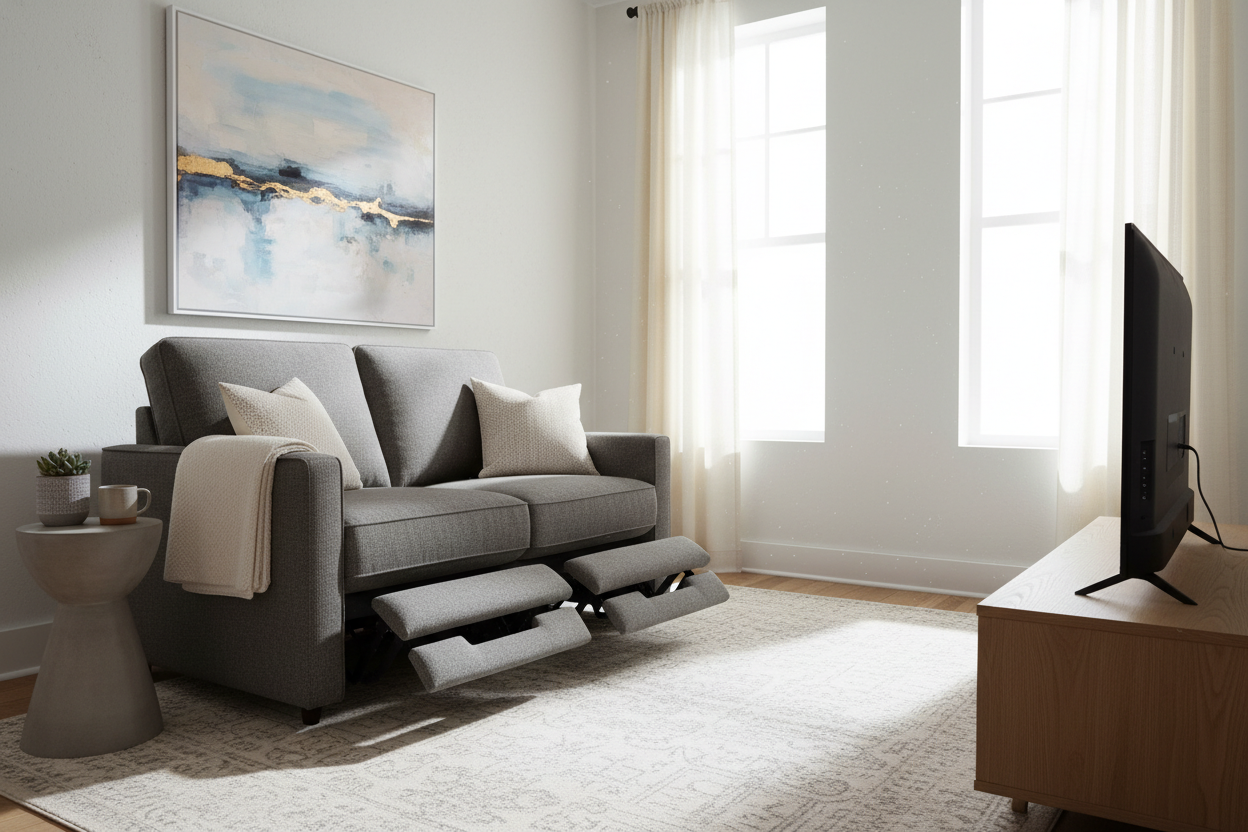
Finding the balance between luxurious comfort and spatial constraints is one of the most common challenges I encounter in urban design projects. You want the cinematic relaxation of a recliner, but you don't want a piece of furniture that dominates the room or blocks traffic flow. Enter the 60 loveseat recliner. This specific dimension is often the "Goldilocks" size for apartments, dens, and home offices, offering just enough width for two adults without the bulk of a standard sofa. However, selecting the right one requires looking beyond just the width measurement.
Key Features to Look For
Before committing to a purchase, review this checklist to ensure the piece functions as well as it fits. These are the technical specifications I check for every client:
- Wall Clearance (Zero-Wall vs. Standard): Essential for tight spaces; zero-wall models only need 2-4 inches of rear clearance to fully recline.
- Upholstery Durability: Look for "performance" fabrics (Crypton or high-rub count polyester) if pets are involved, or top-grain leather for longevity.
- Internal Frame Material: Kiln-dried hardwood frames prevent warping over time, unlike particle board alternatives.
- Seat Depth & Height: Ensure the depth (usually 20-22 inches) complements your height so your legs don't dangle or cramp when upright.
- Mechanism Type: Power recliners offer infinite positions but require a power source; manual levers are cord-free but limit angle options.
Mastering Spatial Planning and Layout
When integrating a 60 inch reclining loveseat into your floor plan, you must consider the piece's "footprint in motion." A common error is measuring the loveseat in its upright position and forgetting that, when fully extended, the footrest can add another 18 to 24 inches to the depth.
Traffic Flow and Clearance
In a small living room, I recommend placing the loveseat perpendicular to the focal point (like the TV) if the room is narrow, or floating it in the center if you have an open plan. Ensure you have at least 30 inches of walking path in front of the footrest when it is extended. If you don't, the room will feel claustrophobic the moment you try to relax.
Visual Weight and Silhouette
Recliners are notoriously bulky. To mitigate this "visual heaviness," look for a 60 loveseat recliner with a streamlined silhouette. Avoid overstuffed arms or pillowy headrests if you are trying to maintain a modern aesthetic. A track arm or a tapered leg (if the mechanism allows) can make the piece look lighter and less imposing, helping to maintain the ambient openness of the room.
Choosing the Right Material
The tactile experience is just as important as the mechanics. For a 60-inch piece, which often sits closer to other furniture, the texture needs to harmonize with your existing decor.
Leather: Top-grain leather is the gold standard for durability and develops a beautiful patina over time. However, be wary of "bonded leather," which tends to peel within a few years of daily use.
Performance Fabric: If you want a softer, warmer feel, opt for a tight-weave chenille or a performance velvet. These materials hide shadows and wear patterns better than flat cotton weaves, which is crucial for a piece that involves movement and friction.
Lessons from My Own Projects
I want to share a specific realization I had while sourcing a 60 loveseat recliner for a client's media room in a renovated loft. We found a gorgeous power-reclining model that fit the 60-inch width constraint perfectly between two structural columns.
However, once we installed it, I realized a massive logistical oversight: the power cords. Because we were floating the unit in the middle of the room, the black power cables snaking across the rug looked terrible and created a tripping hazard. I hadn't accounted for the fact that unlike a manual recliner, a power unit is tethered to the wall.
We ended up having to purchase a separate, rechargeable lithium-ion battery pack (which tucks neatly under the skirt of the furniture) to make it cordless. It was an extra expense I hadn't budgeted for. Now, I always advise clients: if you are floating a power recliner, budget for the battery pack immediately. Also, pay attention to the "gap" between the back flap and the seat when reclined; on cheaper models, this exposes the metal mechanism, which is an eyesore if the back of the sofa is visible.
Conclusion
A 60 loveseat recliner is more than just a space-saver; it is a strategic design choice that prioritizes personal comfort without sacrificing square footage. By focusing on wall clearance, visual weight, and the practicalities of power management, you can create a cozy, high-functioning sanctuary in even the most compact homes.
Frequently Asked Questions
What is the difference between a wall-hugger and a standard recliner?
A standard recliner leans back, requiring 10-14 inches of space behind it. A wall-hugger (or zero-wall) mechanism slides the seat forward as it reclines, requiring only about 2-4 inches of rear clearance, making it ideal for the 60 inch reclining loveseat in small rooms.
Will a 60-inch loveseat fit two adults comfortably?
Yes, but it is intimate. A 60-inch width usually provides two seating areas of roughly 22-24 inches each, leaving space for the arms. It is comparable to the backseat of a mid-sized sedan. It is perfect for couples, but perhaps too cozy for two people who prefer significant personal space.
How do I get a reclining loveseat through a narrow door?
Most quality reclining loveseats have removable backs. Look for "KD" (Knock Down) backs in the specifications. This allows you to detach the backrest, reducing the profile significantly so the base can be maneuvered through standard 30-inch doorways or tight stairwells.

Leave a comment
This site is protected by hCaptcha and the hCaptcha Privacy Policy and Terms of Service apply.