

















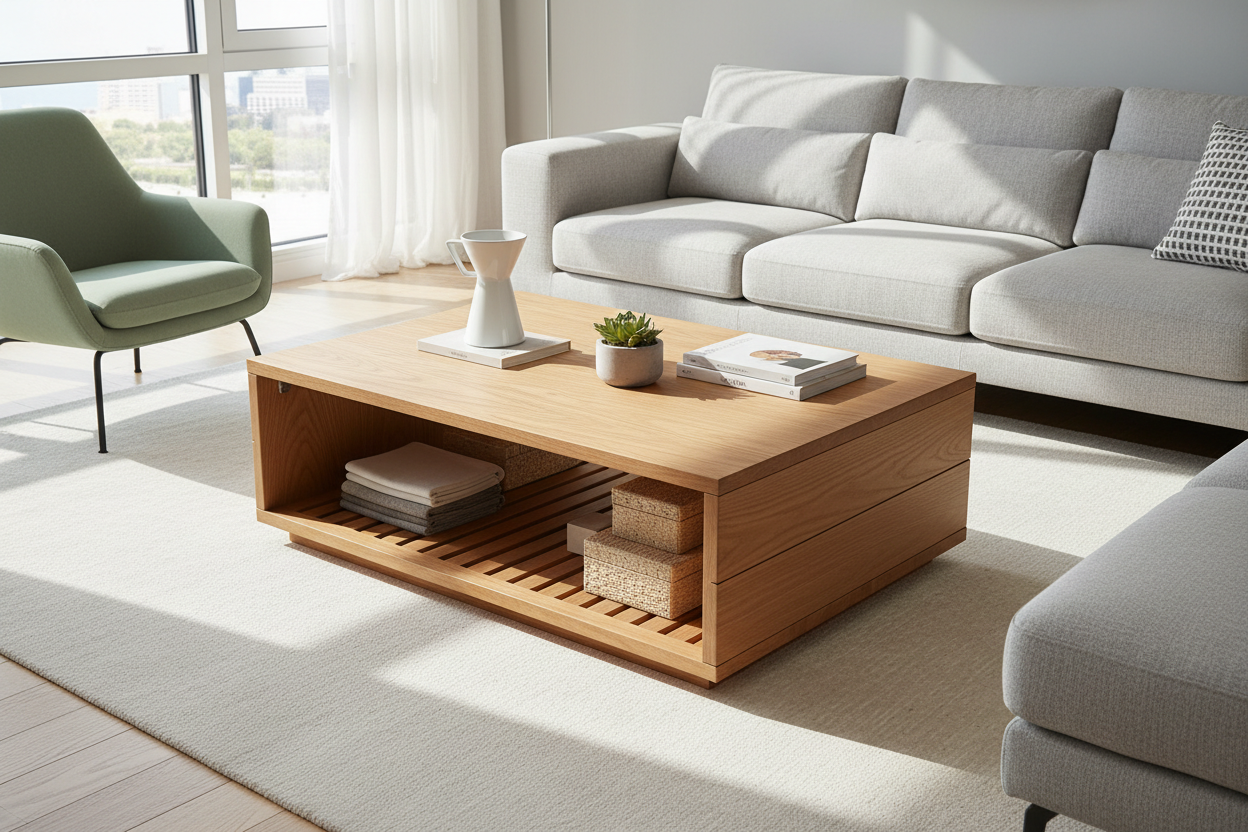
Surface area is a premium in almost any home, but floor space is even more valuable. When you buy a standard table, you often get a flat surface for your coffee or keys, and a whole lot of empty, wasted air underneath. This is where the dual-function magic of a table with shelves comes into play. By utilizing the vertical space below the tabletop, you effectively double or triple the utility of a single footprint. Whether you are outfitting a cramped studio apartment or trying to organize a sprawling living room, choosing furniture that works harder for you is the smartest design decision you can make.
I learned this lesson the hard way in my first apartment, which was essentially a glorified hallway. I had no closet space and nowhere to put my growing collection of design books. I initially bought a sleek, minimalist desk with spindly legs, thinking it would make the room feel bigger. Instead, piles of books ended up on the floor, making the space feel chaotic. I swapped it out for a sturdy small wood table with shelf capacity underneath. Suddenly, the floor was clear, the books were organized, and the room actually felt larger because the clutter was contained within the furniture's silhouette. That experience shifted my entire perspective on buying furniture: if it doesn't offer storage, it hasn't earned its place on the floor.
Why the "Underneath" Matters
The space beneath a tabletop is often referred to as "dead space" in interior design. A table with shelf underneath reclaims this territory. From a practical standpoint, it separates immediate needs from secondary storage. The top surface remains clear for active use—setting down a drink, writing a note, or displaying a lamp—while the lower tier handles the items you need nearby but not necessarily in your way.
Consider the visual weight of the furniture as well. While open-legged tables feel airy, they can leave a room feeling unanchored. Tables with shelf designs add a sense of grounding. They draw the eye down and create a visual center, which is particularly useful in living rooms where you want to create a cozy, gathered atmosphere.
Choosing the Right Table for Every Room
Not all shelving needs are the same, and the type of shelves table you choose should depend heavily on the room's function.
The Living Room Anchor
In the living room, the coffee table is usually the focal point. A coffee table with shelves below is essential for keeping the surface usable. We have all seen coffee tables so covered in magazines and remotes that you can't put a mug down safely. By moving reading materials and electronics to the lower deck, you reclaim the top for hospitality. A side table with shelf underneath flanking the sofa serves a similar purpose. It’s the perfect spot for a decorative basket to hold charging cables or coasters, keeping the aesthetic clean.
The Entryway Console
Hallways are magnets for clutter. A console table with shelves acts as the first line of defense against the mess. The top holds a catch-all tray for keys and mail. The bottom shelf is ideal for larger items that usually trip people up, like shoes or bags. If you opt for a storage table with shelves that has a solid lower tier, you can place wicker bins there to hide shoes completely, maintaining a polished look even when your boots are muddy.
Kitchen and Dining Utility
In the kitchen, aesthetics often take a backseat to pure function. Here, shelves with table hybrids—often called prep tables or islands—are workhorses. A stainless steel or butcher block table with open shelving below allows a home cook to grab pots, pans, or mixing bowls without opening cabinets with wet hands. This open-storage concept encourages you to keep your cookware organized, as it is always on display.
Styling the Lower Shelf
One common hesitation people have is that open shelving will look messy. It is a valid concern. If you treat the lower shelf of a table with shelf underneath as a junk drawer, it will look like one. The key is intentionality.
Use the "Rule of Three" when styling. Group items in odd numbers to create visual interest. For a coffee table, this might mean a stack of two large art books topped with a small decorative object, placed next to a low plant. This leaves negative space, preventing the shelf from looking crowded.
Baskets and trays are your best friends here. If you are using a storage table with shelves to hold unappealing items like kids' toys or gaming controllers, put them in a woven basket that fits the shelf height. This hides the clutter while adding texture to the room. For a small wood table with shelf in a bedroom, the lower area is perfect for a folded throw blanket. It adds softness and texture, making the room feel inviting while keeping the blanket within arm's reach for chilly nights.
Material Matters
The durability of the shelf is just as important as the tabletop. If you plan to store heavy items like hardcover books or kitchen appliances, ensure the joinery is solid. A metal frame often provides the best support for heavy loads without looking bulky. However, for a warmer, more traditional look, wood is unbeatable. Be mindful of the finish on the lower shelf; it will likely see more dust than the top surface. A darker wood or a distressed finish can be more forgiving of dust and scuffs than high-gloss white or glass.
When selecting tables with shelf features, check the clearance height. If the gap between the shelf and the tabletop is too narrow, it becomes a dark crevice where items get lost. If it is too high, the items on the bottom shelf might look disconnected from the table itself. The sweet spot usually allows for a standard magazine file or a medium-sized basket to slide in comfortably.
The Verdict on Versatility
Furniture should solve problems, not create them. A standard table solves the problem of needing a surface, but it ignores the problem of storage. By opting for a design that integrates storage, you are making your square footage work twice as hard. Whether it is a rustic side table with shelf underneath holding your evening reads or an industrial console managing your entryway chaos, these pieces bridge the gap between form and function. They allow you to live with the things you love nearby, without them being in the way.
Frequently Asked Questions
How much weight can the bottom shelf of a table typically hold?
This depends entirely on the material and construction. A solid wood or metal shelf can usually support 20-50 pounds, making it suitable for books or heavy ceramics. However, glass shelves or thin particle board are best reserved for lightweight decor like throw blankets or empty baskets.
How do I keep the bottom shelf from getting dusty?
Lower shelves accumulate dust faster than tabletops because they are closer to the floor. To minimize maintenance, use baskets or boxes to hold loose items, so you only have to lift one object to wipe the surface. wipe down the shelf weekly with a microfiber cloth to prevent buildup.
Can I add a shelf to a table that doesn't have one?
Yes, adding a shelf is a common DIY project for wooden tables. You can install simple L-brackets on the inside of the legs and rest a pre-cut board across them. Ensure the brackets are rated for the weight you intend to store and that the new shelf doesn't interfere with legroom if you sit at the table.

Leave a comment
This site is protected by hCaptcha and the hCaptcha Privacy Policy and Terms of Service apply.