

















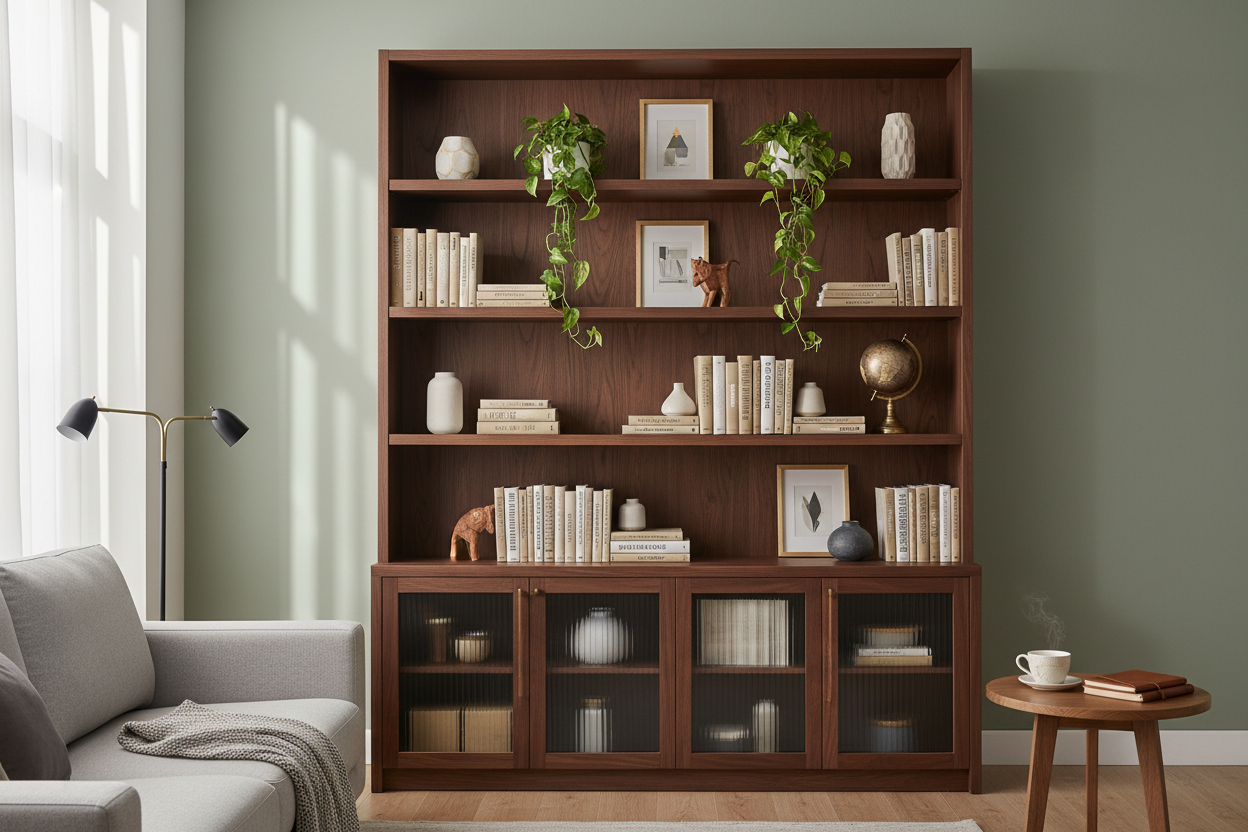
Finding the balance between displaying your favorite items and hiding necessary clutter is a challenge in almost every home. The most effective solution to this common interior design dilemma is the hybrid furniture piece that combines open shelving with closed storage. A bookcase with cabinet base offers the perfect compromise, allowing you to curate a beautiful display on top while concealing paperwork, electronics, or miscellaneous household items below. Rather than choosing between a display unit and a storage cupboard, these dual-purpose pieces provide a grounded, architectural look that elevates a room far more than standard open shelving ever could.
Why the Hybrid Design Works So Well
Open shelving is fantastic for accessibility and aesthetics, but it demands constant curation. If you fill a standard shelf top-to-bottom with books, loose papers, and boxes, it quickly transforms from a design feature into a wall of visual noise. This is where a bookcase with bottom cabinet proves its worth. By keeping the visual weight at the bottom and the open, airy feel at the top, you create a sense of stability in the room.
I learned this lesson the hard way in my own home office. For years, I relied on simple, open metal shelving. While it looked industrial and cool initially, the bottom shelves inevitably became a graveyard for printer paper, tangled charging cables, and ugly binders. It made the whole room feel disorganized. Swapping those out for a bookcase with cabinet on bottom completely changed the energy of the space. Suddenly, the mess was behind solid wood doors, and the room felt intentional and polished. The psychological relief of being able to close a door on the clutter cannot be overstated.
Defining the Style: What to Look For
When shopping for these units, you will encounter various descriptions. Some retailers label them as a hutch, while others describe them as cabinets with bookshelves on top. Regardless of the name, the functionality remains consistent. The base cabinet is usually deeper than the shelves above, creating a "stepped" profile that mimics high-end built-in joinery.
This difference in depth is functional, not just stylistic. A bookshelf with bottom cabinet provides a deeper ledge that can serve as a temporary workspace or a surface for displaying larger art pieces that wouldn't fit on a standard shelf. This ledge breaks up the vertical line of the wall, preventing the furniture from feeling too imposing, even in smaller rooms.
Material and Durability Considerations
Because these units are often top-heavy, construction quality is paramount. A bookshelf with cabinet on bottom requires a solid foundation to support the weight of the books above. Solid wood is always the gold standard, particularly for the base, but high-quality MDF with wood veneers can also offer excellent stability at a lower price point.
Pay close attention to the hardware on the lower section. You will be opening and closing that bookcase with lower cabinet frequently, so durable hinges and smooth drawer runners are essential. Soft-close mechanisms are a nice touch that adds a feeling of luxury and prevents the jarring noise of slamming doors from disturbing the peace of your library or living area.
Storage Strategies for the Lower Cabinet
The closed section of your unit is the workhorse of your organization system. Shelves with cabinets on bottom allow you to store heavy or unsightly items that you need to access but don't want to see. This is the ideal spot for board games, which are notoriously difficult to stack neatly, or heavy photo albums that might warp standard shelving.
If you are using the unit in a dining room, a bookcase with cabinet below serves as an excellent buffet. The upper shelves can display your best china and glassware, while the bottom hides seasonal platters, table linens, and serving utensils. In a living room setting, the base is perfect for media storage, hiding video game consoles, routers, and the tangle of wires that usually accompanies them.
Integrating the Look into Your Decor
Styling bookcases with storage below requires a slightly different approach than styling a standard shelf. Since the bottom is heavy and solid, you can afford to be lighter with the arrangement on the upper shelves. You don't need to pack every inch with books. Leave some negative space. Alternate between vertical stacks of books and forward-facing covers.
Consider the hardware as jewelry for the piece. If you buy a standard big-box store bookcase base cabinet, swapping out the generic knobs for vintage brass pulls or matte black handles can instantly upgrade the look, making it appear custom-made. Lighting also plays a huge role. Adding picture lights to the top header of the bookcase draws the eye upward and highlights your display, further distracting from the heavy storage happening in the cabinet base.
The Built-In Effect
One of the most popular interior design trends involves taking multiple freestanding units and arranging them side-by-side to create a "library wall." If you line up three or four units of a bookcase with cabinet on bottom, the result is impressive. The continuous line of cabinets along the floor anchors the wall, while the repeated vertical lines of the shelves draw the eye up to the ceiling, making the room feel taller.
To achieve a truly seamless look, you can add molding or trim to cover the gaps between the units. This DIY approach gives you the grandeur of custom carpentry for a fraction of the cost. Just ensure that the floors are level; a long run of bookcases with storage below will highlight any slope in your flooring, so shims and anchors are your best friends during installation.
Safety and Installation
Never underestimate the weight of a fully loaded bookcase. Even though the wide base of a bookcase with bottom cabinet makes it inherently more stable than a top-heavy open shelf, anchoring it to the wall is non-negotiable. This is especially true if you live in an earthquake zone or have children who might be tempted to climb the shelves. The cabinet doors on the bottom can sometimes act as a step for adventurous toddlers, so securing the unit to a stud is vital for safety.
Ultimately, investing in this type of furniture is an investment in your home's functionality. Whether you choose a sleek, modern design or a rustic, traditional style, the combination of display and concealed storage solves multiple problems at once. It allows you to keep the things you love in view while keeping the chaos of daily life tucked neatly away.
Frequently Asked Questions
What is the standard depth difference between the bookcase shelves and the base cabinet?
Typically, the base cabinet is 16 to 20 inches deep, while the upper shelves range from 10 to 12 inches deep. This difference creates a ledge that adds visual interest and ensures the unit remains stable and grounded.
Can I turn a regular bookcase into one with a cabinet base?
Yes, many DIY enthusiasts do this by purchasing a separate kitchen base cabinet or a short dresser and mounting a narrower bookshelf on top of it. You just need to ensure the base is sturdy enough to support the weight and that both pieces are securely anchored to the wall.
Are these units suitable for small rooms?
Absolutely. While they might seem large, the closed storage reduces visual clutter, which actually makes a small room feel larger and more organized. Choosing a unit with a lighter color or glass upper doors can also help keep the space feeling open.

Leave a comment
This site is protected by hCaptcha and the hCaptcha Privacy Policy and Terms of Service apply.