

















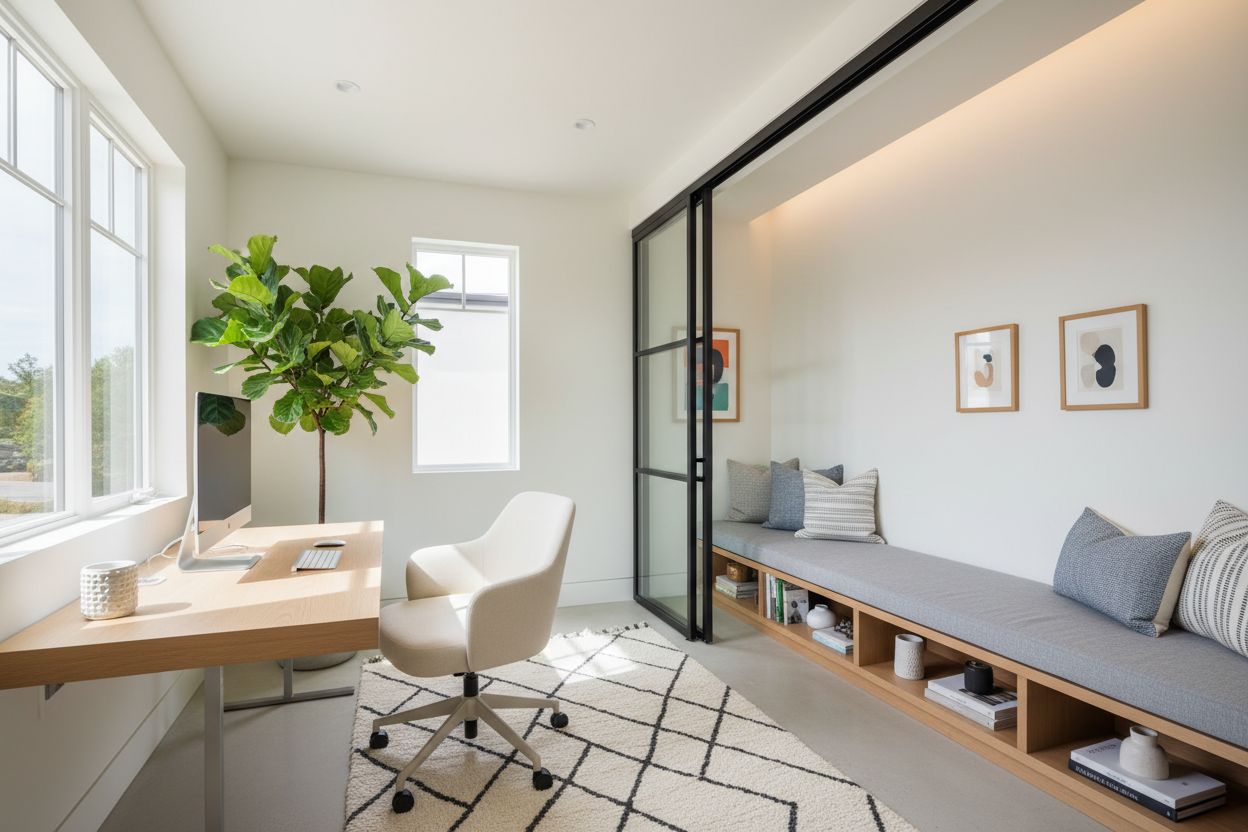
Square footage should never dictate the quality of your work life, yet it remains the primary challenge for many of my clients. The difference between a cramped closet and a high-functioning executive nook lies entirely in spatial strategy. When approaching the interior design of small office spaces, the goal is not just to fit furniture into a room, but to curate a workflow that feels expansive, regardless of the physical dimensions. Whether you are carving out a niche in a master bedroom or outfitting a dedicated box room, the principles of scale, light, and materiality remain paramount.
Key Features to Look For
- Proportional Scale: Furniture must fit the room's volume; avoid heavy, visual-blocking pieces.
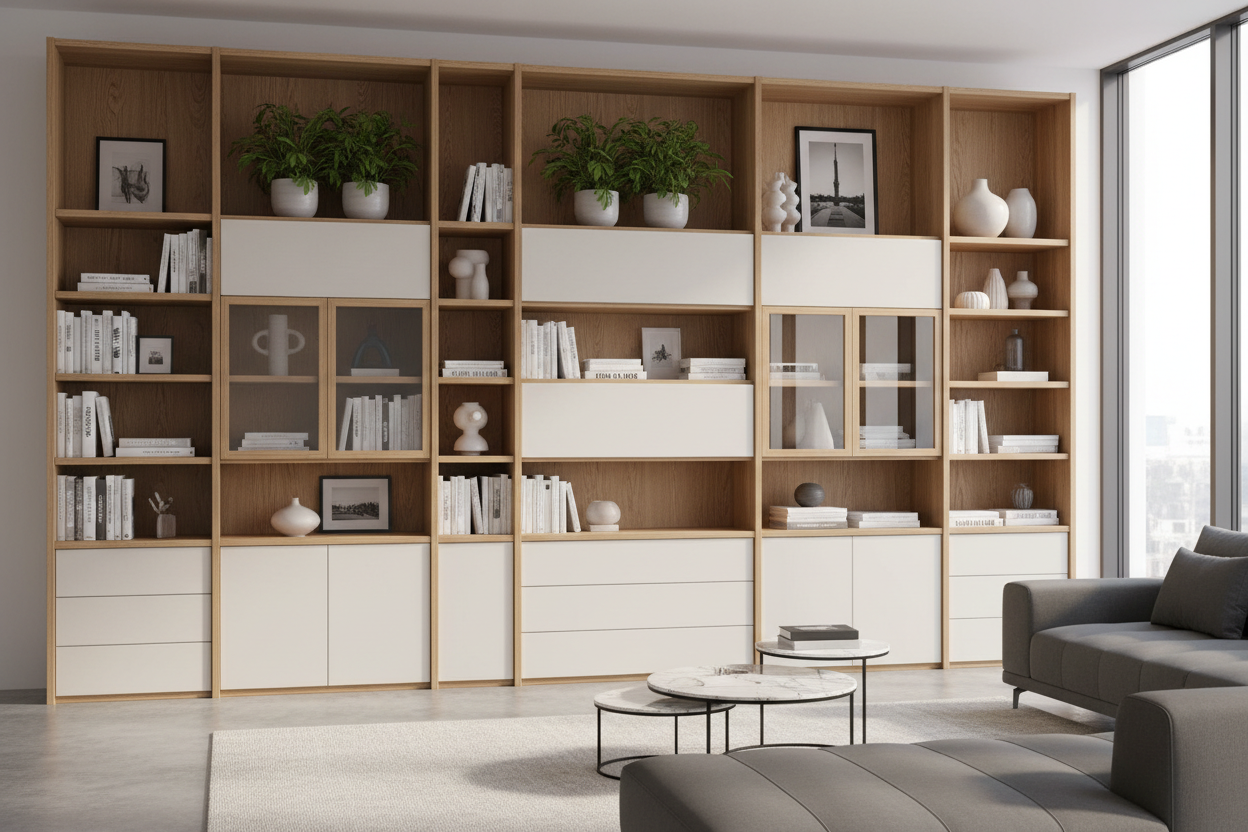
- Vertical Utilization: Floor space is limited, so storage must go up, not out.
- Lighting Layering: A mix of ambient and task lighting prevents the "cave" effect common in small rooms.
- Multi-functional Joinery: Custom or modular pieces that serve as both desk and storage optimize efficacy.
- Ergonomics: Compact chairs must still offer lumbar support without a massive footprint.
Space Planning and Layout Strategies
In small office workspace design, the layout is your architectural skeleton. The most common error I see is the "floating desk" in the center of a tiny room. While this works in large corporate suites, in a 10x10 space, it creates dead zones. Instead, consider a perimeter layout or an L-shaped configuration tucked into a corner. This opens up the center of the room, creating a psychological sense of breathability.
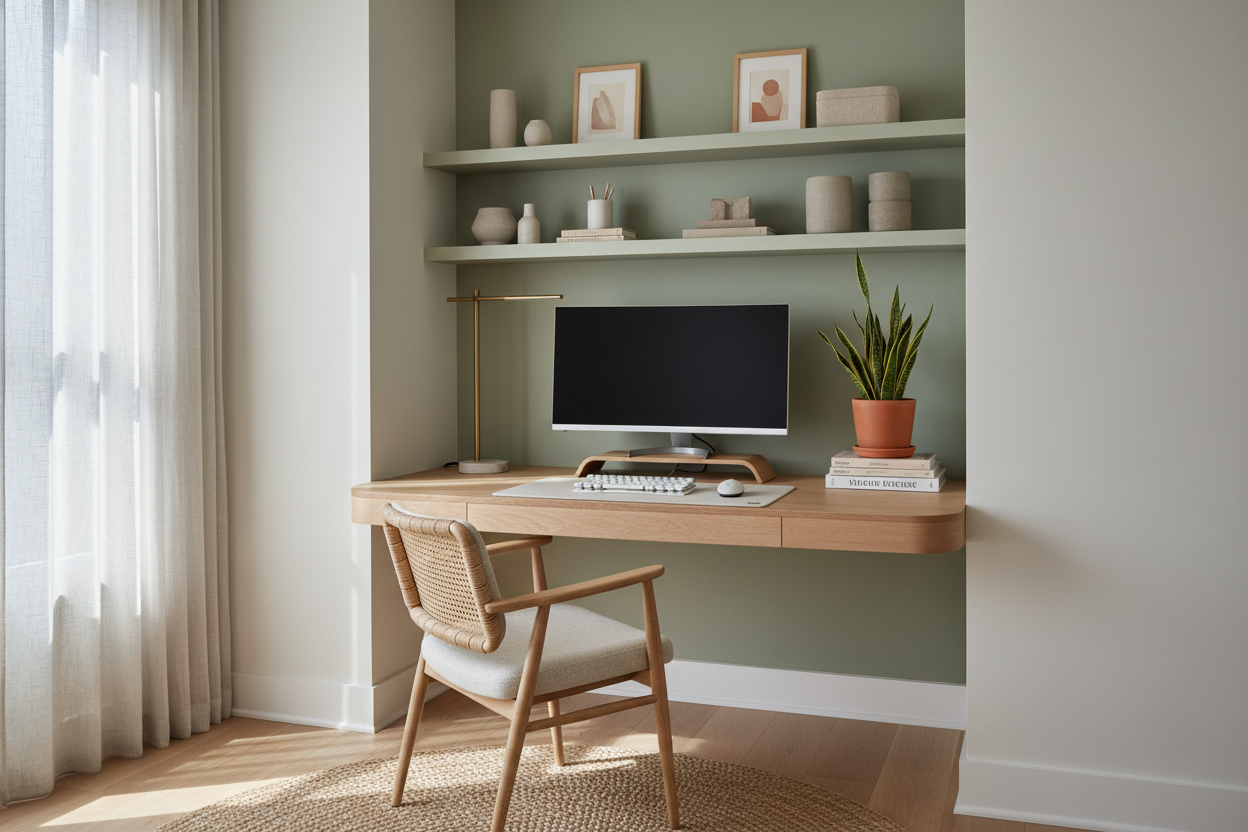
Traffic flow is equally critical. You need a minimum of 36 to 48 inches behind your desk to slide your chair back comfortably without hitting a wall or bookshelf. If your footprint is extremely tight, look into simple small office interior design solutions like wall-mounted floating desks which eliminate leg obstruction entirely.
Material Selection and Visual Weight
Wood vs. Metal and Glass
The materials you choose dictate the "visual weight" of the room. For a modern small office interior design, I often recommend materials that allow light to pass through or reflect it. A glass or acrylic desk can make a workspace disappear, making the room feel larger. However, if you prefer the warmth of wood, opt for lighter grains like white oak or birch rather than heavy mahogany.
Textiles and Acoustics
Hard surfaces bounce sound, which can make a small room echo during conference calls. Incorporating soft textures is vital for creative small office interior design. A low-pile rug not only defines the zone but acts as a sound dampener. When selecting window treatments, choose roller shades or Roman blinds mounted inside the frame to maximize natural light ingress, rather than heavy drapes that encroach on the room's volume.
Lighting: The Invisible Expander
Lighting is the unsung hero of small office interior design ideas. Relying on a single overhead ceiling fixture casts shadows and shrinks the space. You need a three-point lighting system:
- Ambient: Soft, general illumination (dimmable ceiling fixtures).
- Task: Focused light for your desk (articulating arm lamps save surface area).
- Accent: LED strips behind monitors or under shelves to add depth.
Styling for a Contemporary Aesthetic
Clutter is the enemy of the small office interior. However, minimalism doesn't mean sterility. To achieve contemporary small office design ideas, use the "rule of three" for decor on shelves, leaving negative space to let the eye rest. Mirrors are also a classic designer trick; placing a large mirror opposite a window doubles the natural light and tricks the brain into perceiving more depth.
My Personal Take on Interior Design of Small Office
I learned a hard lesson about small office design interior constraints during a project for a client in a historic brownstone. The room was barely 7 feet wide. I initially specified a stunning, high-gloss black lacquer parsons desk. It looked incredible on the mood board.
However, within a week of installation, the client called me. The issue wasn't the size—it was the finish. In such a tight space with a window right next to it, the high-gloss surface acted like a magnifying glass for every speck of dust and every fingerprint. Furthermore, the dark color sucked the light out of the lower half of the room. We swapped it for a matte, wire-brushed oak floating console. The texture hid the daily wear, and the floating design revealed the floorboards underneath, instantly making the room feel two feet wider. It taught me that in small spaces, practical maintenance and floor visibility are just as important as the silhouette.
Conclusion
Executing the perfect interior design of small office spaces requires a balance of rigorous editing and smart investing. By prioritizing vertical storage, appropriate scale, and layered lighting, you can build a workspace that supports high-level output without the footprint of a corner office. Evaluate your needs, measure twice, and choose pieces that work as hard as you do.
Frequently Asked Questions
What are the best colors for a small office interior?
Light, cool neutrals like off-white, soft gray, or sage green recede visually, making walls feel further away. If you want a creative small office interior design, try color-drenching (painting walls, trim, and ceiling the same color) to blur the boundaries of the room.
How do I fit a guest chair in a small office?
If daily client meetings aren't required, avoid permanent guest seating. Instead, use a stylish ottoman that can slide under a console or a folding chair that hangs on a wall peg when not in use. This keeps the small office interior design ideas focused on your daily workflow.
Is custom joinery worth it for small offices?
Yes. In small creative office design, off-the-shelf furniture rarely utilizes every inch. Custom built-ins can bridge awkward corners and go floor-to-ceiling, maximizing storage efficiency far better than standard bookcases.

Leave a comment
This site is protected by hCaptcha and the hCaptcha Privacy Policy and Terms of Service apply.