

















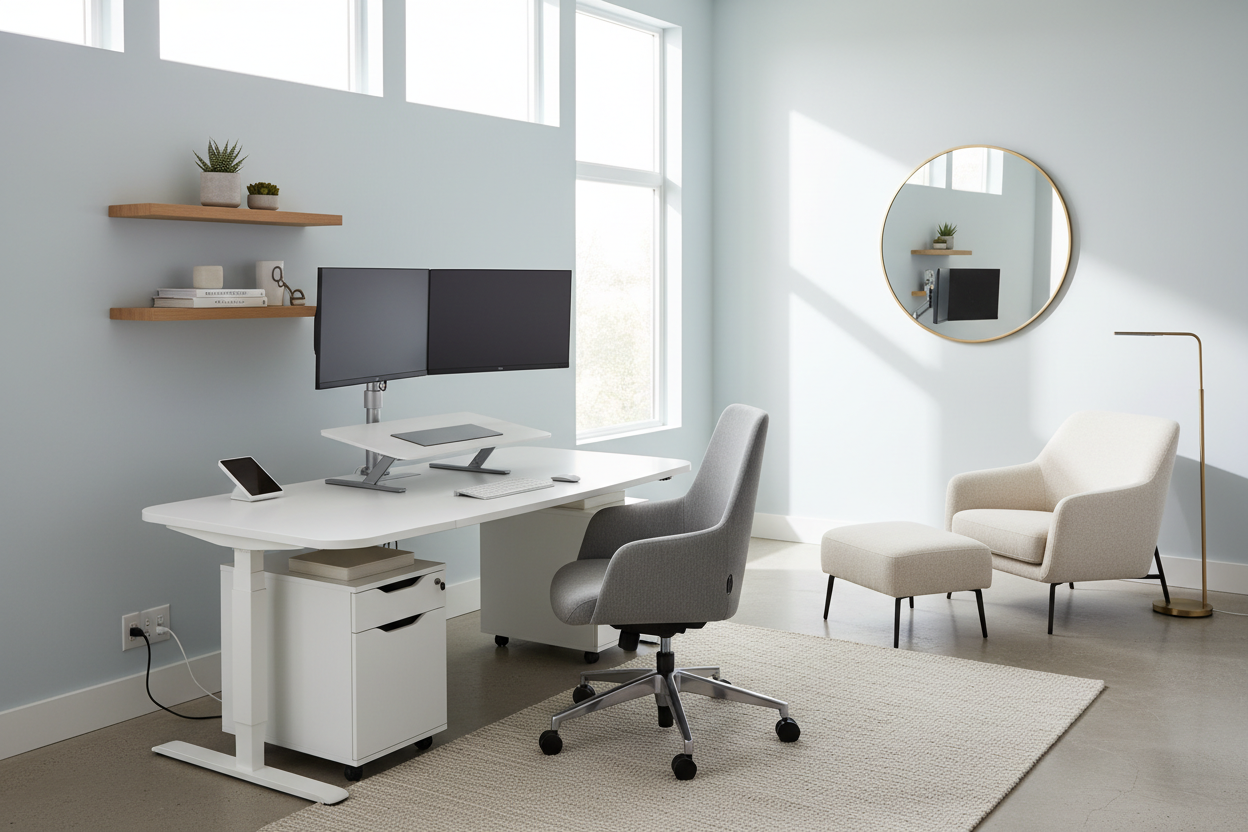
There is nothing more frustrating than a workspace that fights against you. You roll your chair back and hit a bookshelf, or you find yourself constantly shifting piles of paper because there is simply nowhere else to put them. The problem usually isn't the square footage; it is how that footage is utilized. A strategic small office layout is the difference between a cramped storage closet and a high-functioning executive suite.
Core Principles for Compact Workspaces
- Traffic Flow: Ensure a minimum of 36 inches behind your desk for chair clearance and movement.
- Vertical Utilization: Prioritize floor-to-ceiling shelving to free up valuable floor space in small office plans.
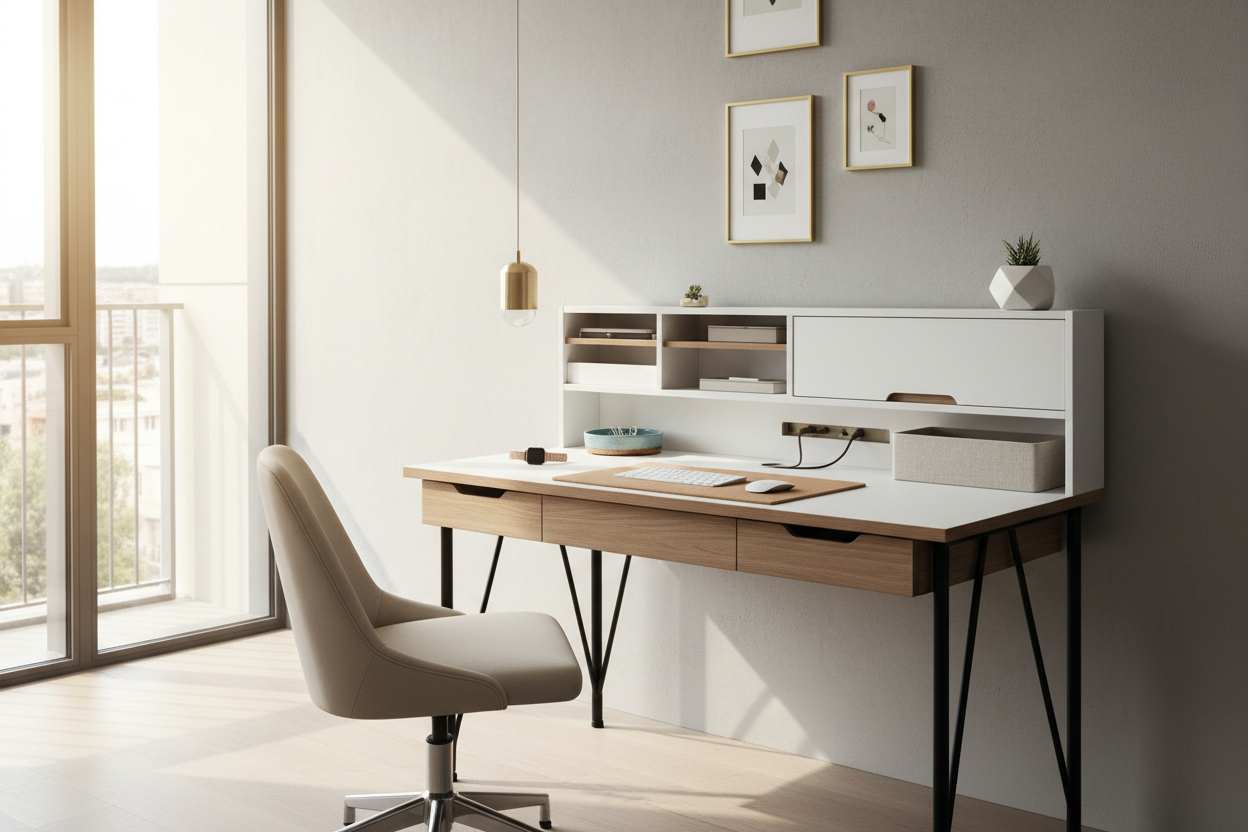
- Scale & Proportion: Select furniture with exposed legs (mid-century modern styles) to maintain visual openness.
- Lighting Layers: Combine task lighting with ambient sources to eliminate dark corners that shrink the room visually.
- Multifunctionality: Opt for desks with integrated cable management and storage to reduce surface clutter.
Strategic Space Planning & Configuration
Before buying a single piece of furniture, we must look at the bones of the room. Successful small office designs and layouts rely on understanding the room's geometry. For a square office layout, floating the desk in the center can command the room, provided you have adequate clearance. However, this often eats up perimeter space.
In contrast, narrow office layout ideas often benefit from a "galley" approach. Here, we place the desk against one long wall and storage on the opposite side, keeping the central pathway clear. This mirrors the efficiency of a ship's kitchen, where everything is within arm's reach but the path remains unobstructed.
The Furniture Equation: Material and Scale
When selecting pieces for a modern small office layout, visual weight is just as important as physical dimensions. A heavy, solid oak desk with a modesty panel creates a visual block, making a tiny office layout feel even smaller. Instead, look for materials like glass, acrylic, or lighter wood veneers such as ash or maple.
Ergonomics in Tight Quarters
Your chair choice is critical in a layout for small office space. A high-back executive leather chair might look prestigious, but in a 10x10 room, it dominates the environment. I often recommend a high-quality mesh task chair. It offers the necessary lumbar support without the visual bulk. When planning your small office furniture layout, remember that ergonomics isn't just about the chair; it's about the triangulation between your eyes, the screen, and the light source.
Optimizing the Desk Position
Many homeowners instinctively push their desk into a corner. While this maximizes floor space, it is often the worst choice for productivity. The best small office desk layout ideas position the user in the "command position"—facing the door, but not directly in line with it. If space restricts this, try facing a window, but be wary of direct glare. If you must face a wall, install a large mirror above the desk. This reflects light and creates depth, a classic designer trick for office layouts for small offices.
Visual Balance and Styling
In small office configurations, clutter is the enemy of calm. Use closed cabinetry for files and supplies, reserving open shelves for curated decor. This balance prevents the "closing in" effect. When considering small office layout design ideas, think about the floor as the fifth wall. A rug should anchor the desk and chair completely; if the chair rolls off the edge of the rug, the rug is too small, fracturing the room's cohesion.
My Personal Take on Small Office Layouts
I learned a hard lesson early in my career while designing a home office in a converted pre-war apartment in Manhattan. The room was barely 8 feet wide. I specified a gorgeous, deep mahogany desk that looked stunning on the floor plan. However, once installed, I hadn't accounted for the "shin bump" factor.
In a small office arrangement, the depth of the desk is deceptive. While standard depth is 30 inches, in a small room, shaving that down to 24 inches makes a massive difference in how the room feels. With the deeper desk, every time the client swiveled, their knees grazed the drawer pulls of the credenza behind them. We had to swap it out. Another detail often overlooked is finish durability in tight spaces. In small rooms, you are constantly brushing against furniture. I've noticed that matte black or dark navy finishes show skin oils and dust significantly more in small, enclosed spaces than in open-plan areas. For tight quarters, I now almost exclusively recommend textured laminates or natural wood grains that hide the inevitable wear of close-contact use.
Conclusion
Designing a layout for a small office space is an exercise in editing. It requires you to be ruthless with clutter and intentional with every square inch. By respecting scale, prioritizing flow, and choosing materials that breathe, you can turn even the most modest floor plan into a powerhouse of productivity. Don't let the walls limit your work; let the design expand your potential.
Frequently Asked Questions
What is the best layout for a very narrow office?
For narrow spaces, an L-shaped configuration tucked into a corner or a galley layout works best. Avoid floating the desk in the middle of the room, as this creates "dead zones" of unusable space on either side.
How do I make my small office look bigger?
Maximize vertical storage to keep the floor visible. Use light paint colors, hang mirrors to reflect natural light, and choose furniture with slender legs rather than solid bases to increase the perception of floor space.
Can I fit a sit-stand desk in a small office plan?
Absolutely. Look for a single-column pneumatic sit-stand desk or a compact electric model with a footprint of 48" wide or less. Ensure you have vertical clearance for the monitor when the desk is in the raised position.

Leave a comment
This site is protected by hCaptcha and the hCaptcha Privacy Policy and Terms of Service apply.