

















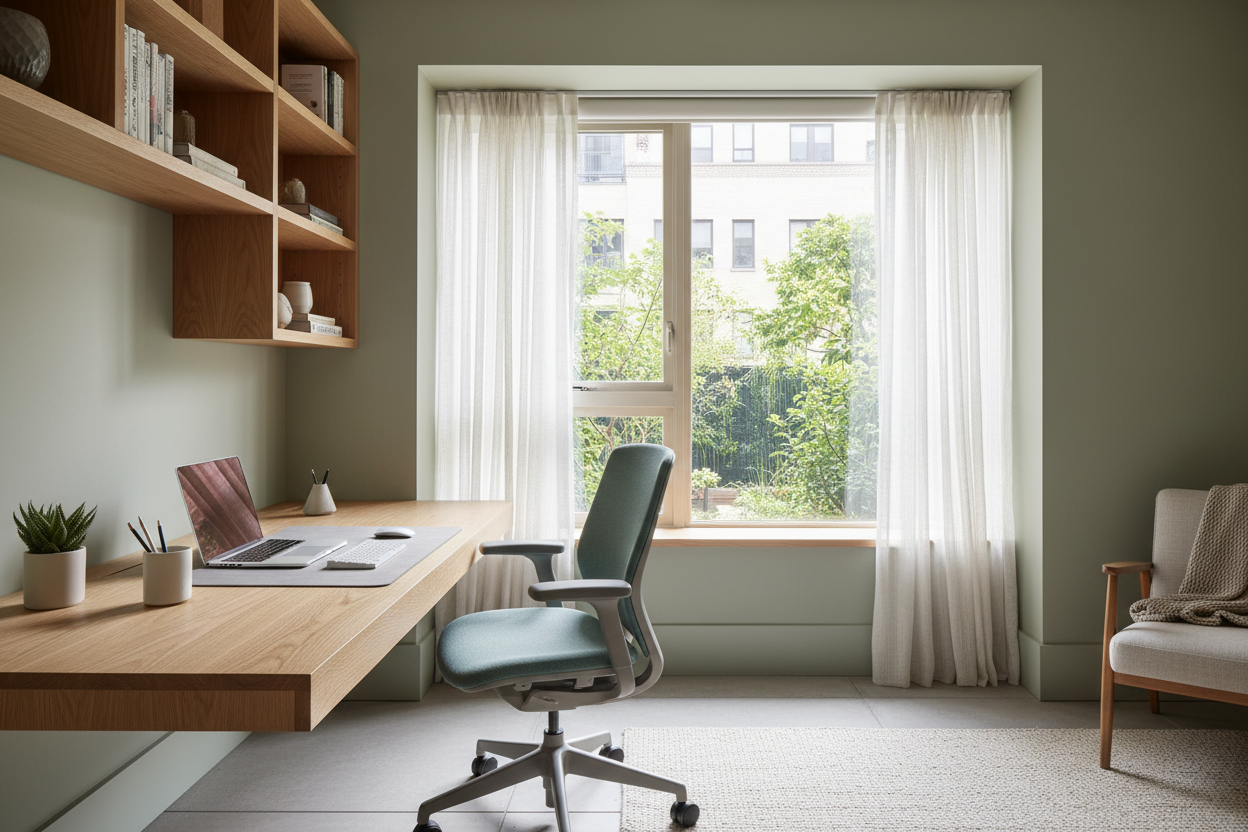
One of the most frequent requests I receive during spatial planning consultations is the desire to work with a view. It is an understandable impulse; staring at a blank wall stifles creativity, while a view of the outdoors can be restorative. However, executing under window desk ideas requires more than simply shoving a table against the sill. It is a delicate balance between harnessing natural light and managing the architectural reality of your room.
Key Considerations for Window-Facing Desks
Before you commit to a layout, consider these structural and functional prerequisites to ensure your workspace is actually usable.
- Solar Orientation: South-facing windows offer intense light that may cause glare, while north-facing windows provide consistent, soft illumination.
- Sill Height vs. Desk Height: Ideally, your desk surface should sit level with or slightly below the window sill to avoid an awkward visual overlap.
- UV Resistance: Direct sunlight can bleach wood veneers and fabrics; choose fade-resistant materials like solid surface, metal, or UV-sealed hardwoods.
- Thermal Comfort: Ensure the desk placement does not block radiators or place you directly in a drafty zone.
Orchestrating the Layout and Flow
When positioning a desk, we must consider the room's circulation. A desk by the window ideas usually works best when the furniture piece anchors the space without obstructing movement.
The Bedroom Context
Incorporating a bedroom window desk requires a lighter touch than a dedicated home office. In a bedroom, visual weight matters. I often recommend desks with slender legs or floating wall-mounted units. This maintains the "airiness" of the room and prevents the furniture from feeling like an intrusion on your sleeping sanctuary. If the room is tight, consider a dual-purpose console that serves as a vanity in the morning and a workstation by day.
Small Spaces and Visual Depth
For a small desk in front of window scenarios, the goal is to borrow the depth of the outdoors to make the room feel larger. A glass or acrylic desk can be a brilliant choice here, as it allows the eye to travel through the furniture to the view beyond, effectively disappearing into the space. If you prefer wood, opt for a silhouette with open shelving rather than heavy, closed cabinetry.
Materiality and Light Management
The interaction between your desk surface and sunlight is critical for ergonomics. A high-gloss white lacquer desk might look stunning in a showroom, but under direct window light, it becomes a reflective mirror that causes significant eye strain.
For window-facing setups, I prioritize matte finishes. A honed stone, a matte-finished walnut, or a linoleum desktop absorbs excess light rather than reflecting it. Furthermore, consider the back of your monitor. If your desk floats in the room facing the window, the back of your equipment is visible. Ensure your cable management is impeccable, or choose a desk with a modesty panel to hide the visual clutter.
My Personal Take on Under Window Desk Ideas
I learned the hard way about the "thermal bridge" effect early in my career. I designed a custom built-in oak desk for a client's bay window in a historic brownstone. It looked magazine-ready. However, I failed to account for the drastic temperature fluctuation right against the glass in mid-winter.
Within six months, the beautiful solid oak top developed a hairline crack running parallel to the window pane because the wood was expanding and contracting rapidly due to the cold glass meeting the hot radiator heat rising from below. Now, whenever I place a desk flush against a window, I always leave a 2-inch "breathing gap" for air circulation and cord management. It’s a small detail that saves the furniture—and the client's investment—long term. Also, if you take frequent video calls, be warned: sitting with a window directly behind your monitor (facing you) lights your face beautifully. Sitting with the window behind you turns you into a silhouette. Always test your camera angle before drilling holes.
Conclusion
Placing your workspace near a window transforms a mundane task into a more connected experience. By selecting the right materials to withstand the sun and respecting the architectural lines of your room, you can create a workspace that is as functional as it is inspiring. Measure twice, check the glare, and enjoy the view.
Frequently Asked Questions
How do I handle glare on my monitor when facing a window?
The most effective solution is light control through window treatments. Solar shades are excellent as they cut UV rays and glare without blocking the view entirely. Alternatively, simply tilting your monitor slightly downward can mitigate direct reflections.
Can I put a desk in front of a floor-to-ceiling window?
Yes, but safety and aesthetics are key. Ensure the back of the desk is finished since it will be visible from the outside. Use a desk with a modesty panel if you want to conceal cords and legs, and ensure there is enough clearance to clean the glass.
What is the ideal depth for a desk facing a window?
A depth of at least 24 to 30 inches is recommended. This distance allows you to sit comfortably without your knees hitting the wall or radiator, and it keeps your monitor at a healthy distance from your eyes while minimizing the feeling of being cramped against the glass.

Leave a comment
This site is protected by hCaptcha and the hCaptcha Privacy Policy and Terms of Service apply.