

















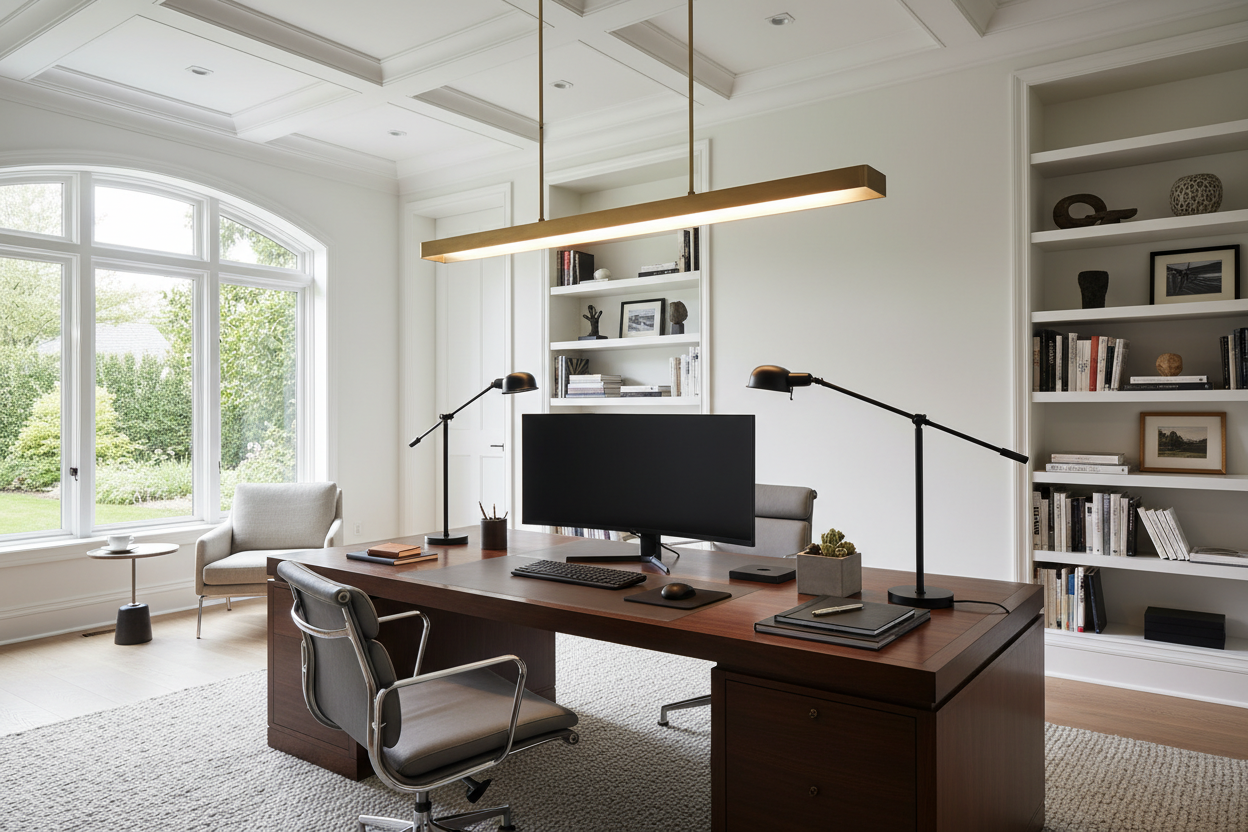
There is nothing quite as draining as trying to focus in a workspace that feels visually flat or, worse, improperly illuminated. As an interior designer, I often walk into home offices where the furniture is exquisite, but the lighting is an afterthought—usually a solitary ceiling can casting harsh shadows right where you are trying to work. Selecting the perfect light over desk is not merely about buying a lamp; it is about curating a balance between high-performance task lighting and sophisticated ambient design.
Quick Decision Guide: Key Features to Look For
- Color Temperature: Aim for 3000K to 4000K. This range reduces eye strain without feeling sterile or overly yellow.
- Adjustability: Look for articulated arms or swivel heads to direct focus exactly where you need it.
- Scale & Proportion: The fixture should span roughly one-third of the desk width to maintain visual balance.
- Glare Control: Ensure the shade is deep enough to hide the bulb from your direct line of sight while sitting.
Defining the Purpose: Task vs. Ambient
Before drilling holes or selecting finishes, we must define the role of your above desk lighting. In a layered lighting plan, a desk light serves primarily as task lighting. However, in modern luxury design, it also acts as a sculptural element that anchors the workspace.
If your office relies heavily on natural light during the day, your artificial light serves to supplement focus during overcast afternoons or late-night sessions. For spaces with limited windows, this fixture becomes the primary source of visual clarity.
Selecting the Right Form Factor
Linear Pendants
For wide, executive-style desks, a linear suspension light above desk surfaces offers a clean, architectural look. This works exceptionally well in minimalist or industrial interiors. The key here is suspension height—hang it too high, and the light disperses too much; too low, and it obstructs your view.
Wall Sconces and Articulated Arms
If surface area is at a premium, wall-mounted sconces are the superior choice. An articulated arm sconce allows you to pull the light closer for detailed work and push it back against the wall when not in use. This creates a "library" aesthetic that feels timeless and intellectual.
Materiality and Visual Weight
The finish of your lighting fixture dictates the mood. Matte black or oil-rubbed bronze absorbs light and adds a grounding, serious note to the room. Conversely, unlacquered brass or polished nickel reflects ambient light, adding a jewelry-like sparkle that elevates the room's perceived value.
Be mindful of the shade material. A metal shade directs light downward (perfect for focus), while a glass or linen shade diffuses light outward (better for general ambiance but weaker for tasks). For true productivity, I almost always recommend an opaque metal shade to prevent light bleed.
Ergonomics: The Technical Details
When installing a light over desk, ergonomics are paramount. You want to avoid "veiling reflections"—glare bouncing off your computer screen or glossy papers. The light source should be positioned to the side of your active hand (left side if you are right-handed) or directly above but slightly forward of your head, not behind you. This prevents your own body from casting a shadow on your work surface.
My Personal Take on Light Over Desk
I learned a hard lesson about above desk lighting during a project for a client who was a graphic designer. We fell in love with a stunning, oversized spun-brass pendant. It looked incredible in the renderings. However, once installed, we realized the interior of the brass shade was highly polished.
The issue wasn't the aesthetic; it was the physics. The polished interior created a "hot spot" of light on her desk that was so intense it actually distorted the color perception of her printed proofs. I had to scramble to find a high-heat matte spray paint to coat the inside of that expensive fixture to diffuse the beam. Since then, I always check the inside finish of a lamp just as rigorously as the outside. If you are doing color-sensitive work, always opt for a fixture with a white or matte interior finish.
Conclusion
Integrating a thoughtful light over desk setup is one of the highest ROI changes you can make in a home office. It protects your vision, anchors your furniture arrangement, and adds a layer of intentionality that distinguishes a "spare room" from a professional workspace. Choose a fixture that speaks to your style, but never compromise on the quality of the illumination.
Frequently Asked Questions
How high should a pendant light hang above a desk?
A good rule of thumb is to position the bottom of the fixture approximately 30 to 40 inches above the desk surface. This clears your monitor while keeping the light source focused enough to be effective.
What is the best bulb brightness for desk work?
Aim for around 450 to 800 lumens. Anything dimmer will cause you to squint, while anything brighter can cause glare and headaches over long periods.
Can I use a picture light as above desk lighting?
Yes, but with caveats. Picture lights are designed to wash a wall with light, not project it downward onto a horizontal surface. If you use one, mount it lower than usual so the throw of the light actually reaches your workspace.

Leave a comment
This site is protected by hCaptcha and the hCaptcha Privacy Policy and Terms of Service apply.