

















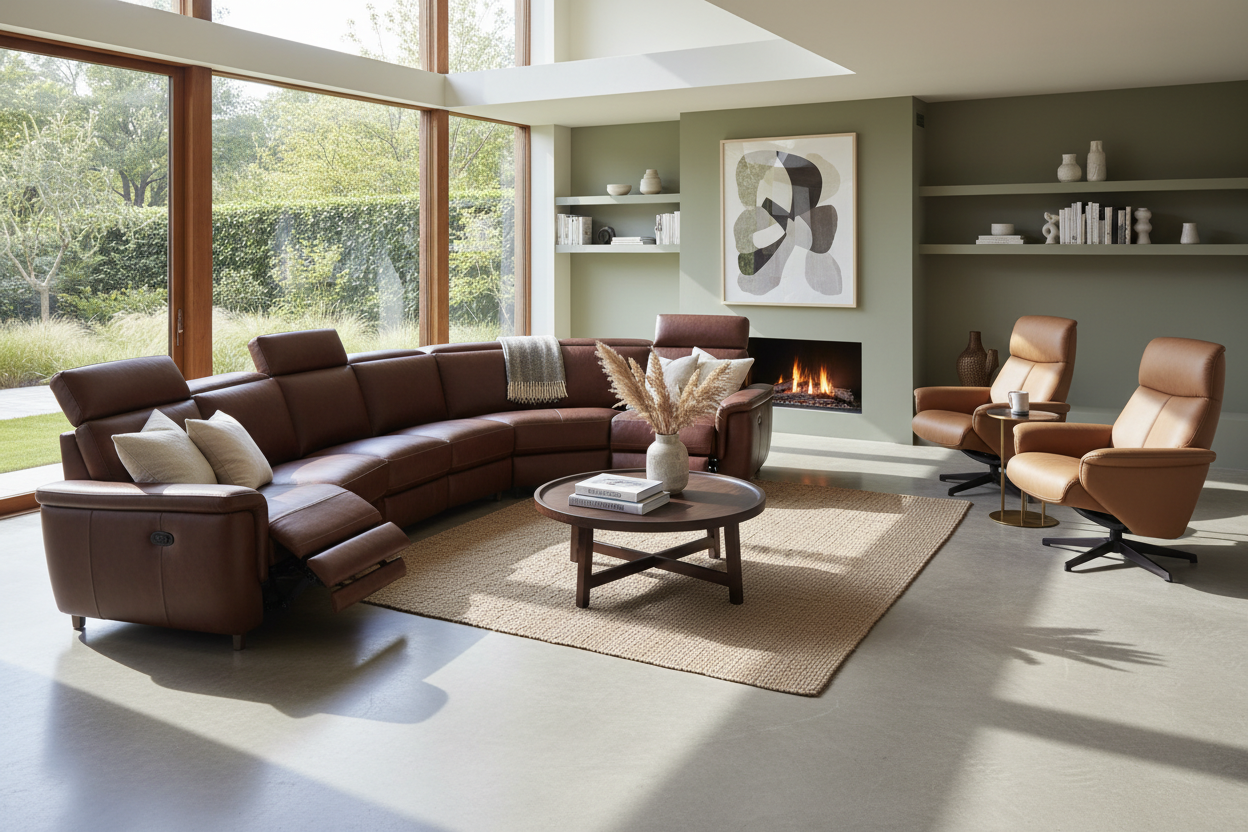
For years, interior designers faced a difficult choice: prioritize the sleek silhouette of a high-end sofa or succumb to the bulky comfort of a recliner. Fortunately, engineering and design have finally converged. The modern leather reclining sectional is no longer an eyesore; it is a sophisticated anchor piece that blends ergonomic luxury with architectural form. However, navigating the market requires a keen eye for details that go beyond mere aesthetics.
Key Features to Look For
- Leather Grade: Prioritize Top Grain or Full Grain for longevity; avoid "bonded" leather which peels over time.
- Suspension System: Look for sinuous springs or 8-way hand-tied systems to prevent sagging seats.
- Mechanism Clearance: Check if the piece is a "wall-hugger" (requires minimal rear clearance) or if it needs significant space to recline.
- Frame Construction: Kiln-dried hardwood frames offer superior durability compared to plywood or particleboard.
- Configuration: Decide between a standard L-shape, a U-shape, or a leather sectional with chaise and recliner based on traffic flow.
Decoding Leather Quality and Texture
The term "leather" is often used loosely in furniture marketing. When you are searching for a leather sectional and recliner, the price difference usually comes down to the hide's authenticity. A real leather sectional recliner will develop a rich patina over time, whereas synthetic alternatives will crack.
I always advise clients to look for "aniline" or "semi-aniline" dyes. These allow the leather to breathe and adjust to body temperature, preventing that sticky feeling in summer. If you see a leather sectional recliner for sale at a price that seems too good to be true, check the tag for "leather match." This means only the seating surfaces are genuine, while the back and sides are vinyl—a compromise that often leads to uneven fading.
Configuration and Space Planning
Integrating a sectional with recliner leather requires precise space planning. Unlike a static sofa, you must account for the "footprint in motion."
The Chaise vs. Recliner Debate
One of the most common dilemmas is choosing between a leather reclining chaise sectional and a standard reclining seat. A leather sectional recliner with chaise offers a static, lounge-style comfort perfect for reading, but it lacks the adjustability of a motorized seat. For media rooms, I often recommend a leather reclining modular sectional where every seat has power capabilities, ensuring no one fights over the "good spot."
Flow and Layout
If you are working with a tighter area, a leather l couch with recliner is your best bet for maximizing seating without overwhelming the room. Ensure you have at least 18 inches of clearance for a coffee table when the footrests are fully extended. For open-concept homes, a leather corner sectional with recliner can act as a fantastic room divider, separating the living area from the dining space.
Ergonomics and Mechanics
A high-quality leather reclining sectional sofa should offer more than just a kick-out footrest. Look for articulating power headrests. This feature is critical for maintaining a proper viewing angle of your television while fully reclined, preventing neck strain. Furthermore, test the switch placement. Hidden controls inside the seat cushion maintain a cleaner look for a sectional leather couch with recliner, whereas side-mounted buttons often include USB charging ports for utility.
My Personal Take on Leather Reclining Sectionals
I learned a hard lesson early in my career regarding the "puddling" effect on a genuine leather sectional with recliner. I specified a stunning, buttery-soft Italian leather piece for a client in a high-rise loft. It looked immaculate on install day.
Six months later, the client called. The leather on the favorite seat had stretched and loosened, creating a "puddle" of fabric. I realized I hadn't explained that high-end, soft leathers lack the tight memory of stiffer, corrected-grain leathers. Now, when I recommend a reclining sectional with chaise leather, I explicitly tell clients to smooth the leather by hand after standing up—much like fluffing a pillow. It’s a small maintenance ritual that keeps a real leather sectional with recliner looking tailored rather than tired. Also, always measure your doorways. I once had to hire a specialized furniture disassembly service because a leather recliner couch sectional had a unified frame that wouldn't fit through a standard pre-war apartment door.
Conclusion
Investing in a sectional couch recliner leather is a commitment to both comfort and style. By focusing on kiln-dried frames, top-grain hides, and appropriate spatial layouts, you ensure your investment serves your home for decades. Whether you choose a sprawling leather sectional with reclining seats or a compact leather chaise recliner sofa, quality materials will always yield the best return on investment.
Frequently Asked Questions
How much space do I need behind a leather reclining sectional?
It depends on the mechanism. "Wall-hugger" designs can be placed as close as 2-4 inches from the wall, while standard reclining mechanisms may require 8-12 inches of clearance to fully recline without hitting the wall.
What is the difference between a reclining chaise and a standard recliner?
A leather reclining chaise sectional features an elongated seat that is stationary and allows you to keep your legs up at all times. A standard recliner seat has a mechanism that extends a footrest and tilts the backrest, offering more adjustable positions.
How do I maintain a leather sectional with recliners?
Dust regularly with a dry cloth and vacuum crevices to prevent dust from damaging the moving mechanical parts. Apply a high-quality leather conditioner every 6-12 months to keep the hide supple and prevent cracking, especially on a leather sectional sofa with recliners exposed to sunlight.

Leave a comment
This site is protected by hCaptcha and the hCaptcha Privacy Policy and Terms of Service apply.