

















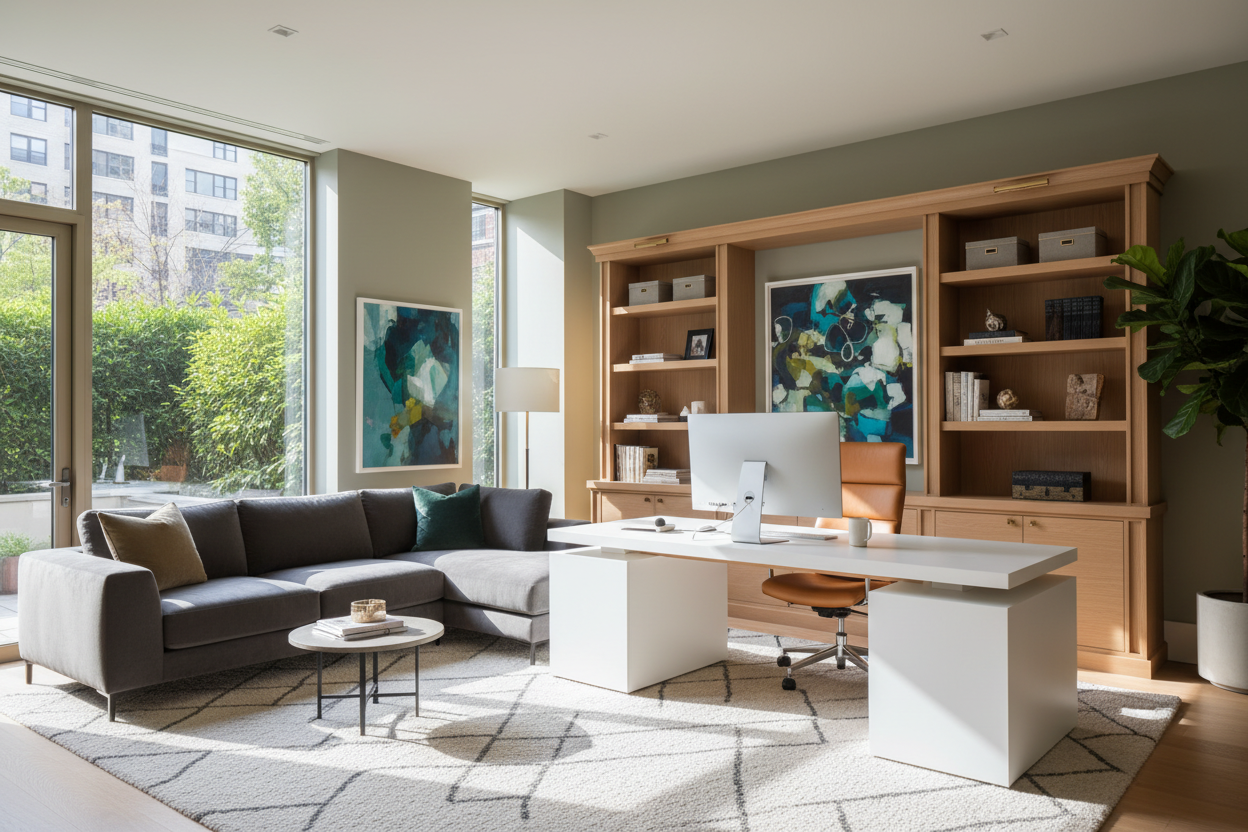
The era of the strictly utilitarian workspace is fading. Today, the most effective workspaces blur the lines between high-productivity zones and comfortable retreats. The design dilemma many of my clients face is how to introduce softness into a room dominated by hard surfaces—desks, monitors, and shelving—without making it look like a misplaced living room. The solution often lies in integrating a **home office with a couch**. This single piece of furniture changes the acoustic profile of the room, offers a secondary location for reading or creative thinking, and elevates the overall visual weight of the space.
Key Features to Look For
- Scale and Proportion: Ensure the sofa depth (typically 36-40 inches) does not impede the traffic flow around your desk chair.
- Upholstery Performance: Opt for commercial-grade fabrics or top-grain leather that can withstand daily use without showing immediate wear.
- Seat Height: A higher seat height (18-20 inches) is preferable in an office setting to make standing up easier when moving back to the desk.
- Visual Weight: In smaller offices, choose sofas with exposed legs to maintain a sense of openness; skirted sofas can make the room feel smaller.
Space Planning & Layout Strategies
When curating couch in office ideas, the placement is just as critical as the piece itself. In my experience, the most common error is shoving the sofa against the wall by default. If your square footage allows, try "floating" the couch. Placing a console table behind a floating sofa creates a distinct zone separate from the primary workstation, effectively breaking the room into a "focus area" and a "lounge area."
For tighter footprints, consider placing the sofa perpendicular to the desk. This allows you to swivel your chair and engage in conversation with a guest or family member without a physical barrier between you.
Choosing the Right Material and Aesthetic
The texture you introduce here serves as a counterpoint to the sleekness of modern technology. When exploring home office with sofa ideas, consider the tactile experience.
Leather vs. Performance Fabric
Top-grain leather conveys authority and ages beautifully, developing a patina that adds character to a study. However, it can be temperature-sensitive. For a warmer, more inviting acoustic environment, I often recommend performance velvet or a heavy-weight bouclé. These fabrics absorb sound, reducing the echo often found in rooms with hardwood floors and empty walls.
Color Coordination and Visual Balance
If your cabinetry and desk are dark wood (walnut or mahogany), a lighter sofa in oatmeal, camel, or soft grey provides necessary contrast. Conversely, in a white-walled, minimalist office, a jewel-toned sofa (emerald or navy) establishes a strong focal point that grounds the room.
Lessons from My Own Projects
I learned a hard lesson early in my career regarding the "nap trap." I once designed a home office for a client where we installed a deep, down-filled cloud sofa. It looked stunning and luxurious. However, three months later, the client called to say he was replacing it.
The issue? It was too comfortable. Every time he moved from his desk to the couch to read a contract, the lack of structure made him sleepy, and the low seat height made it physically difficult to get up quickly when the phone rang. Now, I strictly advise clients to look for "tight-back" sofas or firmer, high-density foam cushions for office spaces. You want a piece that supports upright reading and conversation, not one that encourages a two-hour nap in the middle of the workday. Furthermore, always check the arm height; if you plan to rest a laptop on the arm, a wide, flat track arm is infinitely more practical than a rounded English roll arm.
Conclusion
Integrating a sofa into your workspace is an investment in both your productivity and your well-being. By selecting the right scale, material, and firmness, you create a versatile environment that adapts to your workflow. It is time to stop viewing the office as a place of rigidity and start designing it as a space for sustainable focus.
Frequently Asked Questions
How do I fit a couch in a small 10x10 office?
In a 10x10 room, a standard sofa is likely too large. Opt for a "condo-sized" sofa (usually 70-75 inches wide) or a settee. Alternatively, a loveseat placed along the longest uninterrupted wall can work, provided you choose a sleek silhouette with narrow arms to maximize seating space.
Should I get a sleeper sofa for my home office?
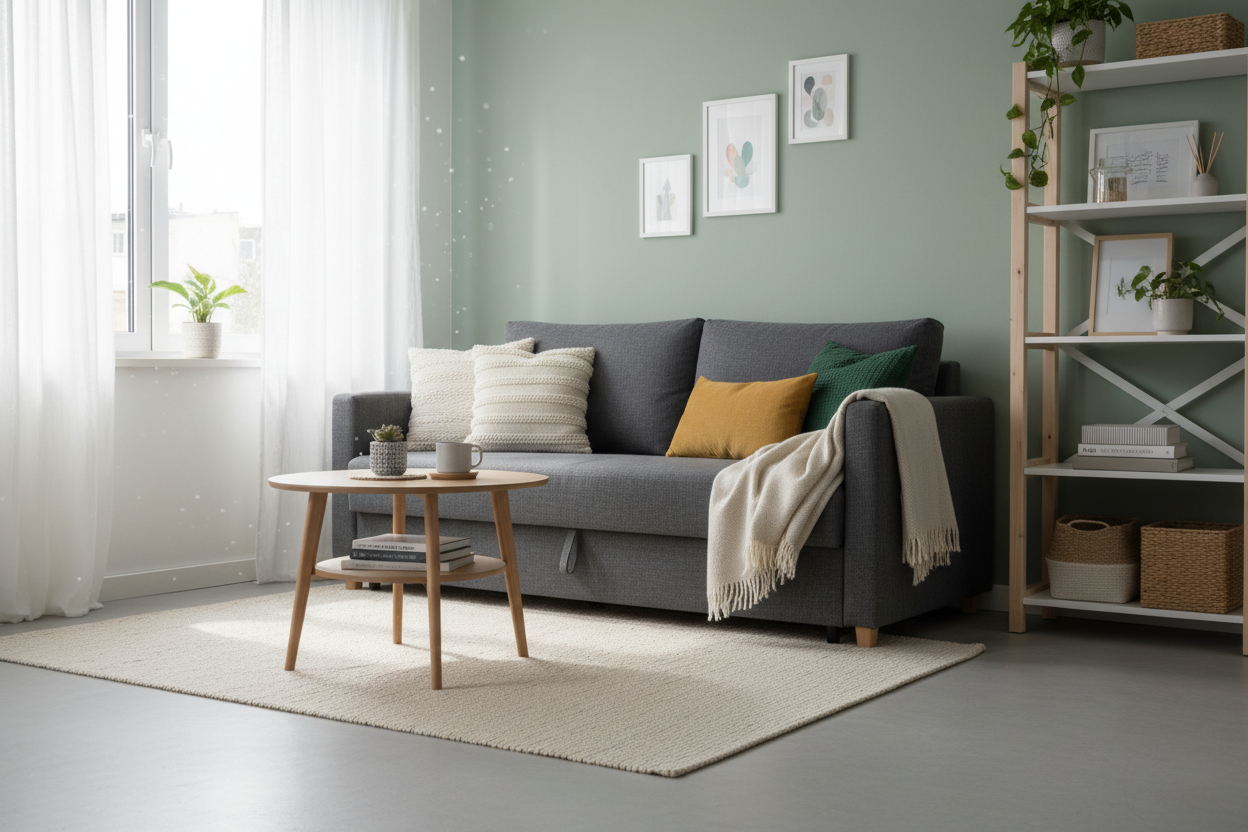
A sleeper sofa is an excellent way to maximize functionality, turning your office into a guest room when needed. However, be aware that sleeper mechanisms make the sofa heavy and often firmer. Ensure you have enough clearance in front of the sofa to fully extend the mattress without hitting your desk.
What is the best fabric for an office chair that matches a sofa?
You don't need to match them perfectly. In fact, a collected look is more designer-forward. If your sofa is a matte fabric (like linen or wool), consider a leather desk chair for contrast. If the sofa is leather, a mesh or upholstered desk chair prevents the room from feeling too heavy or masculine.


Leave a comment
This site is protected by hCaptcha and the hCaptcha Privacy Policy and Terms of Service apply.