






Selecting the anchor piece for your workspace is rarely just about finding a flat surface; it is about balancing architectural scale with daily utility. Many of my clients find themselves scrolling endlessly, overwhelmed by the sheer volume of choices when looking for a houzz desk. The challenge isn't a lack of options—it's distinguishing between a piece that merely looks good in a rendering and one that actually supports your workflow.
Whether you are carving out a dedicated library or a multi-functional nook, this guide cuts through the noise to help you select a piece that offers both ergonomic support and enduring style.
Key Features to Look For
Before committing to a purchase, use this checklist to filter your options. These are the non-negotiables I use when specifying furniture for client projects:
- Material Integrity: Prioritize solid wood or high-grade veneers over particle board for longevity.
- Ergonomic Dimensions: Ensure the desk height is standard (29-30 inches) and offers adequate leg clearance (at least 24 inches wide).
- Cable Management: Look for integrated grommets or hidden channels to keep technology streamlined.
- Visual Weight: Consider whether the room needs a grounding, heavy silhouette or a leggy, airy design to maximize perceived space.
Navigating Materiality and Finish
When browsing houzz office furniture, the finish is usually the first thing that catches the eye, but it should be the last thing you trust from a photo alone. In a high-traffic home office, durability is paramount.
Solid Wood vs. Veneer
For executive styles, solid wood is the gold standard. It ages beautifully and can be refinished. However, high-quality veneers are often more stable in fluctuating humidity, preventing warping. If you are eyeing a houzz office desk with a reclaimed wood finish, be wary of the texture. While aesthetically pleasing, deep grooves can make writing difficult without a blotter.
Functionality: The Tech-Forward Approach
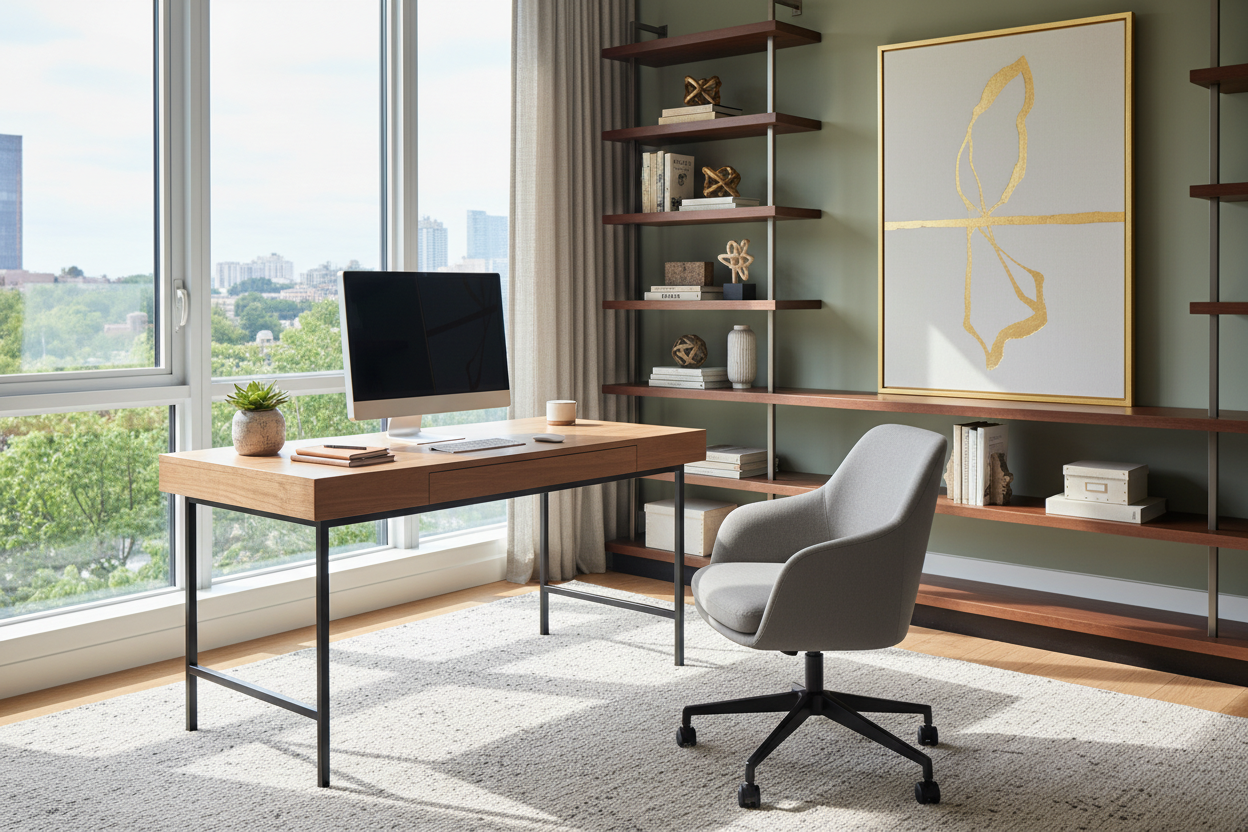
A houzz computer desk must accommodate modern hardware without looking like a server room. I always advise clients to measure their monitor spread before browsing. A standard 48-inch desk feels cramped with dual monitors. Look for a width of at least 60 inches if you run a multi-screen setup. Furthermore, check the depth; you need enough distance between your eyes and the screen to prevent strain, typically a minimum of 24 to 30 inches deep.
Space Planning and Visual Flow
Integrating a houzz home office desk into your layout requires attention to "negative space." A common error is buying a desk that physically fits but visually chokes the room.
If you are working with a compact footprint, avoid desks with solid modesty panels or heavy pedestals specifically on the visitor side. Instead, opt for a silhouette with open legs or a glass top. This allows light to pass through the furniture, maintaining the room's ambient brightness and making the footprint feel larger.
My Personal Take on Houzz Desks
Lessons from My Own Projects
I want to share a specific experience that changed how I shop on this platform. Two years ago, I specified a stunning mid-century modern desk from Houzz for a client in a loft apartment. Visually, it was a 10/10. However, once we assembled it, we realized the "apron" (the structural bar connecting the legs beneath the drawer) was unusually low.
Even with an adjustable ergonomic chair, my client's thighs brushed against the wood every time she crossed her legs. It’s a detail you rarely see in product dimensions. Now, I always dig into the Q&A section or contact the seller specifically to ask for the "clearance height from floor to underside of the drawer." It’s a small measurement that dictates whether you’ll be comfortable or constantly annoyed.
Creating Your Sanctuary
Your desk is more than furniture; it is the cockpit of your career. By focusing on material quality, correct scaling, and functional ergonomics, you ensure that your investment pays dividends in productivity. Take your time, measure twice, and choose a piece that commands respect.
Frequently Asked Questions
How do I know if a desk will fit my chair?
Standard desk height is 29 to 30 inches. Measure your chair's armrest height; you typically need about 25 inches of clearance under the desk to slide the chair in fully.
What is the best material for a writing surface?
Smooth hardwoods like maple or walnut are excellent. Avoid heavily textured reclaimed woods or softwoods like pine, which can dent easily from pen pressure.
Can I return large furniture items easily?
Policies vary by the specific seller on the platform. Always check the return policy regarding restocking fees and return shipping costs before finalizing a large freight order.

Leave a comment
This site is protected by hCaptcha and the hCaptcha Privacy Policy and Terms of Service apply.