









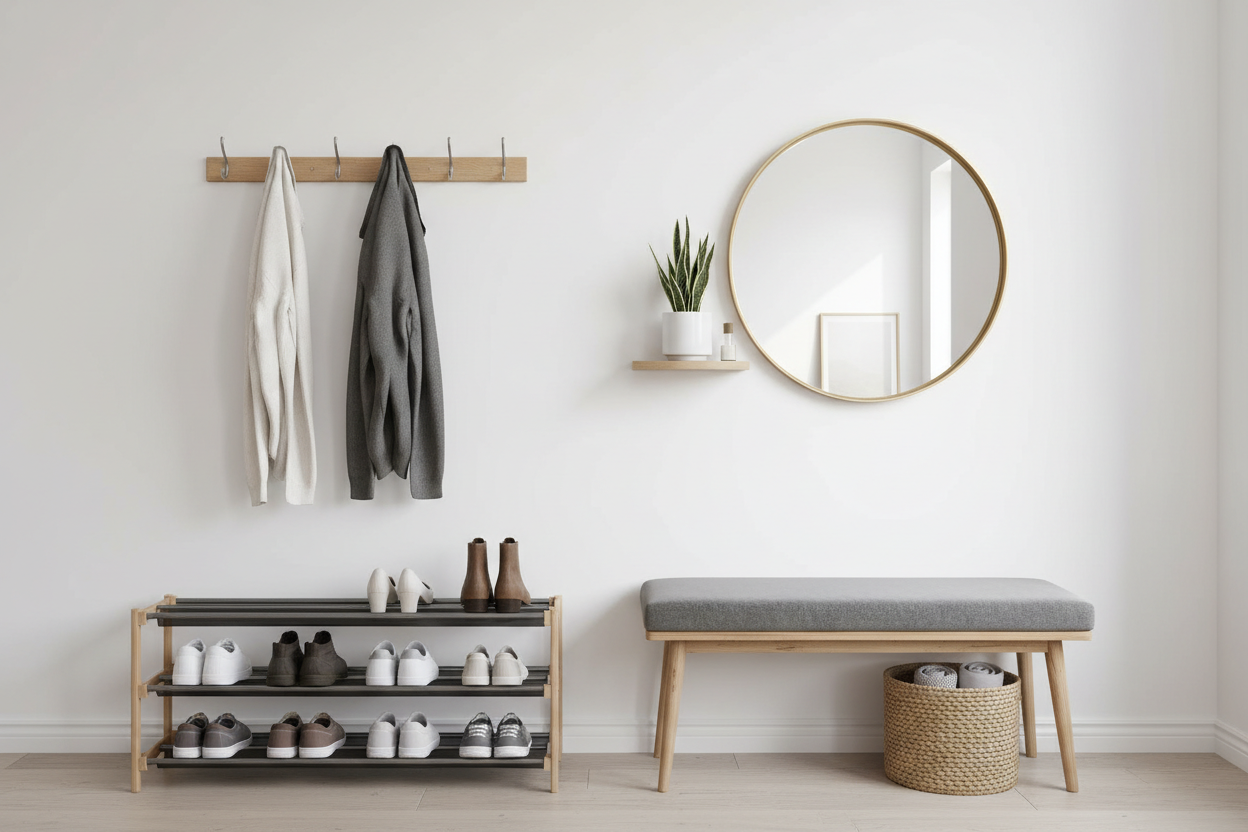
The foyer is the handshake of your home; it sets the tone before a guest even steps into the living room. Yet, for many of my clients, this area is a chaotic drop zone rather than a curated introduction. The dilemma is always the same: balancing the need for heavy-duty storage with the desire for a sleek, welcoming aesthetic. The solution lies in selecting the right coat and shoe rack entryway unit—a piece that acts as both a functional workhorse and a design statement.
Quick Decision Guide: Key Features to Look For
- Depth & Clearance: For a standard hallway, ensure a depth of no more than 15–18 inches to maintain traffic flow.
- Material Integrity: Prioritize solid wood or powder-coated metal over particle board, especially for the base where wet shoes rest.
- Weight Capacity: Look for hooks rated for at least 5–10 lbs each to handle heavy winter woolens.
- Visual Weight: Choose open-frame designs for small spaces to keep the area looking airy, or closed cabinetry to hide clutter.
Orchestrating the Layout: Space Planning
Before falling in love with a specific silhouette, we must address the footprint. In a vast foyer, a substantial entryway coat rack and shoe storage unit can serve as a focal point, anchoring the room. However, most homes deal with tighter constraints. For a narrow entryway coat and shoe rack, verticality is your best friend. I often advise clients to look for units that extend upwards—utilizing wall height rather than floor width.
If you are working with a tight corner, a coat and shoe cubby system can prevent the "pile-up" effect. The goal is to maintain a minimum of 36 inches of clearance for walking; anything less creates a bottleneck that feels cramped and uninviting.
Materiality and Durability
An entryway shoe and jacket storage piece sees more wear and tear than almost any other furniture in the house. It faces moisture from rain, grit from street shoes, and the weight of heavy coats.
Wood vs. Metal
Solid hardwoods like oak or walnut offer longevity and warmth, making them ideal for a front door coat and shoe rack in traditional or transitional homes. However, be wary of low-grade veneers on the shoe shelves; standing water from boots can cause bubbling. For industrial or modern spaces, a metal entrance coat and shoe rack provides superior durability against moisture and scuffs.
Balancing Aesthetics with Function
The best designs hide the chaos. If you are prone to visual clutter, a hallway coat and shoe storage with doors is superior to open shelving. It allows you to close the door on the mess. Conversely, an entryway shoe rack with hooks and an open bench invites immediate use and works well for guests.
Consider the ergonomics of the coat rack with shoe bench combo. The seat height should generally sit between 18 to 20 inches. This allows for comfortable seating while putting on footwear, without requiring a deep squat that feels unnatural for older guests.
Lessons from My Own Projects
I want to share a specific realization from a project I worked on in a rainy Pacific Northwest home. We installed a stunning, high-end hallway shoe coat storage unit made of reclaimed wood. It looked incredible on day one.
However, I made a mistake: I didn't account for the lack of a proper drip tray or ventilation at the bottom. Six months later, the client called me. The bottom shelf had warped slightly, and more annoyingly, the smell of damp leather was trapped in the lower cubbies because there was no airflow. Since then, I always check for slatted shelves or mesh bottoms on any shoe and coat rack for entryway use. It’s a small, unpolished detail that determines whether a piece lasts five years or five months. Also, check the hook spacing—if they are closer than 8 inches apart, your bulky winter coats will overlap and push each other off the rack.
Conclusion
Investing in the right storage solution is about reclaiming your home's entrance. Whether you opt for a sleek small entryway coat and shoe rack or a massive hallway storage for shoes and coats system, prioritize materials that can take a beating and dimensions that respect your walking path. Measure twice, buy once, and enjoy the calm of an organized welcome.
Frequently Asked Questions
What is the ideal depth for a hallway coat and shoe rack?
For a standard hallway, look for a unit between 12 to 16 inches deep. This slim profile prevents the unit from obstructing the walkway while still accommodating most shoe sizes (though men's size 12+ may need to be placed at an angle).
Should I choose an open rack or a closed cabinet?
If you are highly organized and curate your outerwear, an open entrance shoe and coat rack looks airy and spacious. If you have a busy family with brightly colored gear and mismatched shoes, a unit with doors will keep the visual noise to a minimum.
How much weight can a typical entryway bench hold?
A quality entryway coat rack and shoe rack combo with a bench should support at least 200–250 lbs. Always check the manufacturer's specifications, especially if the unit is made of particle board, which has a lower weight tolerance than solid wood or metal frames.



Leave a comment
This site is protected by hCaptcha and the hCaptcha Privacy Policy and Terms of Service apply.