

















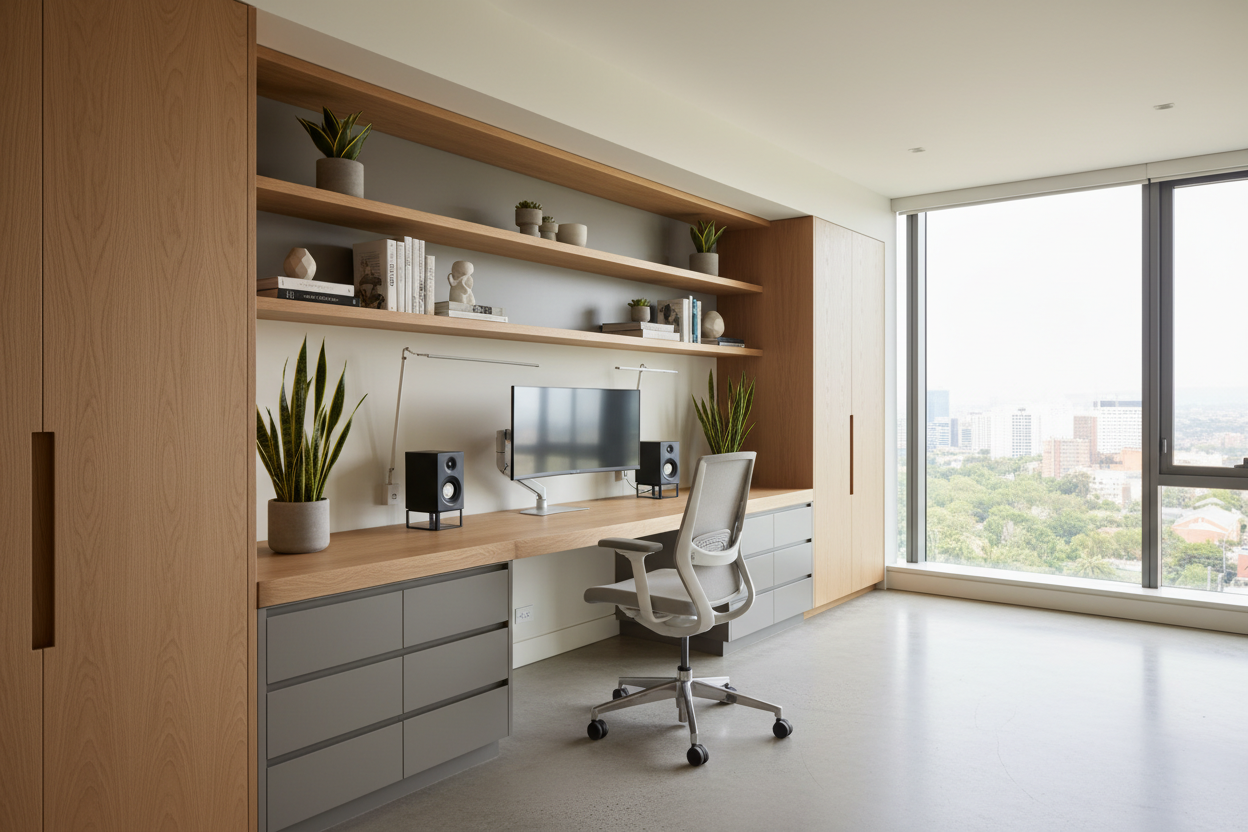
One of the most frequent dilemmas I encounter in residential projects is the "floating furniture" syndrome—where a desk sits awkwardly in the middle of a room, wasting valuable square footage and disrupting the flow of traffic. The solution often lies in architectural integration. By utilizing the perimeter, specifically through full wall desk ideas, you can transform a chaotic spare room into a streamlined, high-performance workspace. This approach does not just save space; it creates a sense of permanence and intentionality that freestanding furniture simply cannot replicate.
Quick Decision Guide: Key Specifications
Before commissioning a carpenter or buying modular units, review these critical factors to ensure your installation succeeds. These are the elements that separate a DIY look from a designer finish:
- Depth Standards: Aim for a minimum depth of 24 inches (60cm) for laptop work, or 30 inches (75cm) if you use multiple monitors, to ensure proper focal distance.
- Material Stability: Solid wood expands and contracts; high-grade plywood with a premium veneer is often more stable for long spans.
- Cable Management: Plan for grommets or routed channels before installation. Retrofitting power access into a mounted unit is messy and expensive.
- Support Span: For floating aesthetics, ensure supports are placed every 36-48 inches to prevent sagging, unless steel reinforcement is used.
Designing the Silhouette: Wall Desk Design Principles
When we talk about wall desk design, we are essentially discussing joinery and millwork. The goal is to make the desk feel like part of the building's architecture rather than an afterthought.
The Linear Layout vs. The Corner Wrap
A straight, linear desk running the full length of a wall is the gold standard for multi-user spaces or dual-monitor setups. It elongates the room visually, drawing the eye across the horizon line. If you are working with a corner, avoid the temptation to curve the desk excessively. A sharp 90-degree turn (an L-shape) often looks more contemporary and maximizes the usable surface area for drafting or paperwork.
Materiality and Texture
The surface you touch every day matters. For a sophisticated office wall table design, I often recommend matte finishes over high-gloss. Gloss reflects overhead lighting, causing glare on screens and eye strain over time. Walnut or white oak veneers bring warmth, while linoleum tops (like Forbo Furniture Linoleum) offer a soft, tactile surface that is incredibly durable and resists fingerprints—a detail often overlooked until the desk is in use.
Scaling Down: Small Wall Desk Ideas
In urban apartments or compact studies, a full wall installation might seem counterintuitive, but it actually tricks the eye into seeing more space. Even when exploring small wall desk ideas, running the surface wall-to-wall eliminates the visual "stops" that clutter a room.
To reduce visual weight in small areas, opt for a "floating" design with no lower cabinetry. Use heavy-duty wall brackets hidden within the shelf thickness. By keeping the floor visible underneath the desk, you maintain the room's footprint, making the space feel airy and open rather than boxed in.
Lessons from My Own Projects: The "Vibration" Factor
I want to share a specific challenge from a project I managed in a pre-war apartment renovation. The client wanted a sleek, 10-foot floating desk made of solid Ash, completely free of legs. We engineered it with standard heavy-duty brackets into the studs.
Visually, it was stunning. However, once the client set up their dual-monitor arm mount, we realized a critical error: micro-vibrations. Every time they typed vigorously, the cantilevered force caused the monitors to wobble slightly. It wasn't structural failure—the desk was secure—but it was annoying.
I learned the hard way that for any floating span over 5 feet intended for heavy computer work, you must either use hidden steel stiffeners embedded inside the wood top or accept a discreet vertical support leg. Now, I always test the "bounce" of a design during the shop drawing phase, not after installation.
Conclusion
Investing in a full wall desk is a commitment to your environment. It shifts the atmosphere from a temporary workspace to a professional command center. Whether you choose a rich timber finish or a monochromatic lacquer that blends with your walls, the key is precise measurement and thoughtful cable planning. A well-executed perimeter desk isn't just furniture; it is an upgrade to the home's infrastructure.
Frequently Asked Questions
What is the ideal height for a wall-mounted desk?
Standard desk height is between 29 and 30 inches (73-76cm) from the floor. However, if you are designing a custom built-in, measure your seated elbow height. Your elbows should be at a 90-degree angle when typing. Customizing this height is one of the biggest ergonomic luxuries of a wall desk.
How do I handle heating vents located on the wall?
This is a common hurdle. Do not block radiators or vents, as heat can warp wood and damage electronics. The solution is to install a vent grille directly into the desktop surface to allow airflow to pass through, or to stop the back panel of the desk just above the skirting board to allow circulation underneath.
Can I use kitchen countertops for a full wall desk?
Absolutely. Butcher block or quartz kitchen countertops are excellent options for an office wall table design because they come in long lengths (often 8-10 feet). Just be aware that stone is cold to the touch, which can be uncomfortable for wrists during long work sessions; a leather desk pad is usually required.

Leave a comment
This site is protected by hCaptcha and the hCaptcha Privacy Policy and Terms of Service apply.