

















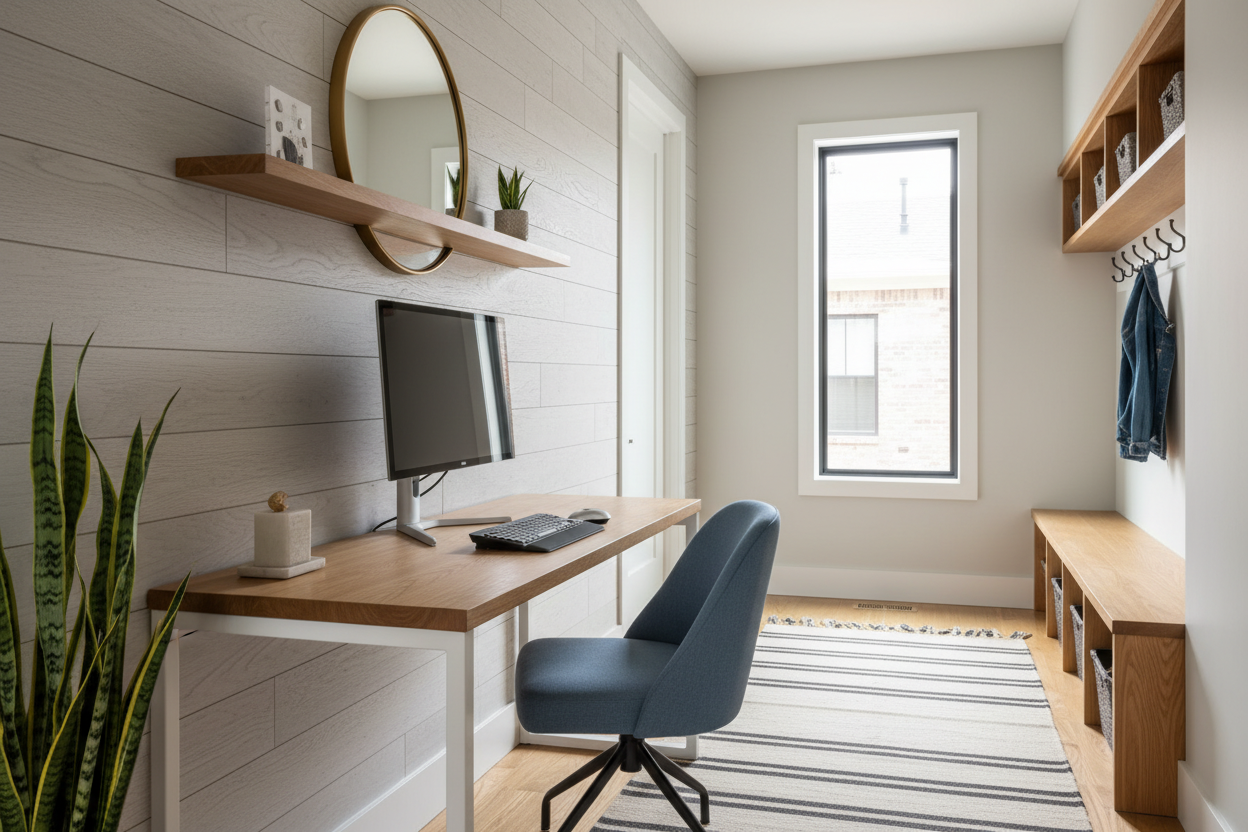
Corridors are often viewed merely as circulation paths—transitional zones that get us from point A to point B. However, in contemporary residential design, ignoring this square footage is a missed opportunity. Implementing smart desk in hallway ideas requires a shift in perspective, treating the corridor not just as a thoroughfare, but as a destination. The challenge lies in introducing functionality without obstructing flow or creating visual clutter.
Key Features to Look For
- Slim Profiles: Prioritize console tables or desks with a depth between 12 to 18 inches to maintain walkway clearance.
- Visual Permeability: Opt for materials like acrylic, glass, or thin metal legs to keep the space feeling open.
- Wall-Mounted Options: Floating desks eliminate leg obstruction, making floor cleaning easier and the space feel larger.
- Integrated Storage: Look for shallow drawers or vertical hutches to contain paperwork without encroaching on the room.
Navigating Spatial Constraints and Layouts
The primary concern when designing an entryway home office is circulation. A standard hallway is often between 36 and 48 inches wide. If you introduce a workspace, you must ensure that the remaining clearance allows for comfortable movement. I generally advise clients to maintain a minimum of 36 inches of walkway space behind the chair. If your hallway is tighter, a standing desk or a fold-down secretary desk becomes the only viable ergonomic solution.
Materiality and Visual Weight
When selecting furniture for narrow areas, visual weight is just as important as physical dimensions. A heavy, solid oak desk with pedestal drawers will make a hallway feel claustrophobic. Instead, lean toward floating joinery or legs with a delicate silhouette.
The Case for Floating Consoles
Cantilevered or wall-mounted desks are superior in these environments. By keeping the floor visible beneath the work surface, the eye perceives the room as wider. If you are renting and cannot drill into studs, look for console tables with an open metal framework. These pieces ground the space without dominating it.
Lighting the Transitional Workspace
Hallways rarely benefit from the natural light that floods a living room. Relying solely on overhead recessed cans can create harsh shadows while you work. To elevate your entryway home office ideas, layer your lighting. Wall sconces with articulating arms are excellent space-savers that free up desk surface area. If hardwiring isn't an option, a slim, rechargeable LED task lamp can provide focused illumination without the cable clutter.
Selecting the Right Seating
The chair is often the dealbreaker in hallway layouts. A standard ergonomic office chair on casters is simply too bulky. You need a seat that can tuck completely under the desk when not in use. Backless stools are the most space-efficient, but they lack long-term support. A better compromise is a low-profile dining chair or a ghost chair, which offers back support while disappearing visually into the surroundings.
My Personal Take on Hallway Workspaces
I recently designed a workspace for a client in a narrow Victorian terrace, and I learned a hard lesson about cable management in open zones. We installed a stunning custom walnut floating shelf to serve as the desk. It looked architectural and sleek—until we plugged in the monitor and laptop.
Because hallway desks are viewed from the side and often from a distance, the "under-desk" chaos is fully visible; there is no modesty panel to hide behind. The dangling wires against the white skirting boards looked messy and ruined the luxury aesthetic we aimed for. I ended up having to retroactively install a false back panel and color-matched cable raceways along the wall. Now, when I advise on these layouts, I insist on planning the electrical pathing before buying a single piece of furniture. If you can't hide the cords, the design fails.
Conclusion
Reclaiming your hallway for a workspace is a design move that marries efficiency with elegance. By selecting slim silhouettes, prioritizing traffic flow, and managing visual clutter, you can create a nook that feels intentional rather than forced. It is about proving that even the narrowest spaces hold immense potential.
Frequently Asked Questions
What is the minimum depth for a hallway desk?
For a laptop setup, a depth of 15 to 18 inches is functional. Anything shallower than 12 inches becomes strictly decorative and difficult to work on comfortably for extended periods.
How do I hide office clutter in an open hallway?
Utilize vertical space. Install floating shelves with opaque baskets or bins above the desk. This keeps papers and tech accessories accessible but out of sight, maintaining a polished look for guests passing through.
Can I use a hallway desk as a permanent home office?
Yes, provided you address ergonomics. While the desk size is manageable, ensure your seating supports your posture. If you work 8+ hours a day, consider a compact chair with lumbar support that can still be tucked away, rather than a stool.

Leave a comment
This site is protected by hCaptcha and the hCaptcha Privacy Policy and Terms of Service apply.