

















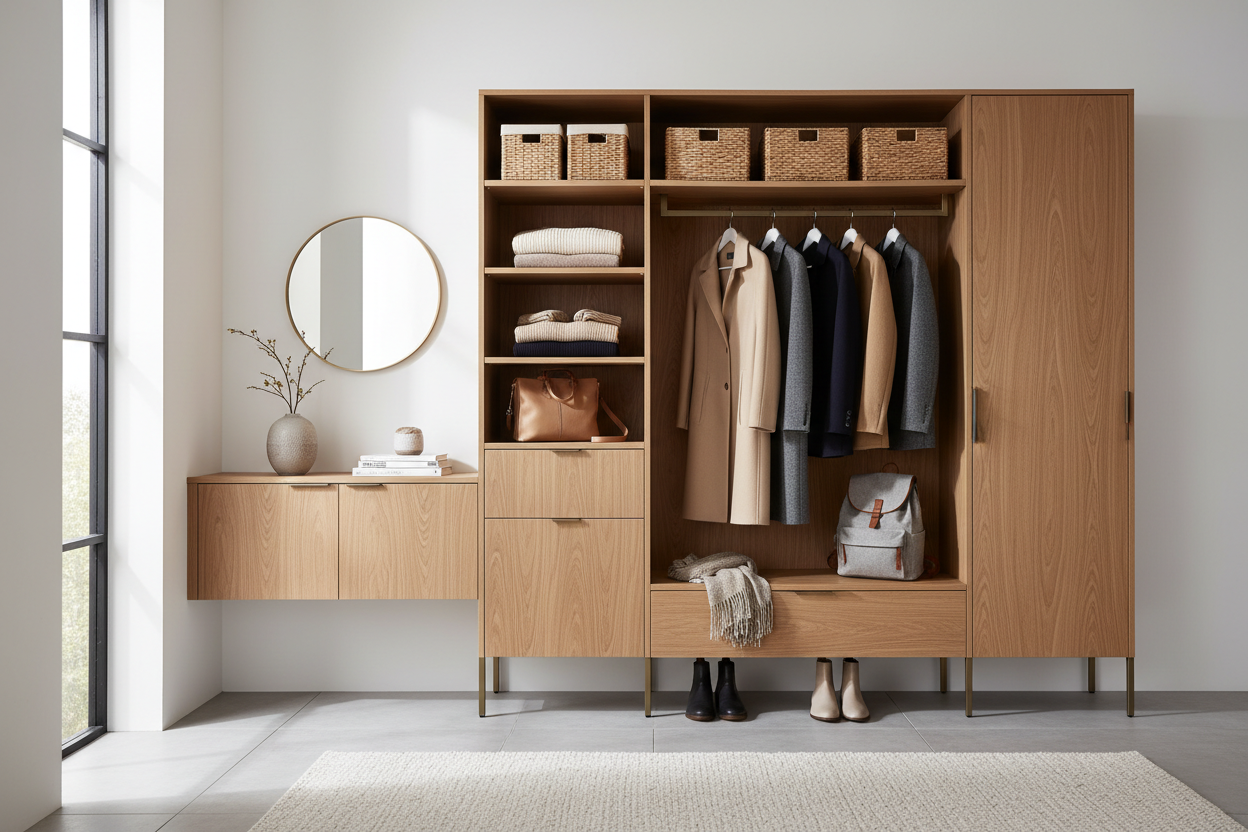
There is nothing quite as jarring as walking through a front door and immediately tripping over a pile of shoes or navigating a sea of draped jackets. The entryway sets the tone for the entire home, yet it is often the most neglected space regarding functional design. The solution isn't just hooks on a wall; it is a dedicated, architectural approach to coat cabinet & storage that balances visual weight with sheer utility.
Key Features to Look For
- Internal Depth: Aim for at least 24 inches (60cm) to ensure coat hangers sit perpendicular without crushing sleeves against the doors.
- Ventilation: Essential for an entryway coat cabinet with doors to prevent damp coats from developing a musty odor.
- Hardware Durability: Look for heavy-duty soft-close hinges that can support the weight of solid doors used frequently.
- Adjustable Shelving: Flexibility is key for changing seasons, allowing you to swap boot space for sandal storage.
Choosing the Right Material and Finish
When selecting an entryway cabinet for coats, the material dictates both longevity and aesthetic contribution. In high-traffic zones, I often steer clients away from high-gloss lacquers which highlight every fingerprint and scratch. Instead, consider textured melamine or hardwood veneers.
Solid wood offers unmatched durability and can be refinished, but be mindful of humidity changes near the front door, which can cause warping. For a built-in look, a high-quality MDF core with a durable laminate finish often provides the best stability against temperature fluctuations while offering a sleek, modern silhouette.
Space Planning and Ergonomics
The placement of your coat hanger cabinet requires precise spatial planning. The most common error is ignoring the "swing clearance." You need sufficient room to open the cabinet doors fully without blocking the flow of traffic or hitting the front door. If your hallway is narrow, consider sliding doors or a tambour unit to preserve the walkway.
Optimizing the Interior
A generic wardrobe interior rarely works for an entryway. A dedicated jacket storage cabinet should be zoned. Reserve the upper section for seasonal items like scarves and hats. The middle zone requires a sturdy rod for heavy wool coats—ensure this rod is mounted high enough that long trenches don't pool at the bottom. Finally, the lower zone needs distinct compartments for footwear to prevent dirt from migrating to the hemlines of your coats.
Visual Balance and Styling
An entryway coat storage cabinet can be a massive piece of furniture. To prevent it from feeling oppressive, consider the visual weight. If the cabinet goes floor-to-ceiling, paint it the same color as the walls to make it recede into the architecture. Alternatively, choosing a cabinet with legs rather than a solid plinth base increases the amount of visible floor, tricking the eye into perceiving the room as larger and airier.
Lessons from My Own Projects
I learned the hard way about the importance of hardware selection during a renovation for a family of five. We installed a beautiful, minimalist entryway coat cabinet with doors that utilized "push-to-open" latches to keep the look handle-free. It looked incredible in the photos.
However, three months later, I visited the client, and the mechanism was already sticky. Why? Because when you come home with groceries in one hand and a dog leash in the other, you end up kneeing the cabinet or pressing it with dirty hands to open it. The finish around the push-point was glossy with oils, and the spring mechanism was fatigued. Since then, I always advise clients to use substantial, easy-to-grip pulls for entryway joinery. It might interrupt the lines slightly, but the tactile experience and longevity are vastly superior.
Conclusion
Investing in the right storage solution is about reclaiming your peace of mind the moment you step indoors. By focusing on depth, durable materials, and smart internal configurations, you turn a cluttered drop zone into a curated arrival experience.
Frequently Asked Questions
What is the ideal depth for a coat cabinet?
Standard closet depth is 24 inches (approx. 60cm). If you have a shallow space (under 20 inches), you will need to use a front-facing pull-out rail rather than a standard hanging rod.
Should I choose open shelving or closed cabinets for the entryway?
Closed cabinets are generally superior for entryways to hide visual clutter and protect fabrics from dust and cooking odors. Open shelving requires constant curation to look tidy.
How do I prevent odors in a closed coat cabinet?
Ensure the back panel has ventilation slots or choose doors with louvers or rattan inserts. Additionally, never store damp raincoats inside immediately; let them air dry on an external hook first.

Leave a comment
This site is protected by hCaptcha and the hCaptcha Privacy Policy and Terms of Service apply.