



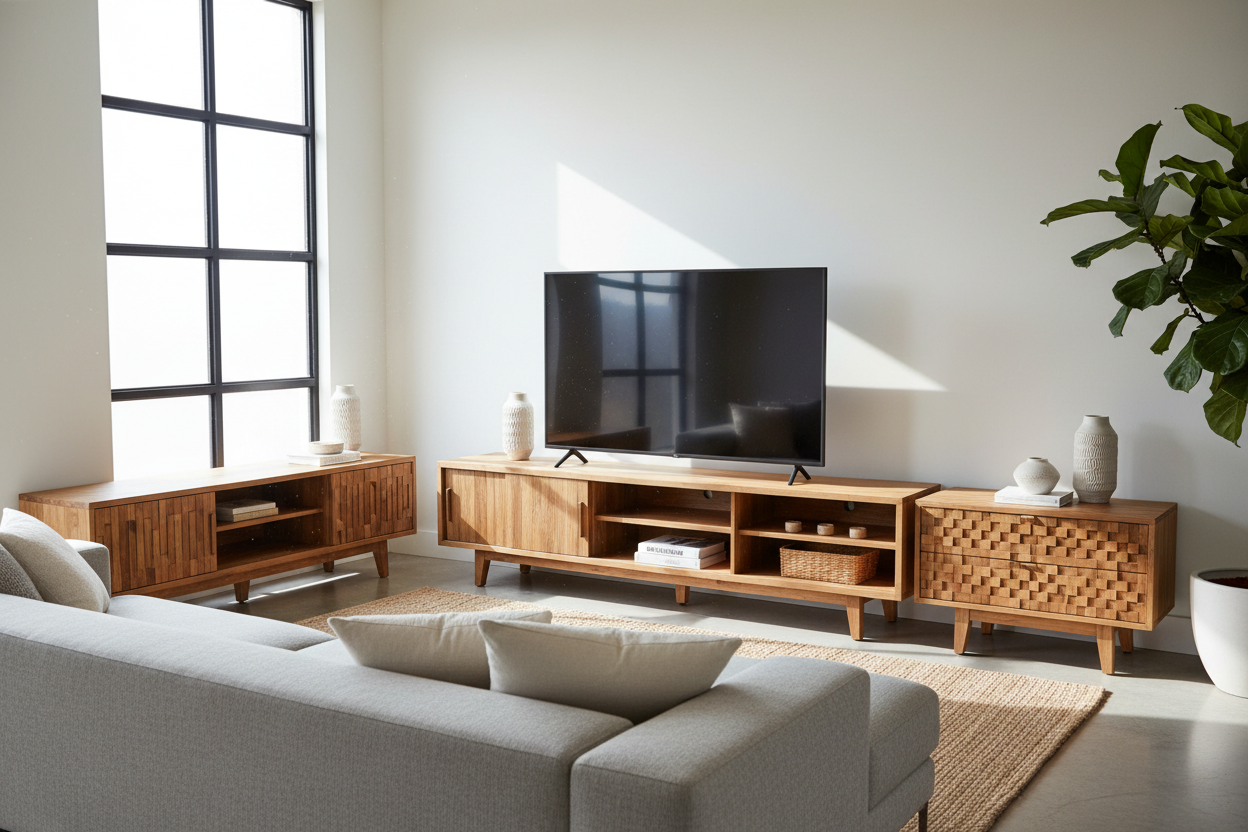
We have all seen it: a beautifully designed living room that completely loses its charm the moment your eyes hit the massive, cold, black rectangle of a television sitting on a lifeless MDF box. Finding a media center that anchors the room without feeling like a heavy afterthought is a common design dilemma. That is exactly why mango wood tv stands have become a staple in my residential projects. They inject immediate warmth, organic texture, and a sense of history into a space that is otherwise dominated by sleek electronics. But before you bring one into your home, you need to understand how this living, breathing material behaves.
In this guide, we will break down everything from sizing and styling to the honest maintenance realities of owning solid wood furniture, helping you decide if this is the right investment for your living space.
Key Takeaways
- Sustainability and Strength: Mango wood is a highly durable, sustainable hardwood with a dense grain, making a solid mango wood tv stand highly resistant to daily wear and tear.
- Visual Weight: Because the wood grain is naturally highly varied and active, these pieces carry significant visual weight. They work best when balanced with neutral, textured surroundings.
- Size Matters: Always choose a console that is at least 4 to 6 inches wider than your television on either side to maintain proper proportion.
- Climate Sensitivity: Like all solid woods, a mango wood tv cabinet will expand and contract. It requires consistent indoor humidity to prevent hairline cracks.
Material & Build Quality: Why Mango Wood?
When clients ask me for a durable, unique piece, I often steer them toward an entertainment unit mango wood design. Mango wood sits in the sweet spot of furniture materials. It is technically a hardwood, sharing a similar density to ash or oak, which means it resists the dents and scratches that plague softer woods like pine. More importantly, it is an eco-friendly byproduct; the trees are only harvested for timber once they stop producing fruit.
However, the most distinctive feature of a mango wood media console is its color variation. You will see streaks of golden brown, yellow, and even subtle pinks or greys. Because of this active grain, I always recommend looking for a piece with clean, simple lines. When shopping for a media console mango wood offers so much natural character that intricate carvings or overly fussy hardware can make the piece look visually cluttered.
Space Planning: Nailing the Proportions
The biggest mistake I see in North American living rooms is a massive television perched on a console that is far too small. This creates a top-heavy, unbalanced look. If you have a standard 55-inch TV, you need a mango wood tv stand 65 inch model at minimum. Upgrading to a 65-inch screen? You should be hunting for a mango wood tv stand 70-inch to give the screen room to breathe.
For open-concept suburban homes, a long, low mango wood media cabinet helps ground the wall without eating up vertical space. If you are working with a tricky layout or a smaller apartment, a mango wood corner tv stand is a brilliant way to utilize dead space while still keeping the television at a comfortable viewing angle. Always leave at least 36 inches of clearance between your mango media console and your coffee table to ensure a comfortable walkway.
Style & Coordination: Taming the Grain
Because a mango wood media stand is so visually active, it pairs beautifully with decor styles that lean on natural textures, like transitional, mid-century modern, or relaxed organic modern. Brands have modernized this material beautifully over the past few years. For instance, the sleek aesthetic of next opus mango furniture shows how minimalist silhouettes can balance the busy grain. A next opus mango tv unit often pairs the warm wood with matte black metal legs or hardware, which grounds the piece and gives it an industrial edge.
When placing a mango tv unit next to existing furniture, pay attention to undertones. Mango wood generally pulls warm. It looks fantastic against matte black, deep navy, or warm cream walls. Avoid pairing your mango wood tv table with woods that have strong red undertones, like cherry or mahogany, as they will clash aggressively.
Designer's Honest Take: The Reality of Solid Wood
A few years ago, I sourced a stunning, solid tv stand mango wood piece for a client's sunny Austin loft. The grain was absolute perfection, but I learned a hard lesson about this material: it breathes. Placed directly over a floor heating vent, the wood dried out and developed a hairline crack down the center door within six months.
While a mango wood entertainment center is incredibly durable, it demands climate control. If you live in a region with extreme seasonal shifts in humidity, you need to keep your mango wood stand away from direct heat sources, radiators, and prolonged direct sunlight. I now strictly advise my clients to treat their mango wood tv unit with a clear furniture wax twice a year to keep the wood nourished. It is a minor chore, but it is the difference between a piece that lasts five years and one that lasts fifty.
Frequently Asked Questions
How do I clean and maintain a mango tv stand?
Dust it regularly with a soft, dry microfiber cloth. Avoid harsh chemical cleaners or silicone-based polishes, which can strip the natural finish. For deep cleaning, use a slightly damp cloth followed immediately by a dry one, and apply a high-quality beeswax or clear furniture wax every six months.
Is a next opus mango piece heavy?
Yes. Whether you are looking at next opus mango or any other solid mango wood collection, expect the piece to be quite heavy. Mango is a dense hardwood, so you will likely need two people to safely move and position a large console.
What size mango wood tv console do I need for a 65-inch TV?
A 65-inch television is roughly 57 inches wide. To maintain proper visual weight and leave room for decorative items, your console should be at least 65 to 70 inches wide. Never buy a console that is narrower than the physical width of your television.

Leave a comment
This site is protected by hCaptcha and the hCaptcha Privacy Policy and Terms of Service apply.