

















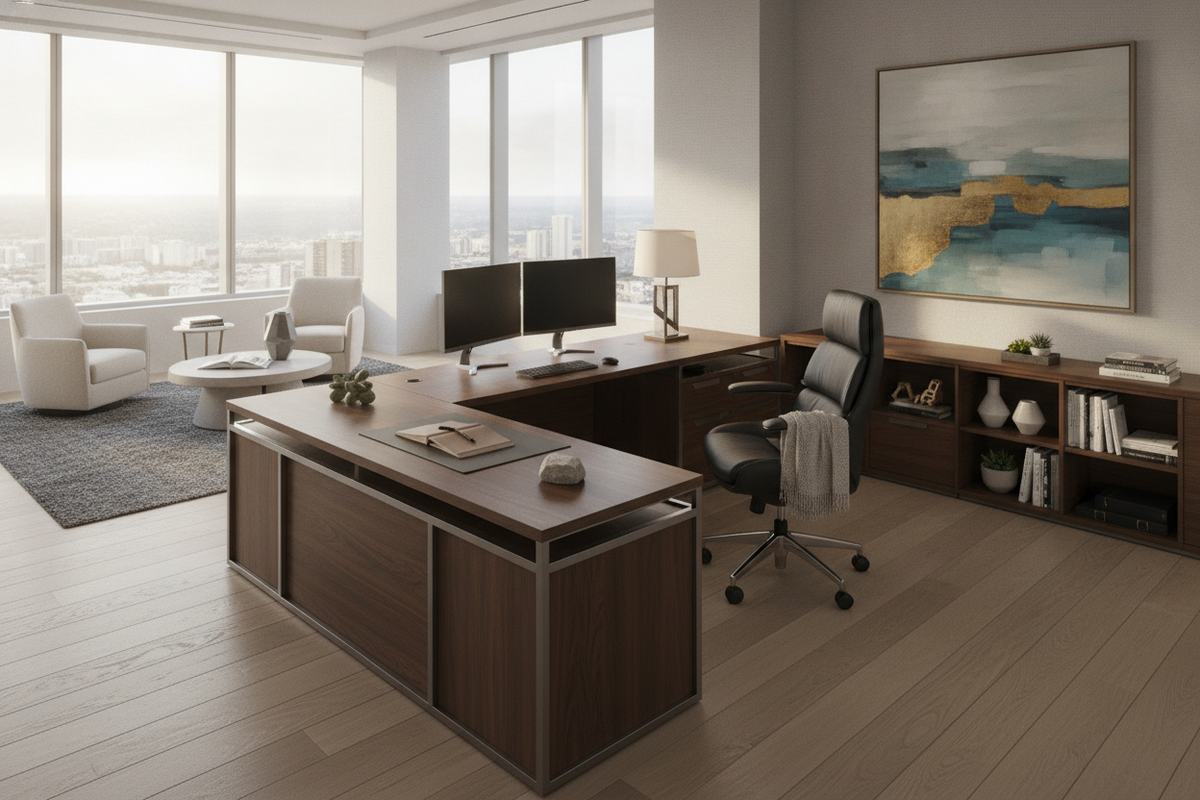
The Strategic Role of an L-Shaped Executive Office Desk
Choosing an l-shaped executive office desk anchors a professional workspace with architectural weight and practical utility. Unlike standard linear surfaces, an executive l desk creates an expansive workstation where high-priority computing and administrative tasks can exist side-by-side without friction.
Defining Workspace Authority and Ergonomic Reach
The primary advantage of an l-shaped executive desk is its natural ergonomic semi-circle. By sitting at the nexus of two adjoining surfaces, a professional can pivot smoothly between computer screens and physical paperwork. This continuous workspace minimizes reaching and repositioning throughout the workday. For open-plan suites and welcoming entry spaces, exploring designs such as a modern desk shaped product illustrates how an angular layout presents a formal, commanding facade while maintaining generous interior utility.
Key Differences Between Standard Desks and Executive L-Configurations
While standard writing desks prioritize minimalist footprints, an executive l-shaped office desk incorporates structural depth, integrated modesty panels, and built-in filing components. The return wing provides dedicated real estate for docking stations, printers, and collaborative discussions, keeping the primary desktop uncluttered for daily focus.
Dimensional Categories and Room Footprint Planning
Proper room planning ensures an executive suite feels balanced rather than overcrowded. Before selecting a configuration, measure the total room volume, door swing paths, and window placements.
Compact vs. Standard vs. Large Executive L Shaped Desk Scales
Executive suites generally fall into three footprint categories:
- Compact Executive Desks: Designed for dedicated home studies or secondary offices, focusing on clean corner alignment while retaining essential drawer storage.
- Standard Executive L-Desks: Suitable for standard corporate offices, offering full-depth primary desktops with extended return wings.
- Large Executive L Shaped Desk Suites: Expansive multi-piece stations designed for spacious executive corners, providing substantial desktop spreads and integrated credenzas.
When selecting expansive furnishings, coordinating your layout with an office storage collection helps harmonize surrounding book shelving, credenzas, and executive wall units.
Calculating Clearance Zones for Seating and Perimeter Traffic Flow
Maintaining adequate clearance behind the main work surface is vital for executive swivel chairs and reclining movement. Ensure sufficient walkway space between the desk perimeter and opposing walls or guest seating to preserve comfortable room circulation.
Layout Dynamics: Command Position vs. Perimeter Corner Fit
Where you orient an l-shaped modern executive desk changes the entire visual dynamics of the room.
Command Positioning for Client-Facing Commercial Suites
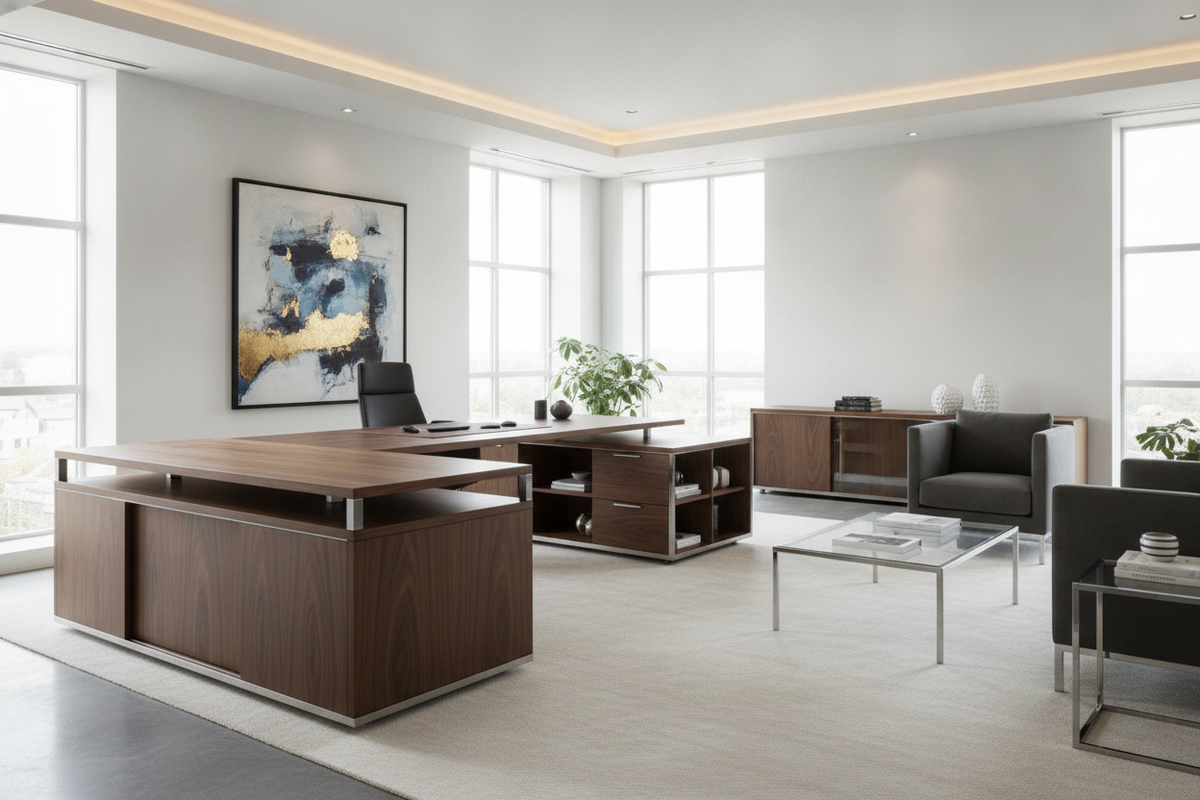
In the classic command position, the main desk surface faces outward toward the primary entryway, while the user sits with their back toward a solid wall or credenza. This arrangement establishes visual authority and privacy for sensitive documents. Integrated front modesty panels are essential here, concealing power cables and under-desk organization from visiting clients.
Corner and Wall-Aligned Configurations for Dedicated Home Offices
In residential workspaces or tighter commercial floor plans, aligning an executive l-shaped desk with drawers against perimeter walls maximizes central floor area. For smaller footprint needs, integrating a modern office desk product allows professionals to make efficient use of room corners without sacrificing surface utility.
Storage Architecture: Pedestals, Lateral Files, and Credenza Wings
Storage planning defines the day-to-day efficiency of any executive setup. An l-shaped executive desk with storage eliminates perimeter clutter by consolidating daily essentials directly beneath the work surface.
Executive L-Shaped Desk with Drawers: File Folders vs. Supply Trays
An l shaped executive desk with drawers generally pairs utility supply drawers with deep suspension file drawers. Top drawers accommodate office supplies, charging cables, and personal items, while lower drawers handle letter- and legal-sized filing folders. Reviewing a detailed desk drawers office guide helps maintain interior compartmentalization, preventing loose stationery from accumulating.
Return Wings with Open Shelving vs. Concealed Cabinetry
Under-desk storage can also feature credenza-style wings with sliding doors or adjustable shelving. Concealed cabinets hide computer towers and hard drives, while open shelving offers quick access to active project binders, reference books, and decorative accents.
Material Selection and Architectural Finishes
The materials chosen for an l-shaped pedestal desk determine both its visual weight and durability over years of daily service.
Rich Wood Tones and Modern Veneers for Traditional Presence
Warm walnut, dark espresso, and classic oak veneers deliver timeless sophistication suited for traditional boardrooms and legal practices. Multi-layered protective finishes resist heat and moisture from daily beverage placement, preserving wood grain character.
Minimalist Laminates, Glass Accents, and Metal Framing
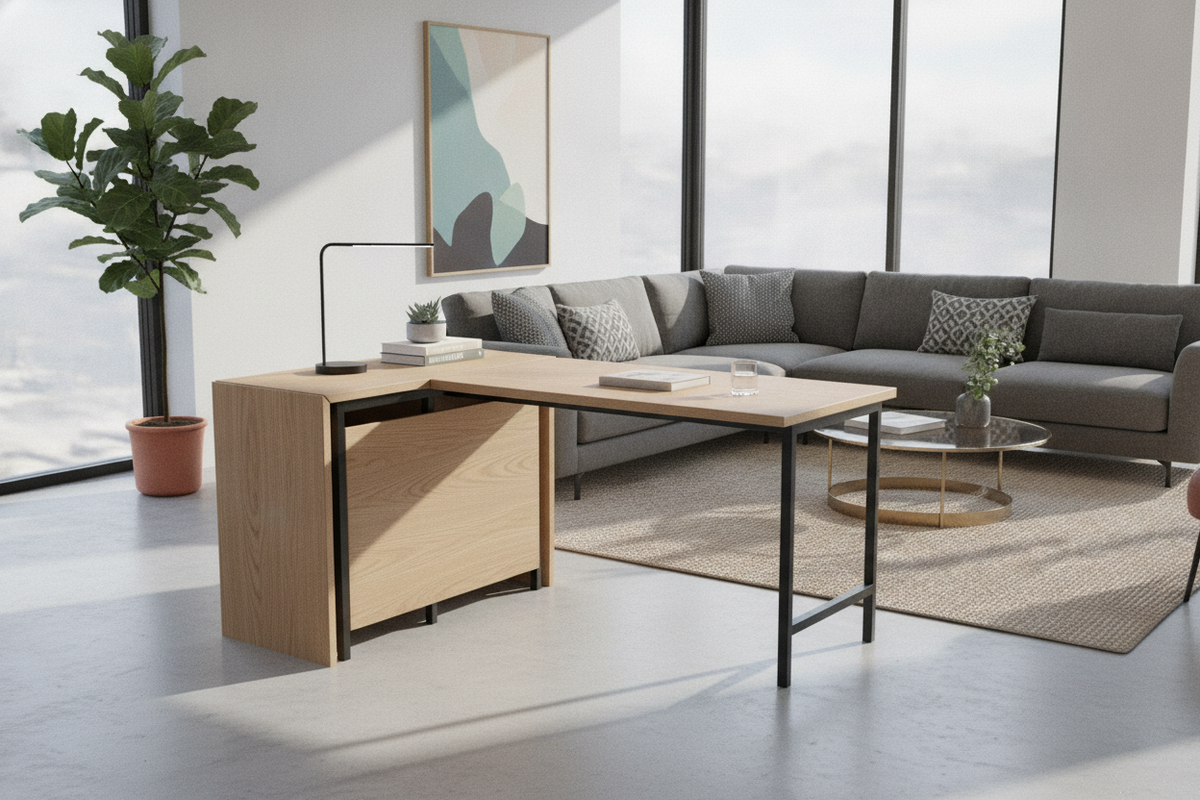
Contemporary executive environments often lean toward high-pressure engineered laminates paired with powder-coated steel frameworks. Matte charcoal, crisp white, and stone-textured finishes create an airy, architectural presence that pairs seamlessly with minimalist office interiors.
Dual-Wing Workflow Ergonomics and Cable Infrastructure
Structuring the dual surfaces of an executive l-shaped desk with drawers establishes clear boundaries between differing workflow modes.
Primary vs. Secondary Surface Zoning
Dedicate the deeper primary surface to primary monitors, keyboard trays, and daily administrative work. Use the return wing as a secondary zone for document review, video conferencing peripherals, or clean drafting space. Pairing this layout with insights from a desk storage office guide ensures that vertical storage accessories complement rather than clutter your horizontal wings.
Cable Channels, Grommets, and Power Strip Housing
An extensive large l shaped executive desk requires intentional wire management to avoid visible tangles. Look for models equipped with built-in desktop grommets, under-desk wire trays, and integrated modesty panel channels that route power and display cables discreetly toward wall outlets.
Assembly Logistics, Structural Bracing, and Long-Term Stability
Because executive desks incorporate multiple structural components, assembling and positioning them requires careful advance preparation.
Corner Joint Support and Reversible Return Considerations
Many modern designs feature non-handed, reversible return wings, allowing the L-junction to be assembled on either the left or right side depending on room architecture. Reinforced steel mending plates and internal corner brackets provide joint rigidity, preventing surface sagging across wide spans.
Floor Protection and Leveling Glide Adjustments
Heavy desk suites require stable footing, particularly when placed on plush commercial carpeting or uneven hardwood floors. Integrated adjustable leveling glides under each pedestal allow fine-tuning, ensuring flush desktop seams and seamless drawer glide alignment.

Leave a comment
This site is protected by hCaptcha and the hCaptcha Privacy Policy and Terms of Service apply.