

















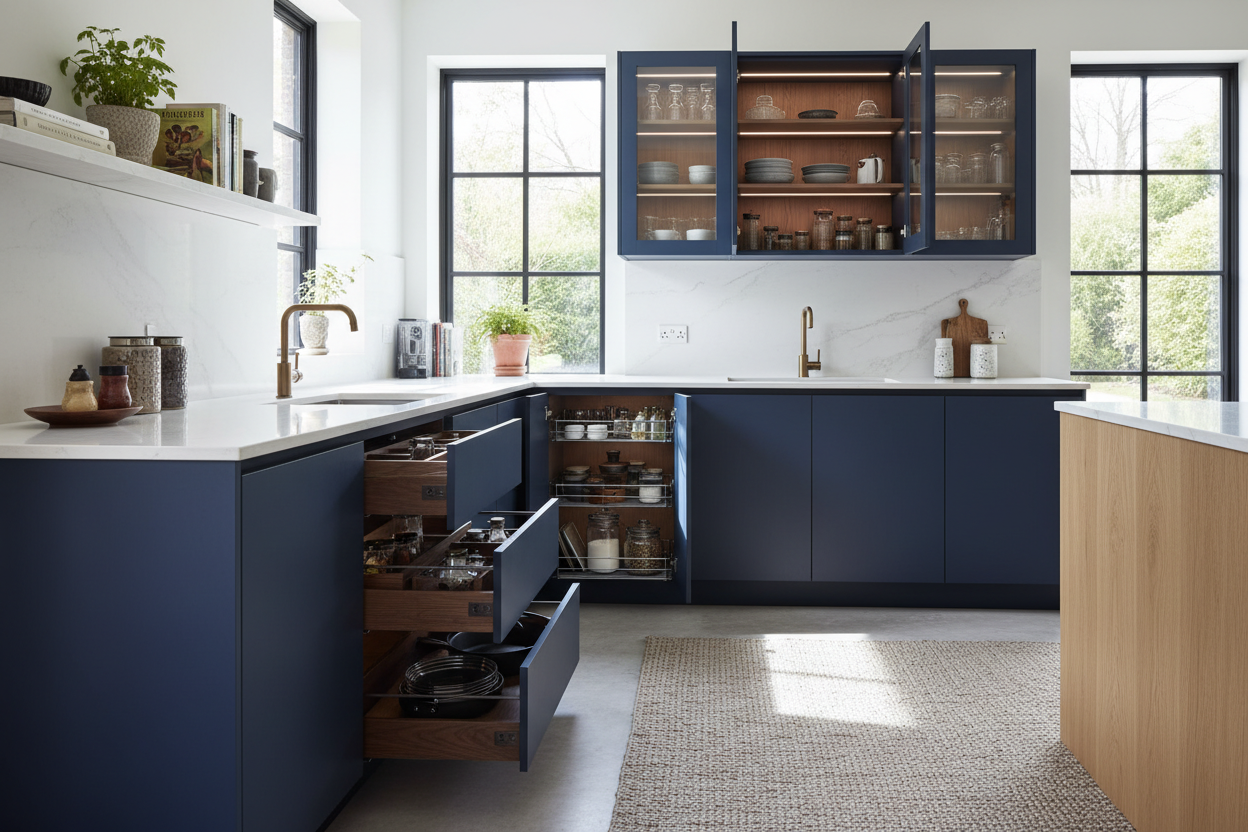
I remember walking into a client's kitchen last year—they'd just moved into their dream home and were showing me their 'upgraded' cabinets. They looked beautiful at first glance, but when I opened a drawer, it wobbled on its tracks. The doors didn't close flush. Within six months, they were calling me about sagging shelves and hardware that kept loosening. That's when I realized: most homeowners focus on how cabinets look, not how they actually function.
After furnishing over 200 homes, I've learned that the right kitchen cabinet features make the difference between a kitchen that works for you and one you constantly fight with. Let's talk about what actually matters beyond just storing your plates.
Quick Takeaways
- Look for full-overlay doors with 1/8-inch gaps—they're easier to clean and look more custom than partial overlay
- Drawer slides should support at least 75 pounds; test them with a stack of dinner plates in the showroom
- Soft-close mechanisms aren't just luxury—they prevent slamming that loosens joints over time
- Consider cabinet depth: standard 24-inch base cabinets work for most, but 27-inch gives you that extra storage for bulky appliances
The Foundation: Core Cabinet Features That Actually Matter
Let's start with what's behind the pretty finish. I always tell clients: your cabinets need to handle daily life—steam from the kettle, occasional spills, kids hanging on open doors. The box construction matters more than the door style.
Look for cabinets with at least 1/2-inch thick sides and backs—thinner materials warp over time, especially around sinks and dishwashers. Dovetail joints in drawers are worth the investment; they distribute weight better than stapled or glued joints. For frames, I prefer kiln-dried hardwood over particleboard—it's more stable when humidity changes.
One client learned this the hard way when their particleboard cabinet sides swelled after a slow leak under their sink. Solid wood or high-quality plywood would have survived with just some drying time. When you're finding quality cabinets without markup, ask about material thickness and joinery first.
Smart Storage Solutions: Beyond Basic Shelves
Here's where modern cabinets really shine. Basic shelves waste so much space—I've measured kitchens where 40% of cabinet volume was unusable because items got lost in the back.
Pull-out shelves are my non-negotiable for base cabinets. They let you access everything without crawling on the floor. For upper cabinets, consider adding a second, shallower shelf at the front—perfect for spices or small jars while keeping taller items accessible behind.
Corner cabinets are the biggest challenge. Lazy Susans work, but I prefer pull-out systems that bring the entire contents forward. One family I worked with gained 30% more usable storage just by switching their corner cabinet to a corner pantry cabinet solution with full-extension shelves.
Don't forget vertical space. Plate racks built into upper cabinets keep dishes organized and accessible. For baking sheets and cutting boards, vertical dividers in a base cabinet prevent the frustrating 'stack collapse' when you pull one item out.
Functional Hardware: The Details That Make Daily Use Effortless
This is where you feel the quality difference every single day. Hardware is the moving parts of your kitchen—it gets used hundreds of times weekly.
Hinges should be self-closing with at least a 90-degree opening. I specify concealed hinges for clean looks, but exposed hinges can be stronger if properly installed. For drawers, full-extension slides are essential—they let you see everything in the back. Test them: load a drawer with 50 pounds of cookbooks and open it smoothly. If it sags or sticks, move on.
Knobs versus pulls comes down to grip. For families with young children or older adults, pulls are easier to grasp. Place them consistently—I usually center pulls vertically on drawers and place knobs 2-3 inches from the corner on doors.
The soft-close feature isn't just quiet—it prevents damage from slamming. I've seen cabinets where the constant impact cracked the frame joints over years. It's worth the extra $15-20 per cabinet.
Specialized Cabinet Types: When to Consider Unique Solutions
Not every kitchen needs every specialty cabinet, but some can solve specific problems beautifully.
Appliance garages keep counters clear but require planning. They need to be at least 18 inches wide and 20 inches deep to fit a stand mixer. Include an electrical outlet inside and consider a tambour door that rolls up completely out of the way.
Buffet cabinets have become popular again as families entertain more at home. A good one has both closed storage for linens and open shelves for display. When choosing the perfect buffet cabinet, consider the height—standard counter height (36 inches) works for serving, but a taller piece can add storage. The buffet cabinet with storage options I used in a recent project had adjustable shelves that could accommodate everything from wine bottles to platters.
Tall pantry cabinets are ideal for small kitchens. Look for ones with adjustable shelving spaced 3-4 inches apart—this lets you customize for cereal boxes, canned goods, and cleaning supplies all in one unit.
Integrating Cabinets with Kitchen Flow
Cabinets don't exist in isolation. They need to work with your kitchen's traffic patterns and work zones.
Leave at least 42 inches between counter edges in main walkways—36 inches is the absolute minimum. For islands, consider which side faces the cooking area. I often put shallow cabinets (12-15 inches deep) on the back of islands—perfect for cookbooks or decorative items without taking up too much floor space.
Think about the 'kitchen triangle' (sink, stove, refrigerator) when planning cabinet placement. Your most-used items should be in cabinets along this path. For example, keep everyday dishes near the dishwasher, pots and pans near the stove.
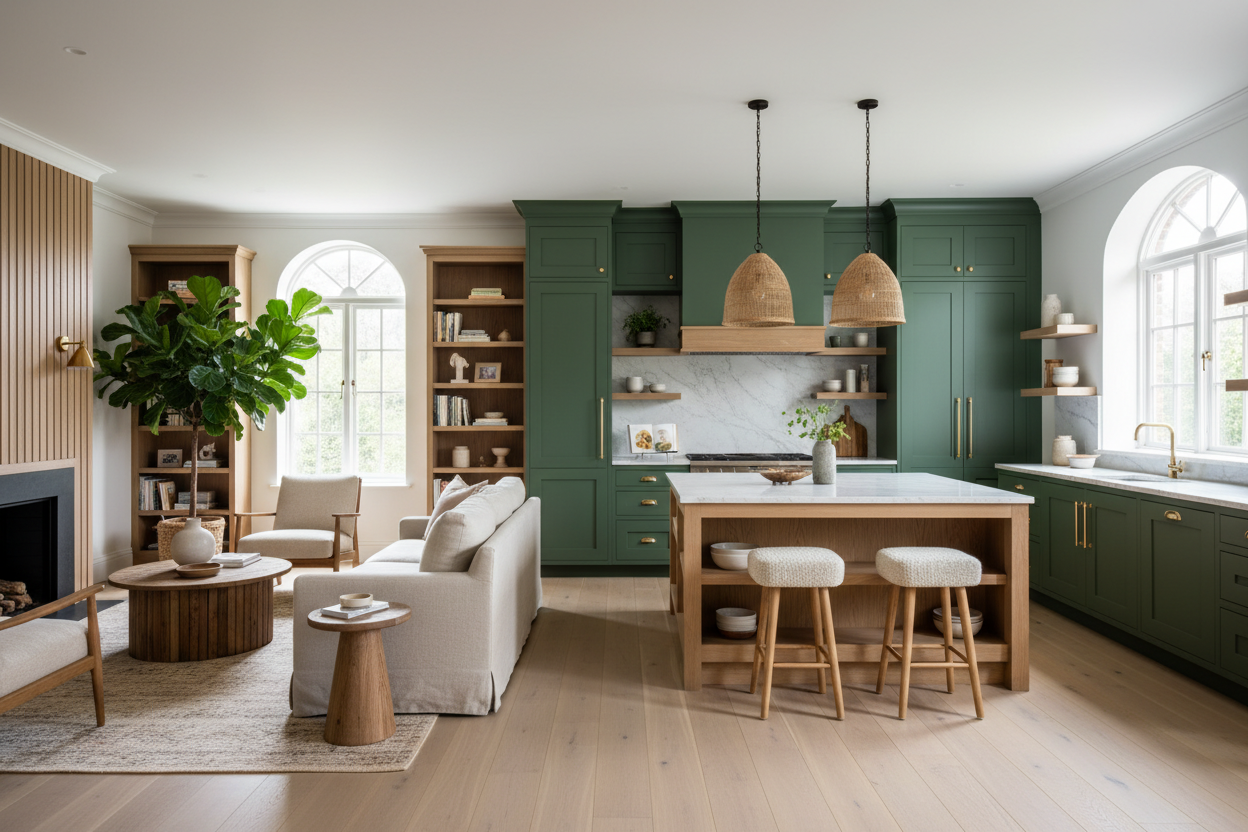
When working with kitchen island collections, I match the cabinet features to the island's purpose. A prep island needs drawers for utensils near the cutting board area. A serving island benefits from glass-front cabinets for display.
Making Your Decision: Prioritizing Features for Your Lifestyle
Here's my practical approach: list your kitchen's pain points first, then match cabinet features to solve them.
For avid cooks, prioritize full-extension drawers near the stove for pots and pans. Baking enthusiasts need flour and sugar bins with easy-access fronts. Families with young children should consider rounded corners on doors and drawers, and locking mechanisms for cleaning supplies.
Budget realistically. You don't need every feature in every cabinet. Put the expensive hardware and specialty storage where you'll use it most—usually near primary workstations. Standard shelves work fine for seasonal items or serving pieces you use occasionally.
Finally, think long-term. Will those glass doors show fingerprints constantly? Will open shelving collect grease near the stove? I once installed beautiful open shelves above a range for a client—they regretted it within months as everything became coated in cooking residue.
Frequently Asked Questions
What's the most overlooked cabinet feature?
Toe kicks—that space at the bottom of base cabinets. Standard 4-inch kicks work, but I prefer 5-6 inches for comfort when standing close to counters. Some manufacturers offer recessed toe kicks that give you another inch of standing room.
Are soft-close mechanisms worth maintaining?
Yes, but they do occasionally need adjustment. The hydraulic mechanism can wear out after 5-7 years of heavy use. They're usually replaceable without changing the entire hinge—keep the model number from your installation paperwork.
How do I prevent cabinets from looking dated in 5 years?
Avoid trendy colors on expensive cabinet boxes. Instead, use removable elements for style: changeable hardware, interior liners, or even door fronts if they're mounted with standard hinges. Shaker-style doors have remained popular for decades because they're simple and timeless.
Remember, good cabinets should work so well you don't notice them. They're the supporting cast to your cooking and gathering—not the diva demanding constant attention. Choose features that solve your actual problems, not just ones that look impressive in a showroom.


Leave a comment
This site is protected by hCaptcha and the hCaptcha Privacy Policy and Terms of Service apply.