

















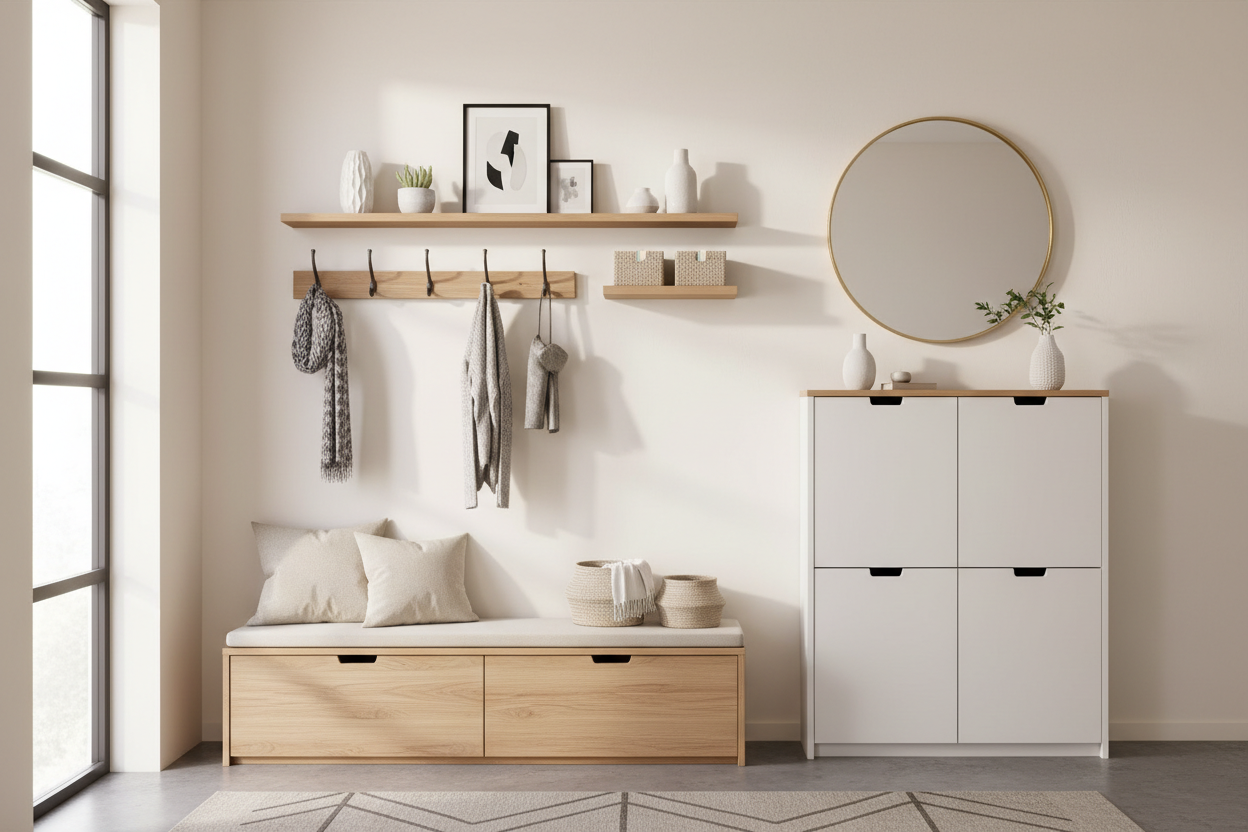
You walk through the front door, exhausted, and immediately trip over a stray sneaker. Your keys end up on the kitchen counter because there is nowhere else to put them, and your coat gets thrown over the back of the sofa. If this sounds familiar, your corridor isn't working for you. The hallway is the most transient space in a home, yet it often becomes a dumping ground for daily clutter. The solution isn't just buying a random rack; it is about implementing strategic hallway storage that respects the traffic flow while capturing the mess.
The most effective approach to organizing this space involves maximizing verticality and utilizing shallow-depth furniture. Since floor space is usually at a premium in corridors, moving storage up the walls and keeping furniture profiles under 12 inches deep allows you to maintain a clear walking path while housing everything from umbrellas to winter boots.
My Battle with the "Bowling Alley" Hallway
I learned the importance of dimensions the hard way. In my second apartment, the entryway was essentially a long, dark tunnel. Desperate to hide my shoes, I bought a standard 15-inch deep cabinet. It looked great online, but once installed, I had to physically turn my body sideways just to shimmy past it to get to the living room. It made the apartment feel claustrophobic immediately. I eventually scrapped it for a set of wall-mounted, tilt-out bins that were only 7 inches deep. The difference was night and day. That experience taught me that in a narrow thoroughfare, every inch of floor width you sacrifice changes the psychology of the entire home. You need storage for hallway areas that whispers rather than shouts.
Assessing Your Traffic Flow
Before buying a single hook or basket, grab a tape measure. A comfortable walkway requires at least 36 inches of clearance. If your hall is 40 inches wide, you only have 4 inches of play for floor-standing furniture. In that scenario, floor storage is out, and wall-mounted solutions are your only option.
Identify exactly what lands on the floor. Is it mail? Dog leashes? Backpacks? Specific problems require specific zones. If you install a shoe rack but the real issue is a mountain of coats, you haven't solved the problem. Map out the "drop zone" behavior of your household members to determine what kind of capacity you actually need.
The Shoe Pile Dilemma
Shoes are the primary antagonist in the battle for a clean entrance. They are bulky, dirty, and never seem to stay in pairs. For narrow spaces, tilt-out shoe cabinets are the gold standard. These units hide footwear vertically, keeping the profile incredibly slim against the wall. They also provide a surface on top for decorative items or a key tray.
If you have a bit more width, a storage bench offers a dual function. It gives you a place to sit while putting on shoes and hides the clutter underneath. Look for benches with sliding doors rather than hinged lids; you don't want to have to ask everyone to stand up every time you need to retrieve a pair of sandals.
Conquering Coats and Bags
Coat stands are classic, but they are also space hogs. A fully loaded coat stand can easily take up two feet of floor space and looks visually chaotic. Wall hooks are superior for maintaining an airy feel. Install them at varying heights: a higher row for adult coats and a lower row for kids' backpacks and jackets. This encourages younger family members to hang up their own gear rather than dropping it on the mat.
For a more polished look, consider a wall-mounted shelf with integrated hooks. The shelf provides a home for hats or decorative baskets, while the hooks handle the heavy lifting. If you have a recessed nook, that is the perfect spot to build in a tall, narrow cupboard. Closed storage for hallway coats is always preferable to open storage if the space allows, as it reduces visual noise.
Managing the Small Things: Keys, Mail, and Wallets
Small items cause the most mental clutter. Losing your keys adds unnecessary stress to the morning rush. A floating console table or a very narrow radiator cover can serve as the landing pad for these items. Because these pieces have no legs or very slender ones, they keep the floor visible, which tricks the eye into thinking the space is larger than it is.
Place a specific vessel on this surface. A bowl for keys and a vertical sorter for mail prevents the flat surface from becoming a junk drawer. If you lack space for a table, a wall organizer with a small pocket for mail and hooks for keys works just as well. The goal is to give every single item a dedicated parking spot the moment you walk inside.
Using Visual Tricks to Expand the Space
Storage doesn't have to be purely utilitarian. Integrating mirrors into your storage strategy can double the perceived size of the area. A large round mirror above a shoe cabinet reflects light and breaks up the boxy feeling of a corridor. Additionally, ensure your lighting is adequate. Dark corners encourage clutter because messes are harder to see. Good overhead lighting, combined with the right organizational furniture, makes the space feel intentional rather than accidental.
Choosing the Right Materials
Durability matters in high-traffic zones. Painted wood can chip if it's constantly bumped by school bags. Metal or stained wood often holds up better to daily abuse. If you use baskets for hats and gloves, opt for soft woven materials rather than wire, which can snag on scarves and knitwear. Washable rugs are also a must-have companion to your storage setup, catching the dirt before it gets tracked to the rest of the house.
Transforming this area requires a shift in perspective. It is not just a passage; it is the engine room of your daily departure and arrival. By prioritizing slim profiles, utilizing vertical space, and being realistic about your family's habits, you can build a hallway storage system that keeps your home running smoothly.
Frequently Asked Questions
How do I add storage to a hallway that is extremely narrow?
Focus entirely on wall-mounted solutions. Use slim tilt-out shoe cabinets that are less than 10 inches deep, and install coat hooks directly onto the wall rather than using bulky racks. High-floating shelves can also store seasonal items like hats and gloves without encroaching on walking space.
What is the best way to hide shoes in an entryway without a closet?
A closed shoe cabinet is the best option to reduce visual clutter. If you prefer a bench, choose one with cubbies and use matching baskets to slide in and conceal the shoes. This keeps the footwear accessible but out of sight.
How can I organize a hallway with no furniture space?
Utilize the back of the front door or any closet doors with over-the-door organizers for shoes and accessories. Additionally, install a pegboard system on the wall, which is extremely flat but allows you to hang keys, bags, and small baskets in a customizable layout.

Leave a comment
This site is protected by hCaptcha and the hCaptcha Privacy Policy and Terms of Service apply.