

















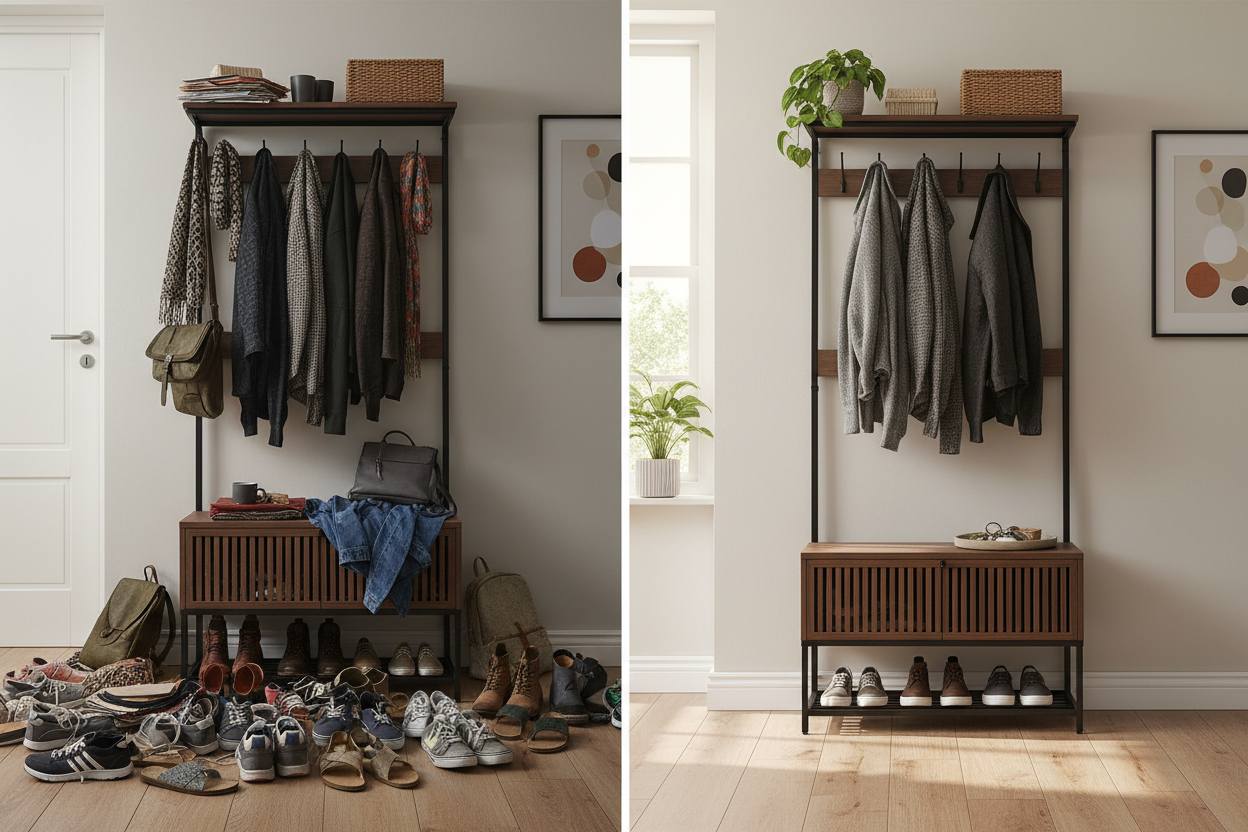
A functional entryway sets the tone for your entire home, but when square footage is limited, keeping that area organized feels like a constant battle against clutter. A small hall stand is often the missing puzzle piece. It serves as a dedicated landing strip for your daily essentials—keys, mail, coats, and shoes—allowing you to reclaim your floor space without requiring a full mudroom renovation. The key isn't just buying smaller furniture; it is choosing a piece that maximizes vertical utility while maintaining a slim footprint.
The Reality of Living with a Narrow Entryway
I learned the value of a properly sized hallway unit the hard way. My first apartment had an entrance corridor that was barely three feet wide. In a burst of optimism, I bought a beautiful, vintage oak coat rack that looked stunning in the store. Once I dragged it home, I realized my mistake. It projected too far from the wall, meaning I had to turn sideways just to squeeze past it with groceries. It wasn't a storage solution; it was an obstacle course.
That experience taught me that depth is the most critical dimension when shopping for a small hallway stand. While width matters for wall space, depth dictates flow. If a piece of furniture forces you to alter your walking path, it is too big, regardless of how cute it looks. You generally want to maintain at least 36 inches of clear walking path for a comfortable hallway, though in tight city apartments, you might squeeze by with 30 inches. If your stand eats into that clearance, the hallway will feel claustrophobic.
Choosing the Right Profile for Your Space
Not all stands are created equal, and the geometry of your specific hall dictates what will work best. You have a few primary categories to consider, each solving a different problem.
The Slim Console Table
If your primary clutter consists of mail, keys, and sunglasses, a narrow console table is your best bet. Look for designs that are 10 to 12 inches deep. These hug the wall tightly and provide a surface without blocking traffic. A console with a lower shelf offers a spot for a basket to hold shoes, keeping them off the floor but still accessible. The visual lightness of a console table—especially one with open legs—keeps the space feeling airy.
The Vertical Hall Tree
For households needing to hang heavy winter coats or backpacks, a vertical hall tree consolidates storage. However, in a small space, you must avoid the bulky, bench-style units that look like lockers. Instead, look for metal or wood frames that are open and skeletal. These provide the hooks and shelves you need without the visual weight of a solid box. A small hall stand in this style utilizes the height of the room, drawing the eye upward and making the ceiling feel higher.
Wall-Mounted Floating Units
Sometimes the best footprint is no footprint at all. If your floor space is non-existent, a floating shelf with hooks underneath acts as a stand without touching the ground. This is a brilliant hack for cleaning; you can sweep or vacuum right underneath it, and seeing the continuous floor makes the room appear larger.
Visual Weight and Material Selection
Size is not just about physical dimensions; it is also about visual weight. A solid dark wood cabinet will feel massive in a narrow corridor, even if the measurements are identical to a glass or acrylic table. When trying to make a small hallway stand blend in, opt for materials that reflect light or allow the eye to travel through them.
Glass tops, mirrored finishes, or thin metal frames are excellent choices. They perform their function without demanding attention. If you prefer the warmth of wood, lighter tones like ash, birch, or white oak tend to recede visually, whereas mahogany or walnut can dominate a small space. If you fall in love with a solid piece, consider painting it the same color as your wall. This monochromatic technique makes the furniture melt into the background, reducing visual clutter significantly.
Strategic Styling to Avoid the "Dump Zone" Effect
Once you have your stand in place, the challenge shifts to maintenance. A flat surface in an entryway is a magnet for junk. Without a system, your sleek new furniture will disappear under a mountain of flyers and receipts within a week. The trick is to define zones on the surface.
Place a small tray or bowl specifically for keys and wallets. This sets a boundary: items go in the bowl, not spread across the table. Use a letter sorter for mail so it stands vertically rather than piling up horizontally. If your stand has a lower shelf, use uniform baskets to hide shoes or scarves. Uniformity is calming to the eye. Three mismatched bags look messy; three identical wicker baskets look like a design choice.
Adding a mirror above your small hallway stand is one of the oldest design tricks in the book, and for good reason. It bounces light around a usually dark part of the house and allows for a final outfit check before you leave. Ensure the mirror is scaled correctly to the stand; it should generally be about two-thirds the width of the furniture below it to feel balanced.
Creative Hacks for Awkward Corners
Sometimes a standard linear stand just won't fit. You might be dealing with a corner right behind the door or a weird architectural nook. In these instances, you have to get creative. A triangular corner stand can utilize dead space that would otherwise be empty. These are often sold as bathroom storage units or plant stands, but they work perfectly for holding a bowl of keys and a pair of shoes.
Another option is repurposing items not meant for the hallway. A narrow shoe cabinet (the kind with tilting drawers) is often only 7 to 9 inches deep. Even if you don't have twenty pairs of shoes, these cabinets are perfect for stashing gloves, dog leashes, and umbrellas while providing a shelf on top. They are perhaps the ultimate space-saver for tight entries.
Lighting Your Entryway Station
A dark hallway makes everything feel smaller and more cramped. If your stand is in a dim corner, it becomes a black hole where items get lost. If you don't have an outlet nearby for a table lamp, consider a battery-operated sconce or a small rechargeable lamp. Illuminating the area makes it a focal point and creates a welcoming atmosphere the moment you walk through the door. It turns the furniture from a utility object into a styled vignette.
Making the Final Decision
Before you click "buy," get out some painter's tape. Mark the outline of the potential furniture on your floor. Leave it there for a day or two. Walk past it, carry groceries through the space, and open the door fully. If the tape creates a bottleneck, the furniture will too. This simple step saves you the hassle of returns and ensures your small hall stand enhances your life rather than complicating it. Your entryway is the handshake of your home; even a tiny one deserves to be firm, welcoming, and organized.
Frequently Asked Questions
How deep should a hallway stand be for a narrow corridor?
Ideally, aim for a depth between 10 and 12 inches for very narrow spaces. This allows enough surface area for essentials like keys and mail without encroaching on the walking path. If you have a standard width hallway, you can go up to 15 inches, but always measure your clearance first.
Can I use a shoe cabinet as a hall stand?
Absolutely. Shoe cabinets with tilting drawers are excellent alternatives because they are designed to be extremely slim (often under 10 inches deep). They hide clutter effectively and provide a top surface for decor and daily necessities, acting as a functional console table.
How do I stop my hall stand from looking cluttered?
Use containment vessels like trays, bowls, and baskets to group loose items. When every item has a designated "container" on the stand, the surface looks intentional rather than messy. Additionally, try to keep only the current season's items on the stand and store off-season gear elsewhere.


Leave a comment
This site is protected by hCaptcha and the hCaptcha Privacy Policy and Terms of Service apply.