








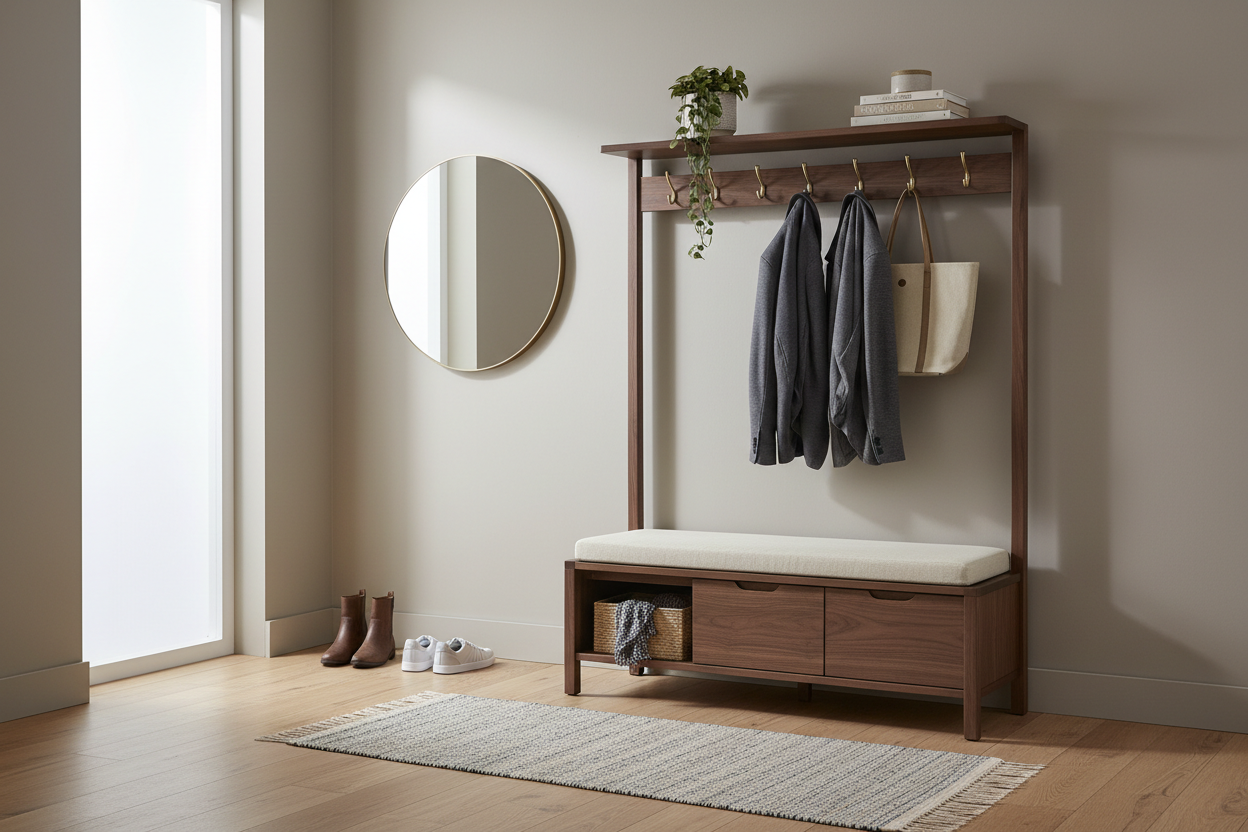
You walk through the front door, and the first thing you encounter is a chaotic pile of shoes, a coat thrown over a chair, and keys missing in action. If this sounds familiar, your home lacks a dedicated landing zone. A hall stand is the most efficient solution for this common problem, serving as a multifunctional piece of furniture that anchors your entryway. It combines a coat rack, shoe storage, and often a bench or mirror into a single vertical unit, designed to streamline your departure and arrival routine without requiring a massive mudroom.
Choosing the right unit goes beyond just picking a wood finish that matches your floor. It requires understanding how your household actually moves through the space. A family of four has vastly different volume needs compared to a couple living in a downtown apartment. The goal is to maximize vertical storage while keeping the floor footprint minimal, ensuring the hallway remains passable and welcoming.
My Battle with the Leaning Tower of Coats
I learned the hard way that not all hallway stands are created equal. In my first apartment, I bought a budget-friendly metal stand that looked sleek and modern in the photos. It had a tiny footprint, which seemed perfect for my narrow corridor. However, I failed to account for the weight distribution of heavy winter gear. About two weeks into January, I came home to find the entire unit tipped over, burying my sneakers in wool coats. The base wasn't weighted enough to handle the load on the top hooks.
That experience shifted my perspective entirely. Now, when I evaluate entryway furniture, I look at the base stability and wall-anchoring capabilities before I even consider the style. You need a piece that works for you, not one that you have to tiptoe around.
Assessing Your Traffic Flow and Space
Before buying anything, grab a tape measure. The depth of the unit is usually the biggest constraint. In a standard corridor, you need at least 36 inches of walking clearance to prevent the space from feeling claustrophobic. If your hall stand is too deep, you will inevitably bump your hip against it when carrying groceries.
For tight spaces, look for units with a depth of 12 to 15 inches. These slim profiles usually feature flat hooks rather than protruding ones and may utilize tilted shoe drawers to save space. If you have an open foyer, you have the luxury of choosing wider, deeper stands that include a bench for sitting.
The Bench Factor
Deciding whether you need a seating element is crucial. A bench integrated into the stand encourages people to take their shoes off immediately upon entering, which keeps the rest of your house cleaner. If you have children or elderly family members, a sturdy place to sit while putting on footwear is practically a necessity. However, verify the weight limit. Some decorative stands are not built to support an adult's weight and are merely shelves disguised as seats.
Material Durability and Maintenance
Your entryway sees the most abuse of any area in the home. Wet umbrellas, muddy boots, and abrasive zippers all come into contact with this furniture. Solid wood or metal frames offer the best longevity. Metal stands, particularly those with powder coating, resist rust and scratches well, making them ideal for industrial or modern aesthetics.
Engineered wood or MDF can be a cost-effective choice, but pay close attention to the veneer quality. If water from a rain-soaked jacket seeps into the edges of cheap laminate, the material will swell and warp. If you choose a wood composite, ensure the area where wet shoes sit is protected by a plastic tray or a metal grate.
Maximizing Storage Potential
The best hallway stands act as a command center. You aren't just hanging a jacket; you are organizing a lifestyle. Look for features that extend utility:
- High and Low Hooks: Double rows of hooks accommodate long coats on top and bags or kids' jackets below.
- Top Shelving: This is often dead space. A shelf above the hooks is perfect for baskets holding winter gloves, hats, or rarely used items.
- Shoe Clearance: Ensure the bottom rack is high enough off the ground to slide a vacuum underneath, or that the shelves are adjustable for boots.
If the stand lacks small storage, you can easily modify it. Adding a magnetic strip for keys or hanging a small wire basket on a side hook can prevent small items from getting lost in the shuffle.
Styling Your Entryway Anchor
Once the functional aspects are covered, the aesthetic contribution matters. This furniture sets the tone for your entire home. A hall stand with a built-in mirror does double duty: it allows for a final outfit check before leaving and reflects light to make a cramped hallway appear larger.
Don't let the stand become a dumping ground. To keep it looking curated, limit the number of active coats to the ones you use daily. Rotate seasonal items to a closet. A small potted plant on the top shelf or a dedicated tray for mail can soften the look of the unit, transforming it from a utility rack into a piece of decor.
Installation and Safety
Regardless of how heavy the unit feels, anchoring it to the wall is non-negotiable. The center of gravity on these stands shifts dramatically when loaded with heavy coats. Most reputable manufacturers include anti-tip hardware. Locate a stud in your wall and secure the top of the frame. This prevents the wobbling issue I experienced and ensures safety for pets and children who might pull on hanging items.
FAQ
Can I put a hall stand in a narrow hallway?
Yes, but you must choose a slim-profile model. Look for stands with a depth of 12 inches or less, often described as "space-saving" or "slimline." These units typically use vertical height for storage rather than floor depth to keep the walkway clear.
What is the difference between a hall tree and a hall stand?
The terms are often used interchangeably, but a hall tree traditionally refers to a standalone pole with hooks, while a hall stand is a larger furniture unit that usually combines a bench, mirror, and storage compartments. Hall stands offer more organization but require more wall space.
How much weight can a hallway stand bench hold?
This varies significantly by material and construction quality. A standard particle board unit might hold 150-200 lbs, while a stand with a reinforced metal or solid wood frame can often support 250-300 lbs or more. Always check the manufacturer's specifications before sitting.

Leave a comment
This site is protected by hCaptcha and the hCaptcha Privacy Policy and Terms of Service apply.