

















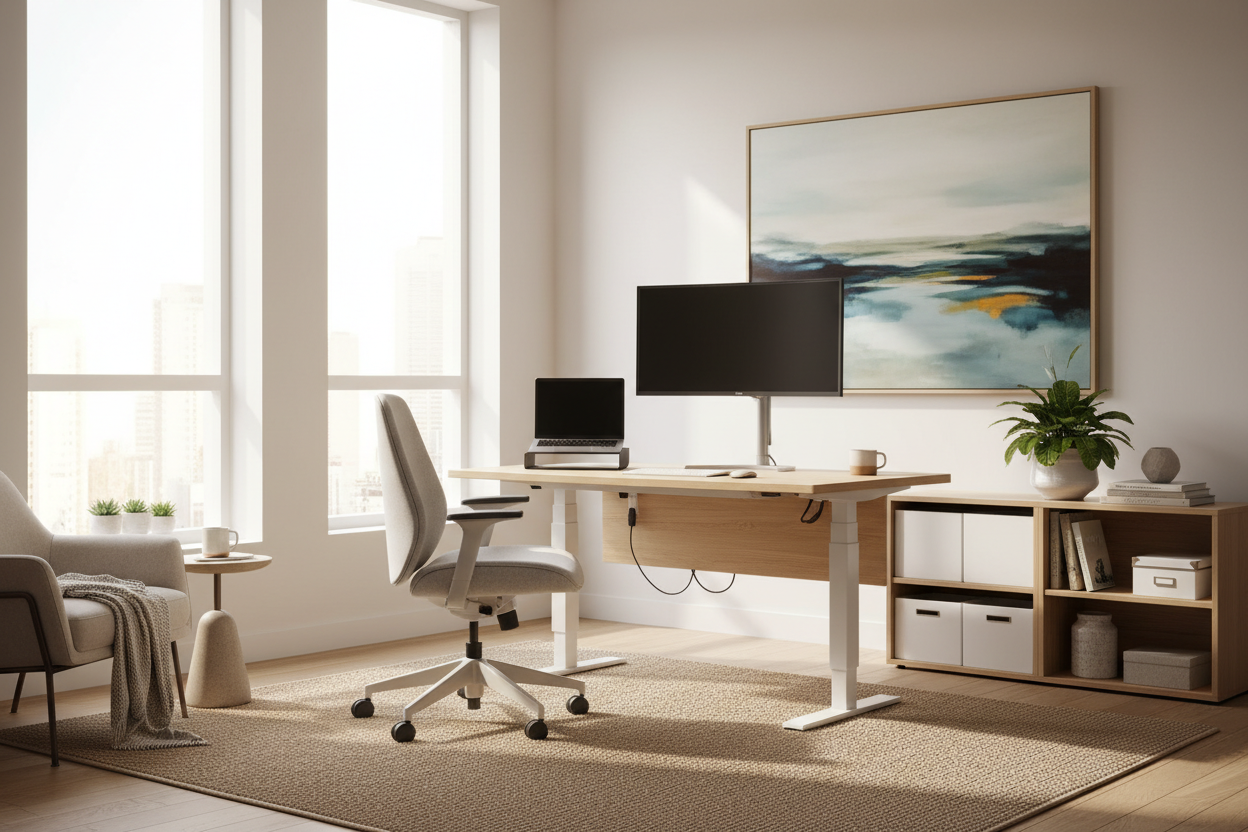
We have all experienced the initial allure of the remote lifestyle, only to find ourselves three weeks later with back pain from a dining chair and eye strain from poor lighting. As an interior designer, I frequently field the question: is working from home good for long-term productivity and well-being? The answer rarely lies in the job description itself, but rather in the physical environment you inhabit. If your space is designed with intention, the answer is a resounding yes. If not, it can be a recipe for physical fatigue and mental clutter.
Key Features for a Successful WFH Setup
Before investing in new furniture, consider these core design elements that determine whether your home office supports or hinders your workflow:
- Ergonomics First: A chair must offer adjustable lumbar support and seat depth, not just aesthetic appeal.
- Lighting Layers: Combine ambient overhead lighting with focused, adjustable task lighting (ideally 4000K for focus).
- Spatial Zoning: Use rugs or shelving to create a psychological boundary between "living" and "working."
- Acoustic Control: Soft textiles like curtains and upholstered furniture absorb sound and reduce echo during calls.
The Ergonomic Equation: Comfort Equals Productivity
When clients ask, "is working from home better than the corporate office?" I tell them it depends entirely on the chair. In a corporate setting, commercial-grade furniture is standard. At home, people often prioritize style over substance, leading to discomfort. To ensure working from home is the best experience possible, you need a task chair that supports the natural S-curve of your spine.
Look for mechanism quality. A good chair should have a synchro-tilt mechanism, allowing the seat and back to move together. This promotes dynamic sitting, which keeps blood flowing. If you are debating should i work from home permanently, treat your chair as a medical device, not just a piece of decor.
Visual Zoning and Mental Boundaries
One reason why is work from home better for some but stressful for others is the lack of separation. In interior design, we call this "zoning." If your laptop sits on the coffee table, you never truly leave work. You need a dedicated silhouette for your workspace.
Creating a Focal Point
Position your desk to command the room—ideally facing the door or a window (the "power position"). This reduces subconscious anxiety. If you are tight on space, use a secretary desk that closes up at the end of the day. This physical act of closing the desk signals to your brain that the workday is done, reinforcing why work from home is good for work-life balance when managed correctly.
The Aesthetic of Focus: Materials and Lighting
Do people like working from home in a sterile white box? Rarely. The advantage of a home office is the ability to curate materials that spark joy and focus. I recommend solid wood desks like walnut or oak over veneers; the tactile warmth of natural wood grounds a space and adds a sense of permanence.
Furthermore, lighting is critical. Avoid the harsh glare of cool-white LEDs found in cubicles. Instead, opt for high CRI (Color Rendering Index) bulbs that mimic natural daylight. This reduces eye strain and makes the environment feel more organic. This level of customization is exactly why is working from home good—you control the sensory input.
My Personal Take on is working from home good
I want to share a mistake I made early in my own renovation. I fell in love with a vintage mid-century modern bucket chair. It was upholstered in a stunning cognac leather and looked incredible in photos. I convinced myself that the aesthetic value outweighed the lack of adjustments. I was wrong.
After two weeks, I developed a nagging pain in my right shoulder because the armrests were fixed and too high for my keyboard tray. I realized that the leather, while beautiful, wasn't breathable, making long design sessions uncomfortable in the summer. I had to swap it for a high-performance mesh task chair. The lesson? Is work from home better with beautiful furniture? Yes, but never sacrifice biomechanics for a photo-ready look. Now, I drape a sheepskin throw over the mesh chair when I'm not working to soften the look, blending function with my home's aesthetic.
Conclusion
So, is working from home good? It is an opportunity to build an environment that caters specifically to your body and your taste. By investing in ergonomic furniture, proper lighting, and thoughtful zoning, you elevate a simple necessity into a luxury experience. Don't just work from home; design a space that works for you.
Frequently Asked Questions
How do I fit a workspace in a small living room?
Look for "floating" wall-mounted desks or console tables with a depth of at least 20 inches. These keep the floor visible, maintaining the illusion of space while providing a functional surface.
Is a standing desk worth the investment?
Absolutely. A sit-stand desk changes your posture throughout the day. Look for dual-motor frames for stability and programmable memory settings so you don't have to fiddle with the height every time.
What is the best color for a home office?
Greens and blues are excellent for focus and calmness, reducing visual fatigue. If you do creative work, warmer terracotta tones can stimulate energy. Avoid stark white, which can cause glare.


Leave a comment
This site is protected by hCaptcha and the hCaptcha Privacy Policy and Terms of Service apply.