

















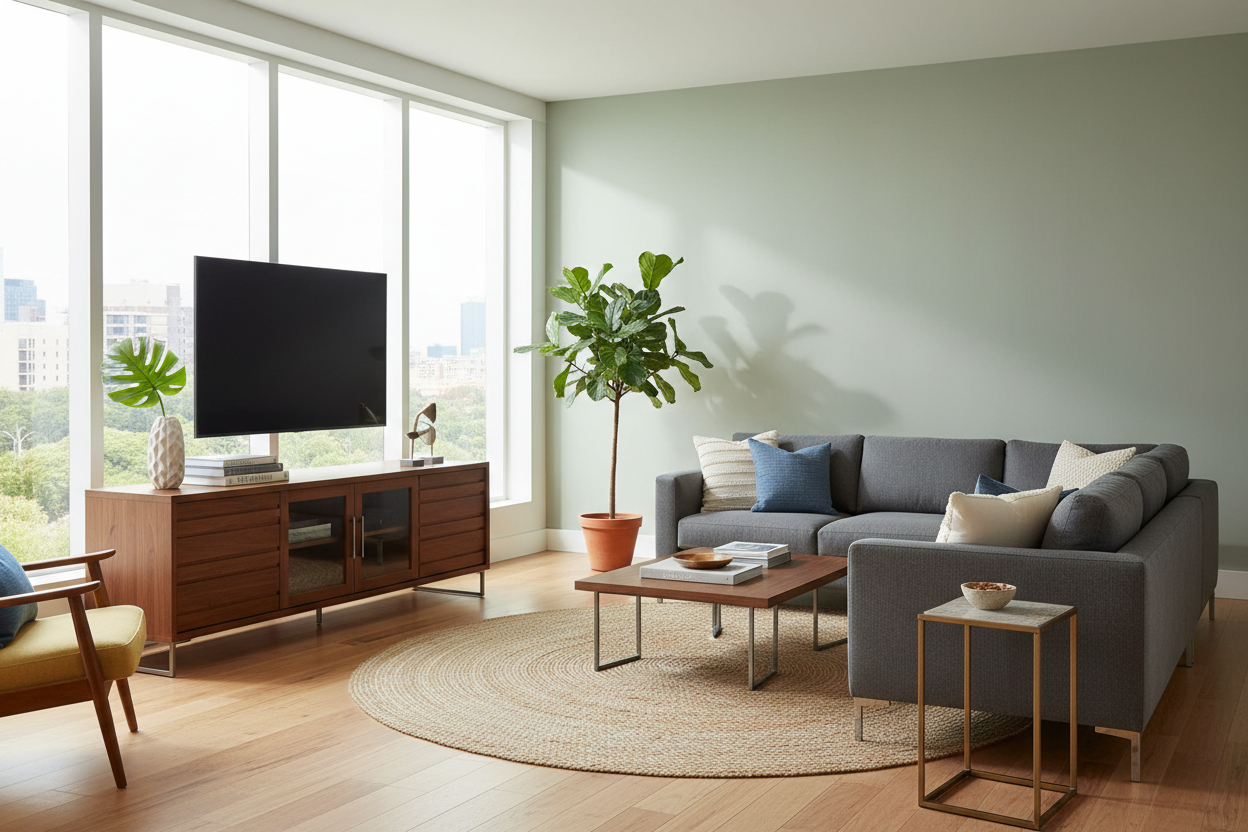
Finding the intersection between high-end audiophile functionality and striking interior design is rarely easy. Most media furniture leans too heavily in one direction: either it is an ugly, utilitarian rack that keeps components cool but ruins the room's aesthetic, or it is a beautiful credenza that cooks your electronics to death. The BDI Corridor collection, designed by Matthew Weatherly, effectively ends this compromise. It stands as one of the few furniture lines that prioritizes airflow and acoustic transparency just as highly as its architectural, mid-century modern visual appeal.
The collection is defined by its louvered hardwood doors and satin-etched glass tops, creating a look that is both retro and undeniably contemporary. Whether you are looking to house a complex home theater system or simply want a statement piece for the living room, understanding the specific engineering behind this line explains why it commands such a premium price point.
Living with the Corridor: A Hands-On Perspective
My first interaction with the BDI Corridor media console wasn't in a showroom, but during a setup for a home theater overhaul. The immediate weight of the unit is the first thing you notice; this is not flat-pack furniture that wobbles when you sneeze. It arrives fully assembled, aside from the legs, which speaks to the build quality.
The real revelation, however, happened when installing a high-output AV receiver. In almost any other cabinet, I would have been reaching for a hole saw to drill extra ventilation ports in the back panel. With the Corridor, the flow-through ventilation is built into the chassis. The bottom panels have generous openings, and the back panels slide off effortlessly for wiring, then slide back on to keep things looking clean. The louvered doors allowed the receiver's display to be seen and the remote signals to pass through without opening the cabinet. It turned a usually frustrating cable-management nightmare into a surprisingly satisfying afternoon project.
Design Language and Aesthetic Appeal
The visual identity of corridor furniture is rooted in horizontal lines. The slats on the doors run continuously across the face of the cabinet, creating a rhythmic, textured appearance. This design choice does more than just look good; it visually lowers the center of gravity of the piece, making your television screen feel more grounded and less dominant in the room.
BDI offers these pieces in several finishes, typically Chocolate Stained Walnut, Charcoal Stained Ash, and Natural Walnut. The wood veneers are applied to sturdy substrates, ensuring the unit doesn't warp over time—a common issue with solid wood when exposed to the heat of electronics. Topping the unit is a sheet of satin-etched glass. This is a brilliant design choice because it is incredibly resistant to fingerprints and scratches compared to standard glossy glass or wood tops. If you place keys or a remote on top, you don't get that hollow clatter; the glass feels substantial and dampened.
Acoustic and Remote Control Functionality
The primary selling point for the BDI Corridor TV stand over a standard credenza is the louvered door design. If you hide a soundbar or a center channel speaker inside a normal cabinet, the sound is muffled and muddy. The Corridor's slats are spaced specifically to allow sound waves to travel through with minimal diffraction. While a dedicated audiophile might still prefer the speaker completely unblocked, this is the closest you can get to open-air sound while keeping the speaker hidden.
Furthermore, standard infrared (IR) remote signals pass easily through the gaps. This eliminates the need for those ugly IR repeater systems where you have to stick a tiny sensor on the outside of your cabinet. You can keep the doors closed, point your remote at the corridor media console, and the gear inside responds instantly. This seamless integration of tech and wood is what separates BDI furniture corridor pieces from generic knockoffs.
Configurations for Every Space
The collection has expanded significantly beyond the original four-door media console. The bdiusa corridor lineup now includes a variety of shapes to fit different room sizes and functional needs. The classic model, the 8179, is a quad-width unit perfect for televisions up to 85 inches. For smaller apartments or secondary viewing rooms, the 8177 provides a narrower, triple-width profile.
Beyond the living room, the design language extends to the corridor cabinet for storage and the highly popular Corridor Bar. The bar features the same louvered look but opens to reveal wine racking, glass storage, and a mixing surface. There are also audio towers specifically designed to hold turntables and vinyl records, proving that BDI understands the resurgence of analog audio. This modularity allows you to furnish an open-concept living and dining area with matching pieces that don't look overly "matchy-matchy" because the texture is so organic.
Hidden Mobility and Cable Management
One feature that often goes unnoticed until you own the piece is the hidden wheel system. The steel legs that elevate the corridor media cabinet are actually just for aesthetics and stability; hidden inside the base are high-quality wheels. This allows you to roll the fully loaded cabinet away from the wall with one hand.
If you have ever tried to add a new HDMI cable to the back of a TV stand that is pushed against a wall, you know the struggle. You typically have to unload the components to lighten it, then drag it across the floor, risking scratches. With the corridor TV stand, you simply roll it out, pop off the back panels, manage your wires using the included velcro straps, and roll it back. The wheels lock to ensure it stays put once you are done.
Is the Investment Justified?
The price tag attached to a BDI Corridor piece is high, often costing more than the television sitting on top of it. However, the value proposition lies in longevity. Cheap particle board furniture often sags under the weight of heavy amplifiers or large TVs within a year or two. The structural steel frame integrated into the Corridor collection prevents this entirely.
Additionally, the resale value of high-end AV furniture tends to hold up better than generic big-box store items. It is a piece of furniture you buy once and keep for decades, regardless of how many times you upgrade the electronics inside it. If you value a clean, wire-free look and have high-performance gear that needs to breathe, this collection remains the gold standard in the industry.
FAQ
Do the louvered doors block remote control signals?
No, the spacing between the wooden slats is designed specifically to allow Infrared (IR) signals to pass through. Your remote will work perfectly even with the doors closed, eliminating the need for IR repeaters.
Can I put a soundbar inside the cabinet?
Yes, the top shelf of the media console is designed to accommodate a soundbar. The louvered doors are acoustically transparent, meaning sound can pass through clearly, though serious audiophiles may still prefer to place the speaker on top for zero interference.
Is the glass top fragile or hard to clean?
The top is made of tempered, satin-etched glass, which is incredibly durable and resistant to fingerprints. Unlike clear glass, it hides dust well and can be easily cleaned with any standard non-ammonia glass cleaner.


Leave a comment
This site is protected by hCaptcha and the hCaptcha Privacy Policy and Terms of Service apply.