

















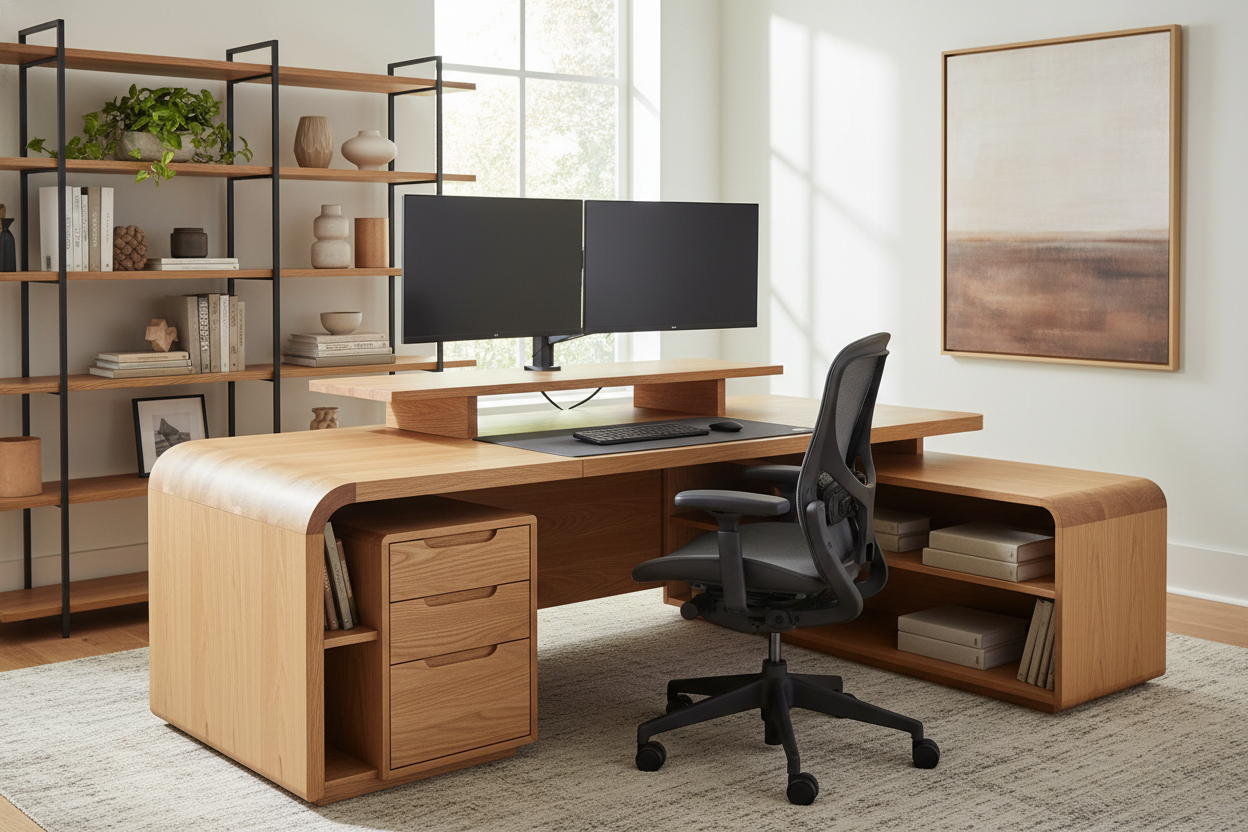
We have all stood in a big-box store with a tape measure in hand, realizing that the standard 60-inch desk is exactly two inches too wide for that perfect alcove. Or perhaps you found the right dimensions, but the laminate finish looks artificial against your hardwood floors. This friction is usually the starting point for considering custom office furniture. It is not merely about vanity; it is about solving specific architectural and functional problems that mass production simply ignores.
Quick Decision Guide: Key Features to Look For
If you are debating between retail and bespoke, consider these critical factors to determine if the investment aligns with your needs:
- Spatial Efficiency: Does the piece utilize vertical space or awkward corners that standard furniture wastes?
- Material Integrity: Are you paying for solid hardwoods and high-grade veneers, or particleboard disguised as wood?
- Ergonomics: Can the desk height and depth be tailored to your specific body measurements rather than industry averages?
- Hardware Quality: Look for soft-close hinges and heavy-duty drawer slides rated for the weight of your equipment.
- Cable Management: Does the design include integrated channels to hide wires, keeping the visual plane clean?
The Case for Office Furniture Bespoke to Your Space
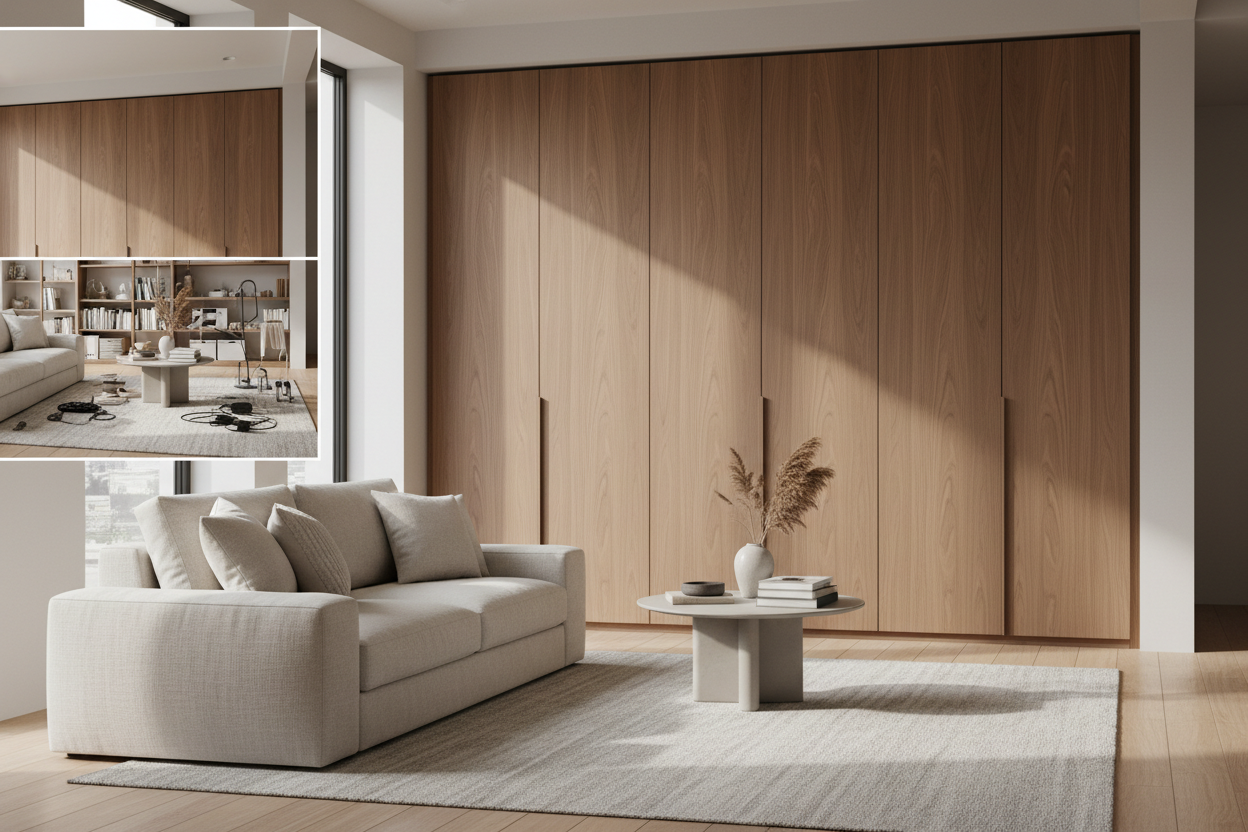
When we specify office furniture bespoke to a client's home, we are looking at the room's architecture first. Standard furniture floats; custom furniture integrates. In a home office, particularly smaller urban spaces, a built-in unit can actually make the room feel larger. By running cabinetry floor-to-ceiling, we draw the eye upward, creating a sense of volume while maximizing storage for files and technology.
Choosing the Right Material
The longevity of custom-made office furniture relies entirely on the substrate. While mass-market retailers often rely on low-density fiberboard, a custom route allows you to select kiln-dried hardwoods like walnut or white oak. These materials not only age beautifully, developing a patina over time, but they also hold screws and joinery significantly better than composites. If you are selecting a veneer for a sleek, modern look, ensure your maker uses a thick, architectural-grade veneer that can withstand the occasional coffee spill or scratch.
Designing Customizable Office Desks for Workflow
The desk is the cockpit of your workspace. With customizable office desks, we move beyond the surface area and look at the "work triangle." This involves the relationship between your monitor, your writing space, and your storage.
For example, an office desk custom designed for a graphic designer might require a deeper surface (30 inches+) to accommodate a large monitor and a drawing tablet without feeling cramped. Conversely, a writer might prefer a shallower, wider console style. We also consider the "modesty panel"—the back of the desk. If your desk faces the room, the back must be finished as beautifully as the front to maintain visual balance.
Lessons from My Own Projects: The "Cable Chaos" Reality
I want to share a specific realization I had while designing a library-style office for a client in Chicago. We designed a stunning solid mahogany desk, visually heavy and grounded. It was a masterpiece of joinery. However, once the client moved in, we realized a critical oversight: monitor arms.
Standard desks are often too thin or hollow to support the clamp of a heavy-duty dual monitor arm. Because we had designed the desktop to be a solid 1.5 inches thick, it was sturdy, but I hadn't accounted for the specific clamp depth needed at the back edge. We had to retrofit a notch into the beautiful wood after the fact—a painful moment for any designer.
Since then, my rule for custom pieces is simple: I don't just ask what computers you have; I ask to see the mounting hardware. I also learned that matte finishes are crucial on custom dark woods; high-gloss finishes on a working desk might look luxurious in a photo, but in daily use, they highlight every fingerprint and dust mote, driving clients crazy within a week.
Conclusion
Investing in custom pieces allows you to curate a workspace that supports your physical health and complements your home's interior architecture. It moves your office from a utilitarian necessity to a deliberate design statement. If you plan to spend forty hours a week in a chair or at a desk, the environment should be tailored to you, not the other way around.
Frequently Asked Questions
How much longer does custom furniture take compared to retail?
Patience is required. While retail is instant, custom work typically requires 8 to 12 weeks. This accounts for design approval, material sourcing (especially for specific wood species), fabrication, and the curing time for finishes.
Is custom furniture always more expensive?
Generally, yes, the upfront cost is higher due to labor and materials. However, when you compare the lifecycle—where a custom solid wood desk lasts 30+ years versus a particleboard desk that may fail in 5—the cost per year of ownership often favors the custom piece.
Can I customize the ergonomics of a desk?
Absolutely. This is the primary benefit. You can specify the exact height of the work surface (standard is 30 inches, but 28 or 31 might suit you better) and the amount of knee clearance needed based on your preferred office chair.

Leave a comment
This site is protected by hCaptcha and the hCaptcha Privacy Policy and Terms of Service apply.