

















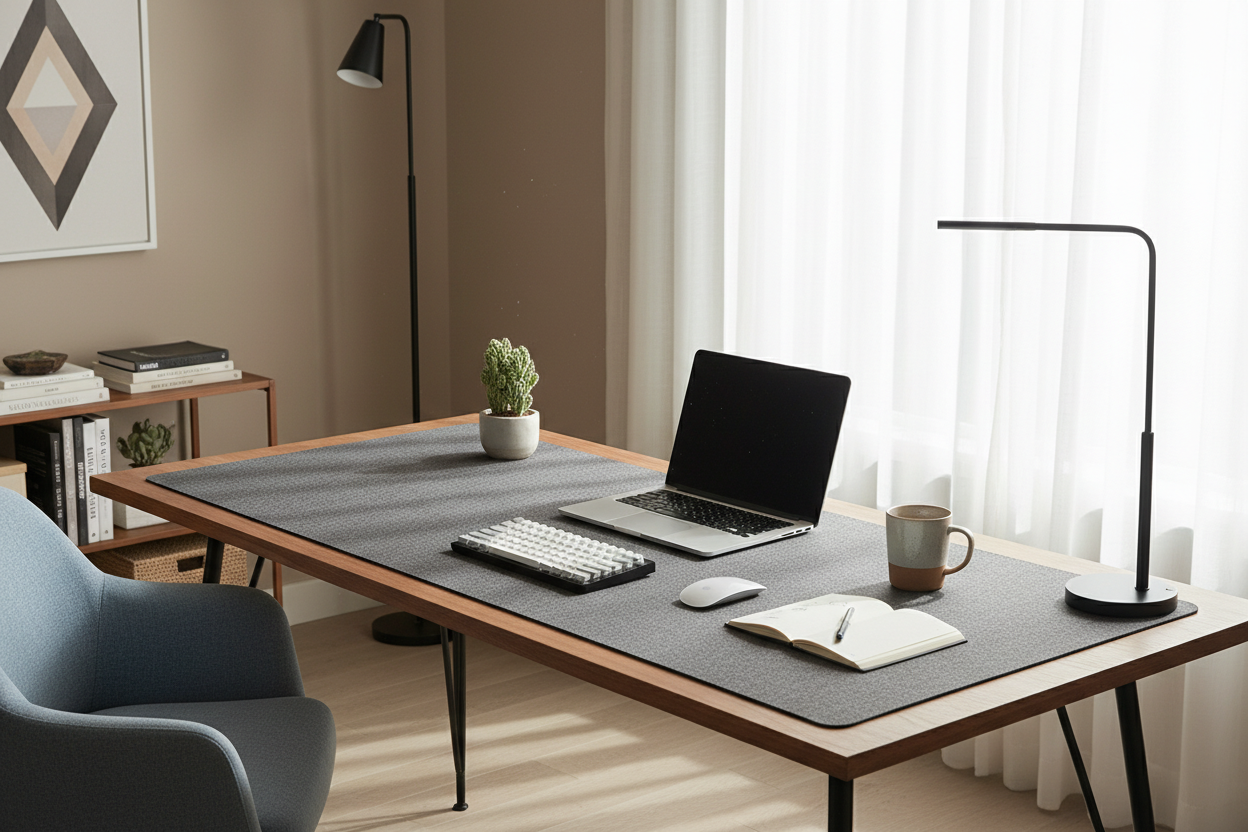
We have all been there: you spend weeks curating the perfect home office, selecting a gorgeous walnut desk and a beautifully tailored chair, only to realize your mouse scratches the surface and your keyboard slides around. You need protection for your furniture, but you do not want an ugly, utilitarian piece of neoprene ruining the carefully crafted vibe of the room.
Enter the wirecutter desk mat. While tech reviewers focus heavily on mouse glide and edge stitching, as an interior designer, I look at how these functional pieces impact the visual weight, texture, and warmth of a space. Today, we are breaking down how to choose and style a desk pad that protects your investment without sacrificing your aesthetic.
Quick Decision Guide
- Material matters: Leather adds organic warmth, while felt introduces cozy texture, but both require drastically different maintenance than standard polyurethane.
- Proportion is key: Ensure your mat leaves at least 3 to 4 inches of exposed desk edge to act as a visual frame for your workspace.
- Color coordination: Anchor the mat by matching it to secondary room accents (like a chair frame or bookshelf decor) rather than the desk itself.
- Utility meets design: The best desk mat wirecutter recommends often leans highly functional; you can soften its look by pairing it with brass, wood, or ceramic desk accessories.
Material & Build Quality
Balancing Durability with Aesthetics
When selecting a wirecutter desk pad, the material dictates both the lifespan of the product and the overall mood of the room. Polyurethane (PU) leather is highly popular for its spill resistance, making it ideal for busy North American households where the home office might double as a homework station. However, from a design perspective, PU can sometimes read as flat or synthetic under natural light.
If you want a richer, more high-end look, consider top-grain leather or natural linoleum. These materials develop a beautiful patina over time and add organic texture to an otherwise sterile, tech-heavy setup. Felt is another designer favorite for adding softness to glass or metal desks, though it requires more careful maintenance against dust and coffee spills.
Space Planning & Layout
Getting the Proportions Right
A common mistake I see in home offices is a desk mat that throws off the visual balance of the furniture. If a mat is too small, it looks like an oversized mousepad floating aimlessly. If it is too large, it swallows the beautiful wood grain of your desk entirely, making the room feel heavy and cramped.
As a general rule for standard North American room layouts, aim for a mat that accommodates your keyboard and mouse while leaving ample negative space. This exposed desk surface acts as a visual border, highlighting the furniture beneath while keeping your immediate work zone anchored and intentional.
Style & Coordination
Integrating Utility into Your Decor
Your desk pad should never look like a last-minute afterthought. To make it feel intentional, tie its color to a secondary accent in the room. If you have a mid-century modern space with brass fixtures and a deep green accent chair, a forest green mat creates a cohesive, thoughtful thread throughout the space.
Avoid matching the mat exactly to the desk finish. Placing a black mat on a black desk creates a heavy, monolithic void in the center of the room. Instead, use contrast to your advantage. Pair a soft gray or warm tan mat with a dark mahogany desk to introduce visual layering and break up the heavy silhouette.
Designer's Honest Take
A few years ago, I fell in love with the aesthetic of a thick, merino wool felt desk mat. It looked incredibly chic in my project portfolio photos, adding a necessary layer of cozy texture to a sleek, modern glass desk.
I learned the hard way that while felt photographs beautifully, it is not always practical for heavy daily use. Within three months, the metal clasp on my watch caused severe pilling on the left side of the mat, and a single rogue drop of morning espresso became a permanent feature. I ultimately swapped it for a high-quality leather pad. It still offers that organic warmth I wanted, but I can actually wipe it down when life happens. Always weigh your aesthetic goals against your actual daily habits.
Frequently Asked Questions
How do I clean my desk mat?
Maintenance depends entirely on the material. PU leather and linoleum simply need a wipe-down with a damp microfiber cloth and mild dish soap. For genuine leather, use a dedicated leather cleaner and conditioner every few months to prevent the surface from drying out and cracking.
What size desk mat do I need?
Measure your keyboard and mouse side-by-side, then add at least 4 to 6 inches to the width and depth for comfortable movement. A standard medium size, usually around 35 by 15 inches, fits beautifully on a typical 48-inch to 60-inch wide desk without overwhelming the surface.
Do desk mats damage wood finishes?
Most high-quality mats are perfectly safe, but beware of cheap rubber backings. Some synthetic rubbers can react chemically with lacquer or polyurethane desk finishes over time, leaving a sticky residue or permanent discoloration. Always verify that the backing material is safe for your specific wood finish.



Leave a comment
This site is protected by hCaptcha and the hCaptcha Privacy Policy and Terms of Service apply.