

















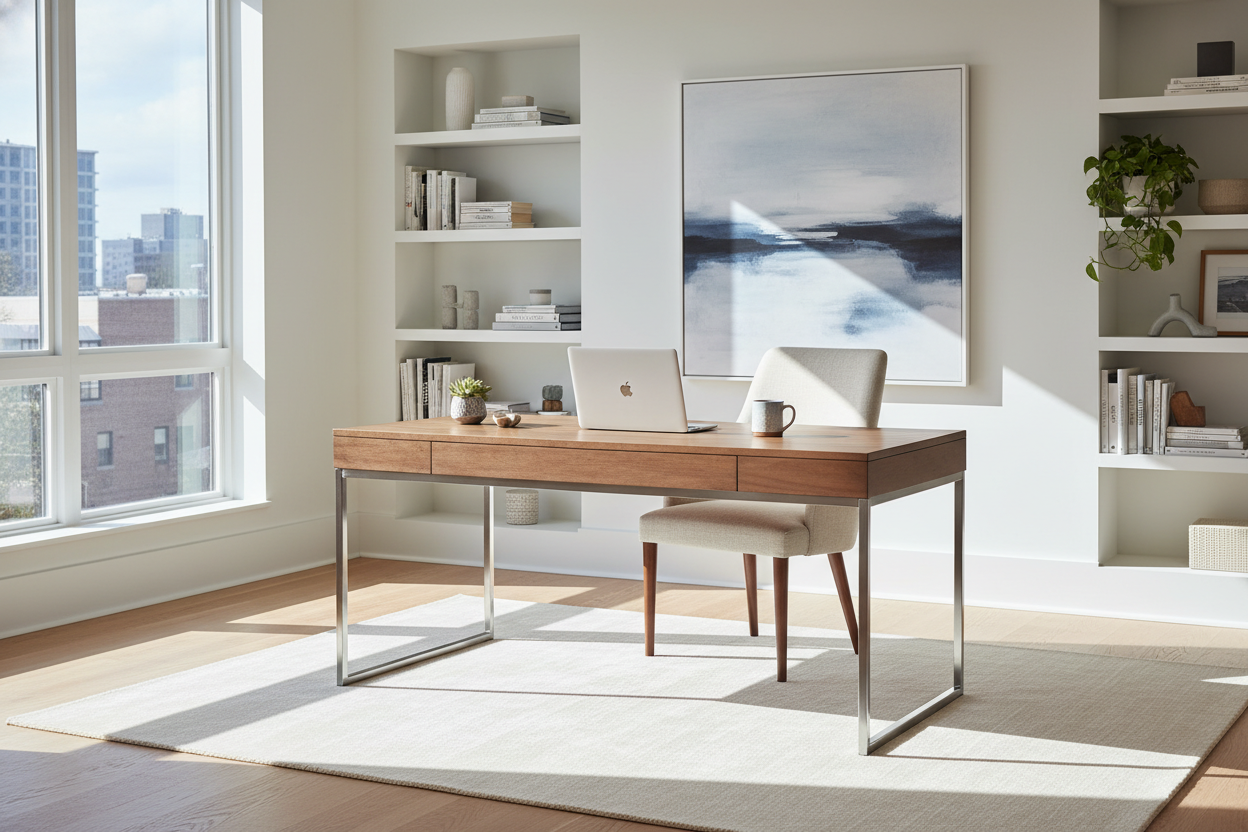
It happens to the best of us: you transition to working from home, and suddenly your living room is hijacked by a bulky, utilitarian workstation that looks like it was stolen from a corporate cubicle. Finding a piece that bridges the gap between residential warmth and professional practicality is a common design hurdle. That is usually when clients ask me about investing in a West Elm computer desk.
Over the last 15 years designing residential interiors across North America, I have placed countless West Elm pieces in both sprawling suburban studies and tight urban condos. While they excel at nailing that coveted mid-century or industrial aesthetic, they are not always the perfect fit for every working style. In this guide, we will break down the materials, space requirements, and honest pros and cons so you know exactly what you are getting before you commit.
Quick Decision Guide
- Check the depth: Many West Elm desks hover around 20 to 24 inches deep, which is ideal for a laptop but often too shallow for dual monitors with heavy stands.
- Understand the materials: Expect high-quality wood veneers over engineered wood (MDF), rather than solid slabs of hardwood. This prevents warping but requires careful maintenance against scratches.
- Plan for wire management: Older models lack built-in cable routing, so you may need to factor in aftermarket cable trays to maintain that sleek silhouette.
- Resale value is strong: If you outgrow the piece, the brand recognition means you can easily list a west elm desk for sale on local marketplaces and recoup a good portion of your investment.
Material Reality: What Are You Actually Buying?
Veneers, MDF, and Metal Frames
A common misconception is that premium retail prices guarantee solid wood construction. In reality, most West Elm desks utilize kiln-dried engineered wood wrapped in real wood veneers, such as walnut or eucalyptus. From a design perspective, this is actually intentional. Engineered wood resists the expanding and contracting caused by the drastic humidity shifts in North American homes, meaning your desk will not warp over a harsh winter.
However, veneers require respect. While the finishes are beautiful, they do not possess the forgiving nature of a rustic, solid oak table that looks better with a few dings. The finishes lean toward matte and satin, which look incredibly high-end but demand coasters for your coffee and felt pads under heavy desk lamps.
Space Planning and Layout Rules
Visual Weight in Small Footprints
One of the main reasons designers gravitate toward West Elm for home offices is their mastery of visual weight. Pieces like their iconic Mid-Century desk feature tapered legs and open bases. This negative space allows light to pass underneath the desk, making a small apartment bedroom feel much larger than it would with a heavy, floor-to-ceiling pedestal desk.
Clearance and Walkways
When placing your desk, always leave at least 36 inches of clearance between the edge of the desk and the nearest wall or piece of furniture behind you. This ensures you can push your chair back comfortably without scraping the drywall. If you are floating the desk in the middle of an open-concept living room, pay close attention to the back of the desk; ensure it is fully finished, as some models have exposed backing meant to be pushed against a wall.
Designer's Honest Take: Lessons from My Own Projects
I recently placed a beautiful matte acorn desk in a client's sunny Toronto loft. The silhouette was absolutely stunning against their exposed brick wall, and it instantly anchored the room. But I learned a hard lesson during the installation: the signature beveled edges on many of their mid-century designs are incredibly unforgiving if you plan to use a clamp-on monitor arm.
We tried to attach a dual-monitor mount, and the angled edge meant the clamp could not get a secure, flat grip. We ended up having to drill a grommet hole directly through the veneer, which was nerve-wracking. Furthermore, after just a month of daily use, the beautiful walnut finish started showing micro-scratches from a ceramic coffee mug. We had to immediately source a custom leather desk pad to protect the primary work zone. They are beautiful desks, but they are built for light residential use, not industrial wear and tear.
Frequently Asked Questions
How do I clean and maintain the wood veneer?
Avoid harsh chemical cleaners or anything abrasive. Use a soft, slightly damp microfiber cloth to wipe away dust and smudges, followed immediately by a dry cloth. If you spill water, wipe it up instantly to prevent the veneer from bubbling.
Are West Elm desks deep enough for dual monitors?
It depends heavily on the model. Desks under 22 inches deep will feel very cramped with two large monitors and a keyboard. If you run a multi-monitor setup, look specifically for their executive sizes or dining tables repurposed as desks, which offer 30+ inches of depth.
Is the hardware easily replaceable?
Most of the drawer pulls and knobs use standard sizing, making it very easy to swap out the factory hardware for custom brass or matte black pulls to better coordinate with your existing room decor.


Leave a comment
This site is protected by hCaptcha and the hCaptcha Privacy Policy and Terms of Service apply.