

















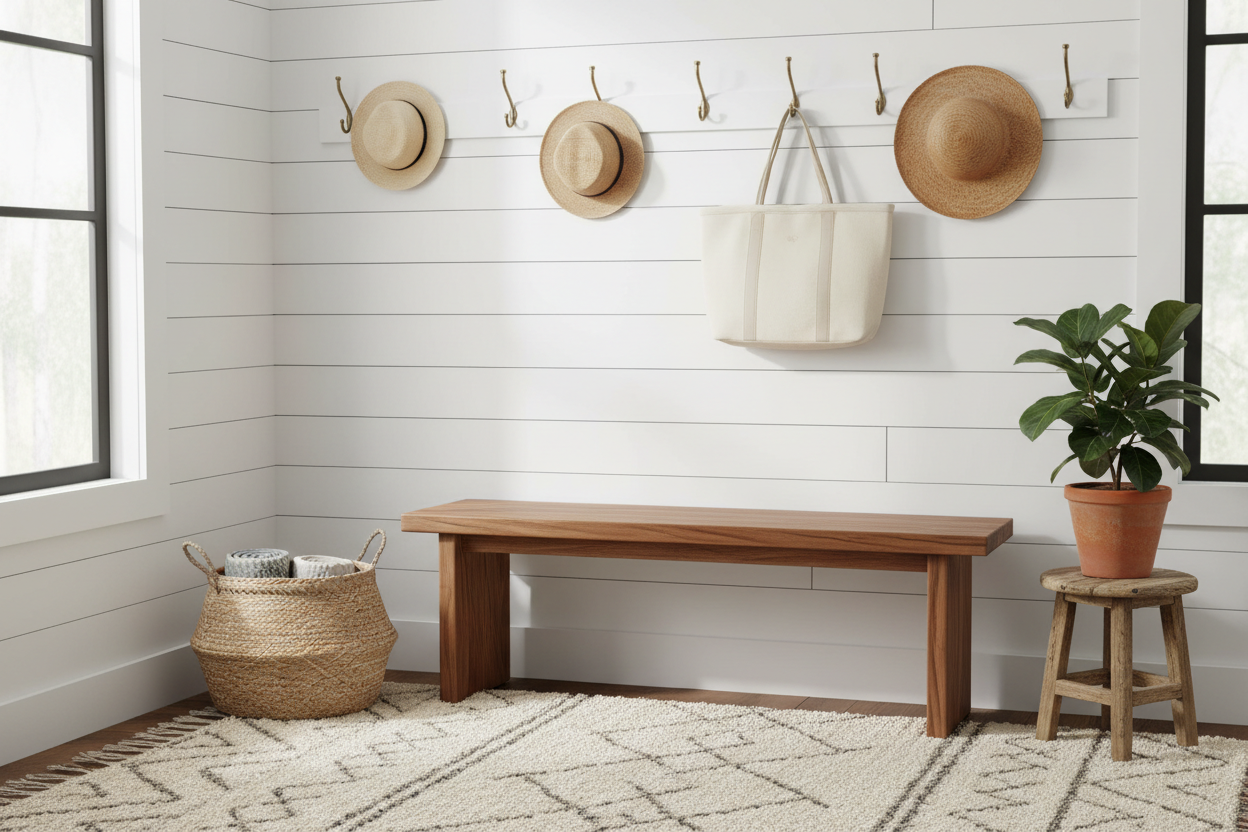
Walking through your front door should feel like a relief, not a navigation challenge involving scattered shoes and piled-up mail. The entryway sets the tone for the entire home, yet it often becomes the most neglected space. A high-quality wood bench for entryway use serves as the perfect anchor, bridging the gap between a chaotic drop zone and a welcoming reception area. It provides a dedicated spot to sit while taking off boots, a surface for grocery bags, and an immediate visual cue that says, "you are home."
I learned the value of this specific piece of furniture the hard way. In my previous home, a narrow Victorian terrace, the hallway was a constant disaster zone of tripping hazards. I resisted buying furniture because I thought it would clutter the space. Eventually, I caved and bought a slim, reclaimed oak seat. That single addition transformed the corridor. It forced us to organize. We sat down to untie laces instead of kicking shoes into corners, and the timber added a warmth that the bare drywall desperately lacked. If you are on the fence about adding a wood entryway bench to your space, consider this your sign to go for it.
Why Natural Materials Matter in High-Traffic Zones
Entryways take a beating. They face muddy paws, wet umbrellas, and heavy school bags. While upholstered furniture looks plush, it rarely survives the grime of a front door environment for long. This is why solid wood benches for entryway applications are superior. Timber is forgiving. A scratch on a painted metal bench looks like damage; a scratch on a natural wood entryway bench often blends into the grain or adds to the patina over time.
Beyond durability, wood introduces an organic element that softens the transition from the outdoors to the indoors. Whether you prefer the deep, chocolate tones of walnut or the light, airy feel of maple, an indoor entryway bench made from timber works with almost any architectural style. It grounds the space, providing visual weight that flimsy particle board or plastic alternatives simply cannot match.
Matching the Bench to the Space: Foyer vs. Hallway
Selecting the right piece requires an honest assessment of your square footage. A sprawling wooden bench for foyer areas creates a grand statement. If you have the room, look for deep seats with armrests or high backs (monk’s bench style) that command attention. In a wide foyer, the bench becomes a focal point rather than just an accessory. You can style a foyer wood bench with substantial throw pillows or flank it with large potted plants without overcrowding the room.
Conversely, narrow corridors require a different approach. A heavy, deep seat will choke the flow of traffic. Here, you need a wood hallway bench designed with a shallow depth—typically 12 to 15 inches. These pieces hug the wall, offering functionality without encroaching on walking space. A backless wooden bench for hallway use is often the smartest choice visually; because it doesn't break the sightline, the hall continues to look open and airy. I often recommend looking for "spindle" legs or floating designs for tight spaces to maintain that sense of openness.
The Storage Factor: Hide the Clutter
If you have children or a "no shoes inside" policy, a simple slab of wood might not cut it. You likely need a wooden entryway bench with storage. These workhorses come in two main varieties: the flip-top and the open cubby.
Flip-top benches offer the cleanest look. You can stash winter scarves, dog leashes, or emergency umbrellas inside, and when the lid is down, the clutter vanishes completely. However, if the goal is to hide shoes, I generally prefer a wooden foyer bench with open cubbies or a lower shelf. Flip-tops are inconvenient for daily footwear—nobody wants to stand up and open a lid just to put their sneakers away. A bench with a slatted shelf underneath allows you to kick shoes out of the way instantly while keeping them organized.
For those who want the best of both worlds, look for wood entryway benches that incorporate drawers. You get the quick-access surface on top and organized compartments for keys and mail below, keeping the surface clear for sitting.
Styling Your Wood Hall Bench
Once you have the furniture in place, the styling determines whether it looks like a waiting room or a home. Wood is warm, but it is also hard. You need to introduce textiles to break up the rigidity. A sheepskin throw draped over one side of a wood hall bench adds instant texture and comfort. If the bench is backless, consider hanging a row of hooks or a large round mirror on the wall above it to create a cohesive "station."
Lighting also plays a massive role. If your bench is dark—say, a mahogany or stained acacia—ensure there is adequate lighting nearby so it doesn't become a dark void in the corner. A sconce above the bench or a floor lamp beside it highlights the grain and makes the area inviting.
Maintenance and Longevity
Real timber requires a little more love than laminate, but the payoff is longevity. A wooden foyer bench situated near a door will be exposed to temperature fluctuations and occasional moisture. It is wise to check the finish. A polyurethane or wax finish will protect the wood from water droplets off raincoats. If you choose a raw or oiled finish, be prepared to re-oil it once a year to keep the wood from drying out. With minimal care, these pieces don't just last; they improve, developing a character that mass-produced furniture never achieves.
Frequently Asked Questions
How deep should a bench be for a narrow hallway?
For tight hallways, aim for a bench depth between 12 and 15 inches. Anything deeper than 16 inches tends to obstruct the walkway and can make the corridor feel cramped. Backless designs also help preserve the visual space in narrow areas.
What is the best wood type for durability in an entryway?
Hardwoods like oak, maple, and walnut are excellent choices because they resist denting and scratching better than softwoods like pine. Teak and acacia are also fantastic options, especially if the area is prone to moisture or humidity, as they have natural water-resistant properties.
Can I use an outdoor wood bench inside my foyer?
Yes, you can use outdoor benches inside, and they are often very durable. However, ensure the feet have felt pads to protect your indoor flooring, and be aware that outdoor finishes might have a rougher texture than furniture designed specifically for interiors.

Leave a comment
This site is protected by hCaptcha and the hCaptcha Privacy Policy and Terms of Service apply.