

















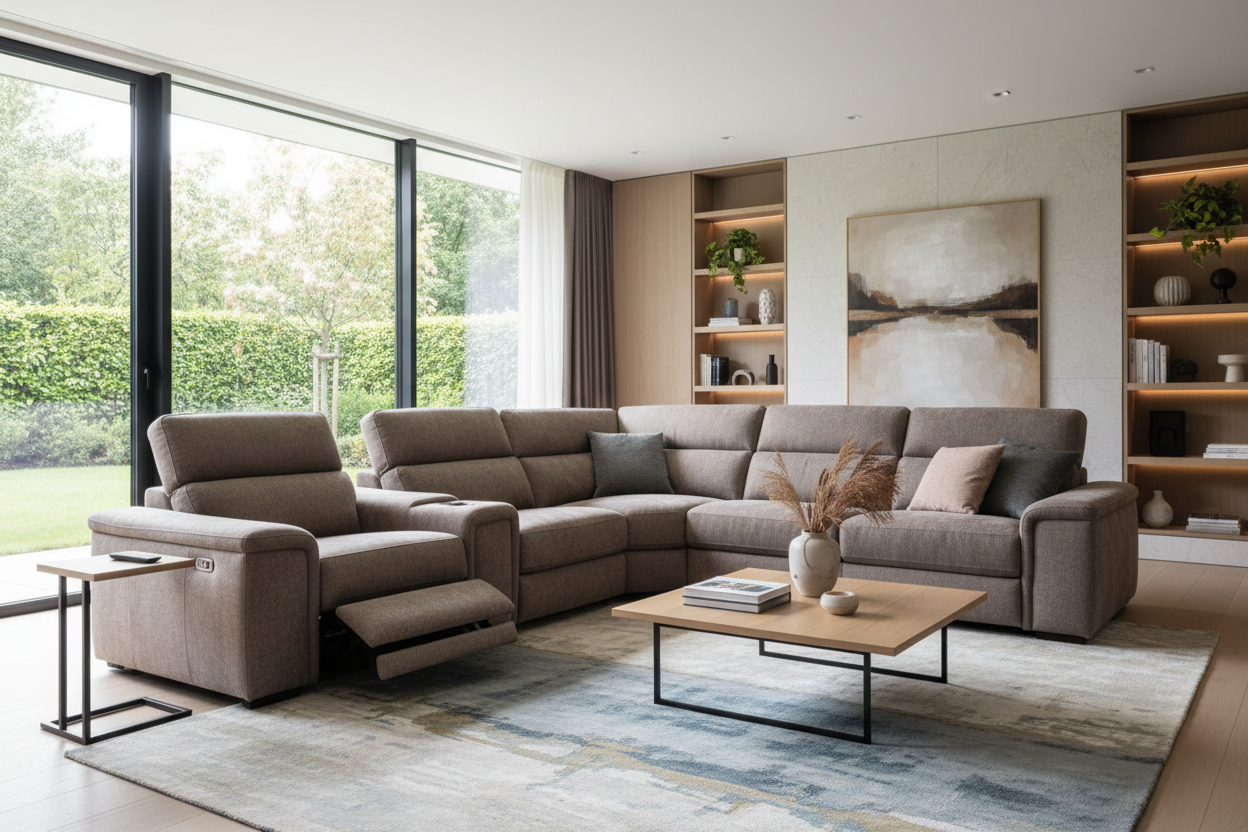
One of the most frequent debates I witness in my design studio involves the battle between aesthetics and comfort. One homeowner wants a sleek, low-profile Italian silhouette, while the other wants a cloud-like spot to kick their feet up for a movie marathon. For years, these desires were mutually exclusive. However, the modern sectional couch with two recliners has evolved to bridge this gap, offering a compromise that no longer requires hiding the furniture in a basement media room.
Quick Decision Guide: What to Check Before Buying
- Mechanism Quality: Always prioritize power recliners with metal-on-metal construction over manual plastic pulls for longevity.
- Wall Clearance: Look for "zero-wall" or "wall-hugger" designs if you plan to place the sofa against a perimeter wall; standard recliners need 4-6 inches of clearance.
- Upholstery Durability: For high-motion furniture, ensure leather is top-grain (not bonded) or choose a high-performance fabric with a rub count over 50,000.
- Seat Configuration: Decide if you need the recliners on opposite ends (bookends) or a sectional with two recliners side by side for shared lounging.
Balancing Visual Weight and Scale
The primary challenge with motion furniture is its visual "heaviness." Reclining mechanisms require internal volume, often resulting in a bulkier silhouette than a standard stationary sofa. When planning your layout, you must account for the piece's dominance in the room.
To counteract the bulk, I advise clients to pair a sectional sofa with two recliners with leggy, visually light coffee tables—think glass tops or thin metal frames. This restores balance to the room's composition. Avoid heavy, blocky ottomans; the room will start to feel like a furniture warehouse.
Ergonomics and The "Side-by-Side" Factor
A specific configuration that is gaining traction is the sectional with two recliners side by side. This is excellent for home theaters, but it introduces a unique design consideration: the gap.
Managing the Recliner Gap
When two reclining modules are placed next to each other, there is often a functional gap between the cushions to allow the leather or fabric to move without friction. If you are looking for a "cuddle couch," be aware that this gap can feel like a rigid divider. In my showroom consultations, I always have clients sit in both seats simultaneously to ensure the proximity feels natural, not separated by mechanism hardware.
Material Selection for Motion Furniture
Fabric stress is significantly higher on a recliner than on a static seat. The constant friction of opening and closing the footrest wears down lower-quality fibers rapidly.
If you prefer leather, avoid "split" or "bonded" leather at all costs. The stretching motion will cause peeling within two years. Full-grain or top-grain leather develops a patina and stretches naturally. If you prefer soft fabric, opt for a tight-weave chenille or a performance velvet. These materials hide the inevitable "wrinkle" that occurs on the footrest after it retracts better than flat-woven linens.
Lessons from My Own Projects
I want to share a specific headache I encountered during a project in a downtown loft that you won't find in a standard catalog description. We specified a beautiful, high-end power sectional for the center of an open-concept living room. It looked stunning on the floor plan.
However, once installed, we realized the flaw: Power cords.
Because the sofa was floating in the middle of the room (not against a wall), we had black power cables snaking across a beautiful oak floor to the nearest outlet. It ruined the clean lines immediately. We eventually had to cut into the floor to install a floor outlet underneath the sofa. If you are buying a power reclining sectional and plan to float it, check your battery pack options or ensure you have a floor outlet ready. Also, be prepared for the weight—these units are incredibly heavy. If you like rearranging your furniture seasonally, a sectional with two recliners will likely put an end to that habit.
Conclusion
Investing in this type of furniture is about prioritizing lifestyle without abandoning taste. If you choose the right upholstery and plan for the mechanical requirements, a reclining sectional can be the most used, beloved piece in your home. Just remember to measure your clearance twice.
Frequently Asked Questions
How much space do I need behind the sofa for it to recline?
This depends entirely on the mechanism. "Wall-huggers" slide forward as they recline and require as little as 2 to 4 inches. Standard mechanisms may require up to 12 inches. Always check the "fully reclined depth" spec.
Are power recliners better than manual ones?
From a design and longevity standpoint, yes. Power mechanisms allow for infinite stopping positions, offering better ergonomic support. Manual levers often rely on spring tension that can snap or become noisy over time.
Can I separate the reclining pieces later?
Generally, no. In most modular sectionals, the reclining ends are finished only on the visible sides. The sides that connect to the rest of the sofa are usually unfinished metal brackets and lining fabric, meaning they cannot stand alone as accent chairs.


Leave a comment
This site is protected by hCaptcha and the hCaptcha Privacy Policy and Terms of Service apply.