

















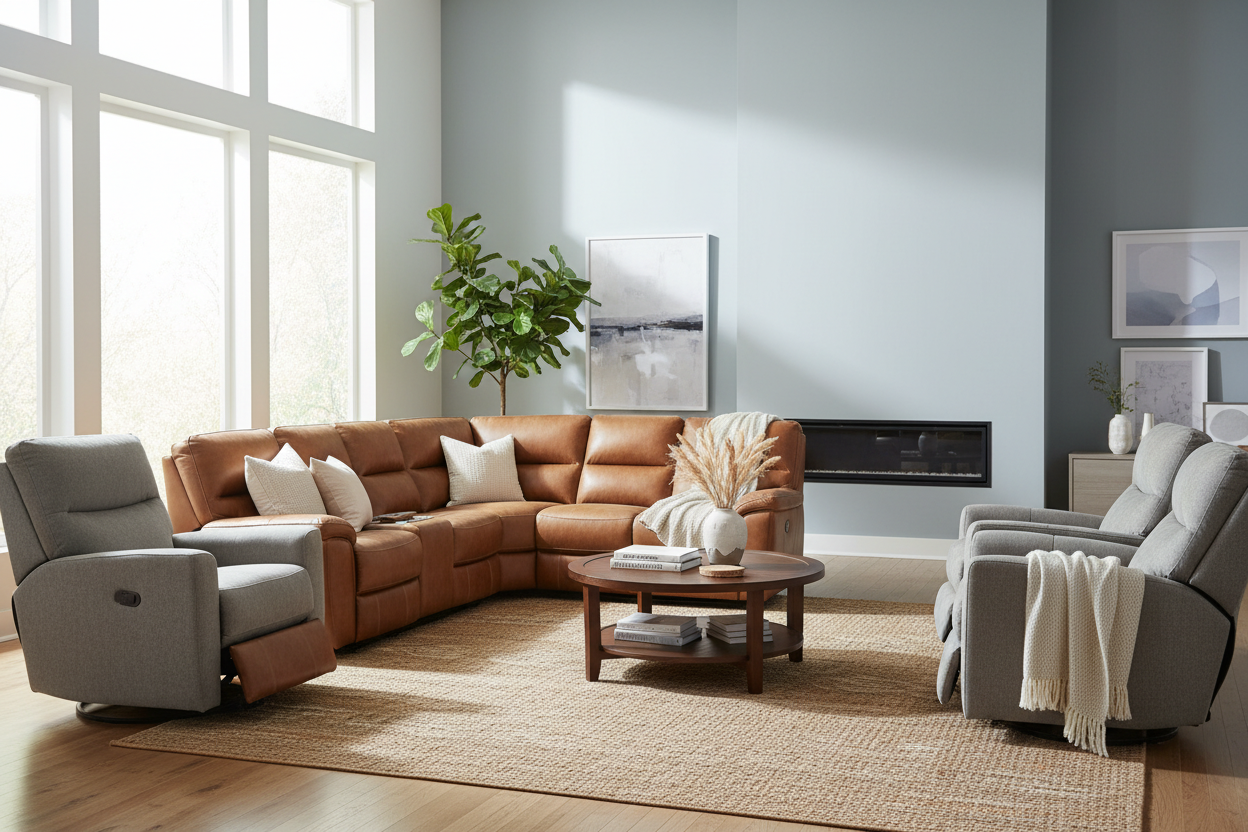
There is often a visible tension in my clients' faces when I suggest a recliner for their main living area. They envision bulky, overstuffed silhouettes that dominate the room and disrupt the visual flow. However, the modern lazy boy sectional has evolved significantly from the basement furniture of the past. Today, bridging the gap between high-end aesthetics and genuine ergonomic comfort is entirely possible, provided you know exactly what specifications to look for.
Quick Decision Guide: Key Features to Look For
- Module Configuration: Ensure the layout (L-shape vs. U-shape) allows for 36 inches of walking clearance around the perimeter.
- Upholstery Grade: For high-traffic homes, opt for performance fabrics (like iClean) or top-grain leather rather than bonded alternatives.
- Mechanism Type: Choose "wall-away" or "wall-hugger" designs if placing the piece near a perimeter wall to save floor space.
- Cushion Core: Look for high-density foam cores with a gel-infused topper to prevent the seat from "puddling" over time.
Balancing Aesthetics with Ergonomics
The primary challenge with incorporating a lazyboy recliner sectional into a sophisticated living room is managing the visual weight. Traditional motion furniture tends to look heavy. When selecting a model, I always advise clients to look for high-leg profiles. A sectional that sits off the floor on visible wooden or metal legs creates a sense of airiness, making the room feel larger than it is.
For a contemporary aesthetic, avoid the over-tufted "biscuit" back styles. Instead, gravitate toward clean lines and track arms found in modern lazyboy sectional sofas. This allows the piece to provide lumbar support without screaming "recliner" the moment you walk in the door.
Material Selection: Leather vs. Fabric
The choice of material dictates not just the look, but the longevity of the investment. A lazyboy sectional leather option is often the gold standard for durability, but you must distinguish between full-grain and split-grain leather. Full-grain develops a patina and breathes; lower grades will crack after a few years of reclining motion.
If you prefer a softer tactile experience, lazyboy reclining sectionals in performance heavy-weave fabrics offer texture and warmth. From a design standpoint, I often pair a neutral fabric sectional with a bold, leather ottoman to create textural contrast and break up the monotony of the upholstery.
The Mechanics of Comfort
The engineering inside a lazyboy sectional with recliner modules is where the brand generally justifies its price point. Unlike static sofas, these pieces have moving metal chassis. When testing these on the showroom floor, pay attention to the transition smoothness. A jerky mechanism is a sign of poor tension calibration.
Power vs. Manual
While manual latches are traditional, power reclining options allow for infinite positioning. This is crucial for ergonomics, as it allows you to stop the leg rest at the exact angle that relieves pressure on your lower back. However, remember that power units require floor outlets or battery packs. I cannot tell you how many times I have seen a beautiful room ruined by a black power cord snaking across a rug.
Space Planning and Layouts
Integrating a lazy sectional sofa requires precise spatial planning. The fully extended footprint is the most critical metric. You need to account for the footrest extension—usually an additional 18 to 24 inches. If you place a coffee table in front of lazyboy recliner sectional sofas, opt for a narrow, oval shape or nesting tables that can be easily moved aside when it is time to relax.
My Personal Take on Lazy Boy Sectional
I want to share a specific detail from a recent project that you won't find in the brochure. I specified a large modular sectional for a client's media room. While the comfort was undeniable, we ran into a specific issue during installation: the weight.
These units are incredibly heavy due to the metal mechanisms inside. If you have hardwood floors, the standard plastic glides provided are insufficient and will dent your floor the moment someone flops down. I learned this the hard way years ago. Now, I immediately swap the factory feet for heavy-duty felt pads or rubber cups before the delivery team leaves.
Another nuance is the "gap." When you connect modular reclining pieces, there is often a slight gap between seats to allow the fabric to move without rubbing. It can look like a misalignment to the untrained eye, but it is actually a necessary functional tolerance. Knowing this upfront saves a lot of anxiety during the unboxing process.
Conclusion
Ultimately, selecting the right sectional is about prioritizing how you live over how a room looks in a magazine. With the right fabric choice and a silhouette that fits your architecture, you can achieve a space that is both visually stunning and deeply comfortable.
Frequently Asked Questions
How much space do I need behind the sectional to recline?
It depends on the model. Standard recliners need about 8-12 inches, but "wall-saver" or "zero-wall" models can function with as little as 2-4 inches of clearance, making them ideal for tighter rooms.
Are the sectional pieces locked together?
Yes, most high-quality modular sectionals use metal alligator clips or interlocking brackets on the underside. This prevents the lightweight pieces (like wedges) from separating from the heavy recliner units during use.
Can I mix reclining and stationary seats?
Absolutely. Most custom orders allow you to place reclining modules only on the ends (the most common configuration) while keeping the center seats stationary. This saves money and often provides a firmer seating area for guests.

Leave a comment
This site is protected by hCaptcha and the hCaptcha Privacy Policy and Terms of Service apply.