

















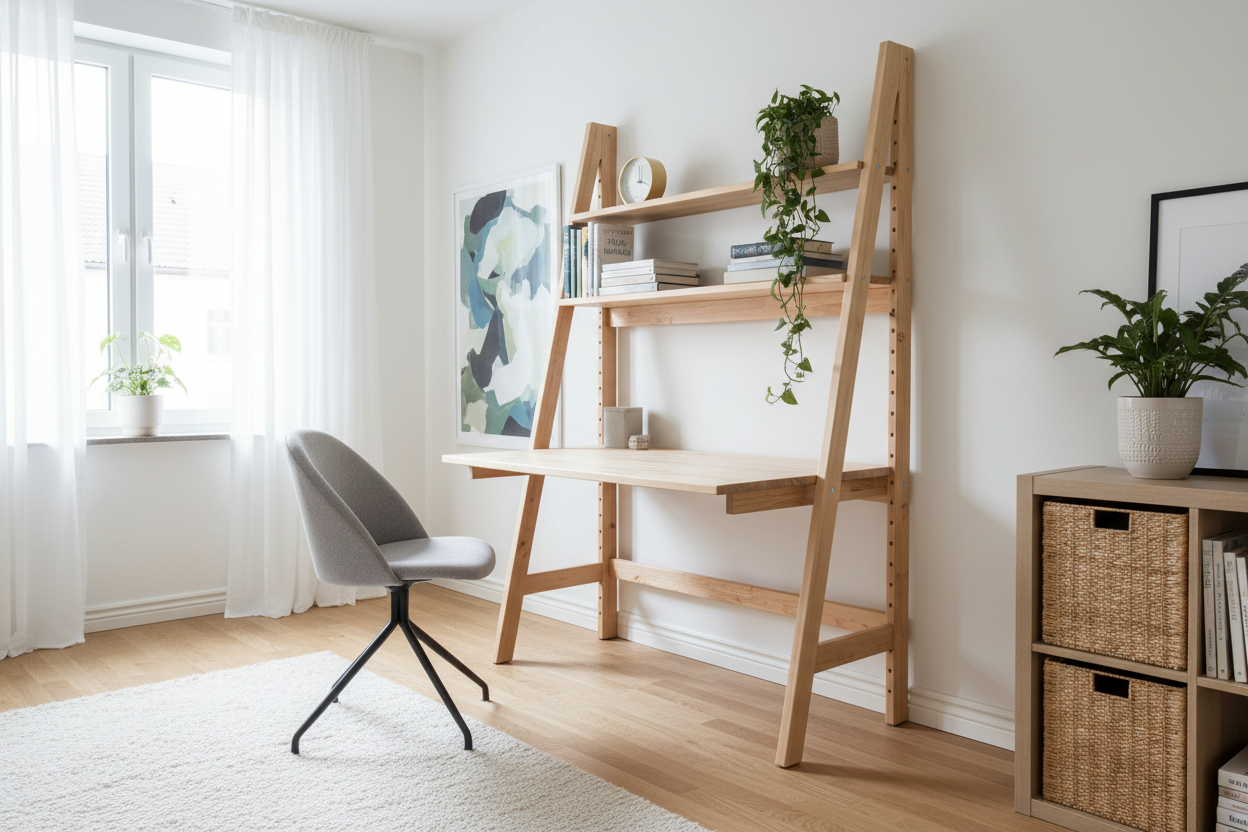
We all face the same dilemma when carving out a workspace in a multi-purpose room: how do you add functionality without introducing visual clutter? You want a dedicated spot for your laptop, but you don't want a bulky piece of furniture dominating your living room or bedroom. This is precisely where the ladder desk ikea enters the conversation. As a designer, I frequently recommend these pieces not just for their affordability, but for their ability to utilize verticality while maintaining a light, airy footprint. In this guide, we will explore whether this popular silhouette is the right architectural fit for your home.
Key Features to Consider Before Buying
- Wall Anchorage: Unlike standard desks, leaning designs require secure wall mounting to prevent tipping and ensure stability while typing.
- Shelf Depth: Check the depth of the top shelves versus the desk surface; ensure the workspace is deep enough for your laptop and a notebook.
- Material Composition: Most IKEA options utilize particleboard or fiberboard with acrylic paint; consider how this texture pairs with your existing solid wood furniture.
- Baseboard Clearance: Verify if the rear legs are cut away to accommodate skirting boards, or if the desk is designed to stand slightly forward.
Analyzing the Silhouette: The "Leaning" Appeal
The primary reason clients gravitate toward an ikea leaning desk is the optical illusion of space. Traditional pedestal desks block light and floor visibility, which makes a room feel smaller. A ladder design draws the eye upward, utilizing the wall rather than the floor area. This vertical approach allows you to integrate storage—books, plants, or decor—above your workspace without the bulk of a hutch.
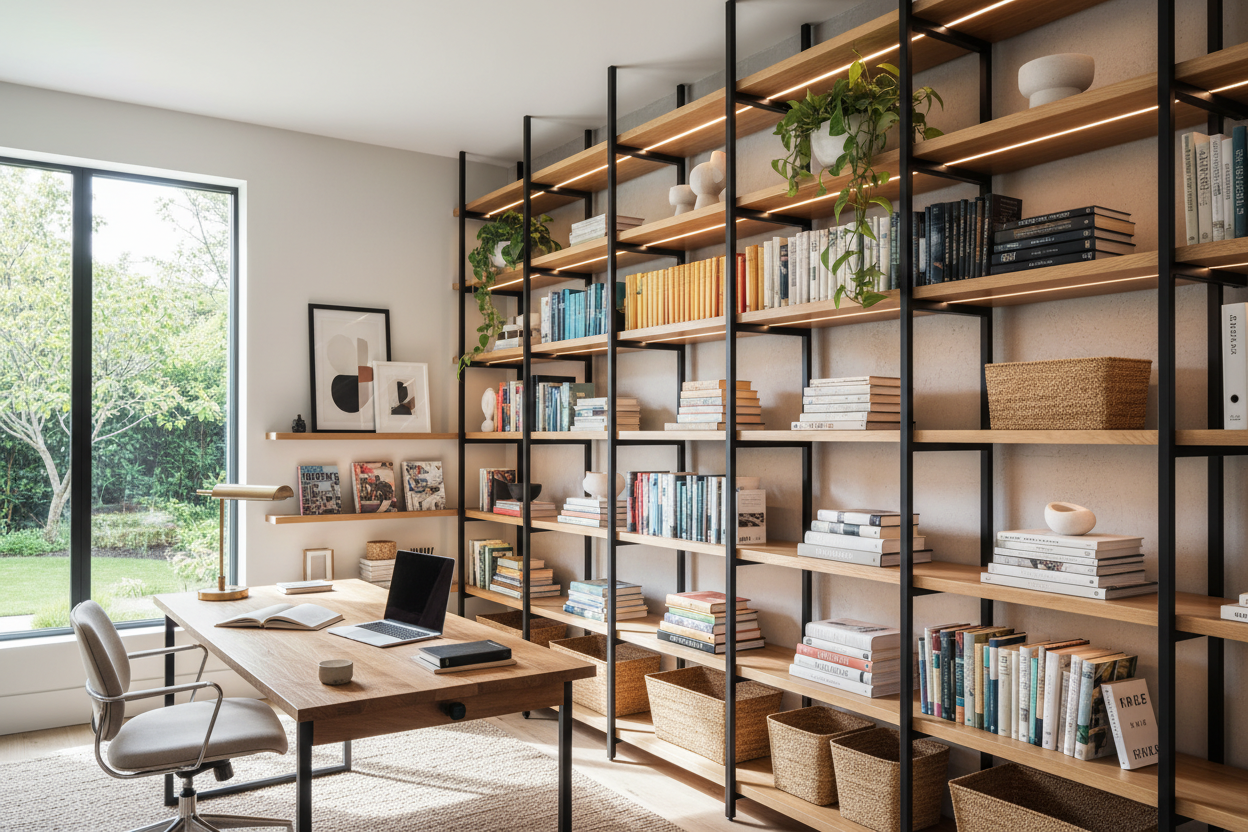
However, placement is critical. Because of the tapered profile, these desks look best when flanked by matching bookshelves or placed on a feature wall. If placed in a corner without breathing room, the unique architectural lines get lost.
Materiality and Durability
When selecting a ladder shelf desk ikea offers, you are usually looking at painted finishes or wood veneers. From a design perspective, the matte white or black finishes are excellent for modern, minimalist, or Scandi-inspired interiors because they blend into the wall, further reducing visual weight.
The Stability Factor
A common concern is the "wobble." Since these desks rely on geometry and wall anchors for stability, they perform differently than a four-legged table. For heavy-handed typists or those using heavy dual-monitor setups, you must ensure the unit is drilled into studs. If properly anchored, the structural integrity is surprisingly high, but it lacks the rigidity of a solid oak executive desk.
Styling for a High-End Look
To elevate the look of a mass-produced item, styling is non-negotiable. Avoid cluttering the upper shelves with office supplies. Instead, treat the upper rungs as a gallery. Use textured baskets to hide chargers and cables—cable management is notoriously tricky with open-back desks. Incorporate trailing plants like Pothos on the top shelf to soften the rigid, angular lines of the ladder frame.
Lessons from My Own Projects
I want to share a specific challenge I encountered when installing a ladder desk for a client in a historic apartment. We bought a popular leaning model, assuming it would just prop up against the wall. We didn't account for the client's 8-inch vintage baseboards (skirting boards).
Because the desk legs weren't notched deep enough to clear that high molding, the desk couldn't sit flush against the wall. This created a 2-inch gap at the top anchor point, putting dangerous stress on the screws. We actually had to hire a carpenter to notch the back legs custom to the molding profile. It’s a small detail, but if you have older homes with thick trim, measure that clearance before you drive to the store. Also, a personal gripe: the matte finish loves to hold onto coffee cup rings. I always insist my clients use a leather desk pad—it protects the veneer and adds a layer of tactile luxury that makes the desk feel more expensive than it is.
Conclusion
The IKEA ladder desk is more than just a budget-friendly option; it is a smart spatial solution for compact living. By understanding its structural limits and styling it with intention, you can create a workspace that feels curated rather than compromised. Measure your walls, check your baseboards, and anchor it tight.
Frequently Asked Questions
Can I use a clamp-on monitor arm with a ladder desk?
Generally, no. The desktop surface on ladder desks is often thinner than standard desks, and the back panel usually sits flush against the frame or wall, leaving no lip for a clamp. A freestanding monitor stand is a safer choice.
can I paint the laminate finish to match my room?
Yes, but it requires prep work. You cannot paint directly over the smooth IKEA finish. You must scuff-sand the surface, apply a high-adhesion primer (like shellac-based primer), and then apply your cabinet-grade enamel.
Is the desk depth sufficient for a desktop computer?
Most ladder desks are designed for laptops or tablets. The depth is usually between 15 to 24 inches. A full tower and keyboard setup will likely feel cramped and leave you with no wrist support. Stick to laptop setups for the best ergonomics.

Leave a comment
This site is protected by hCaptcha and the hCaptcha Privacy Policy and Terms of Service apply.