

















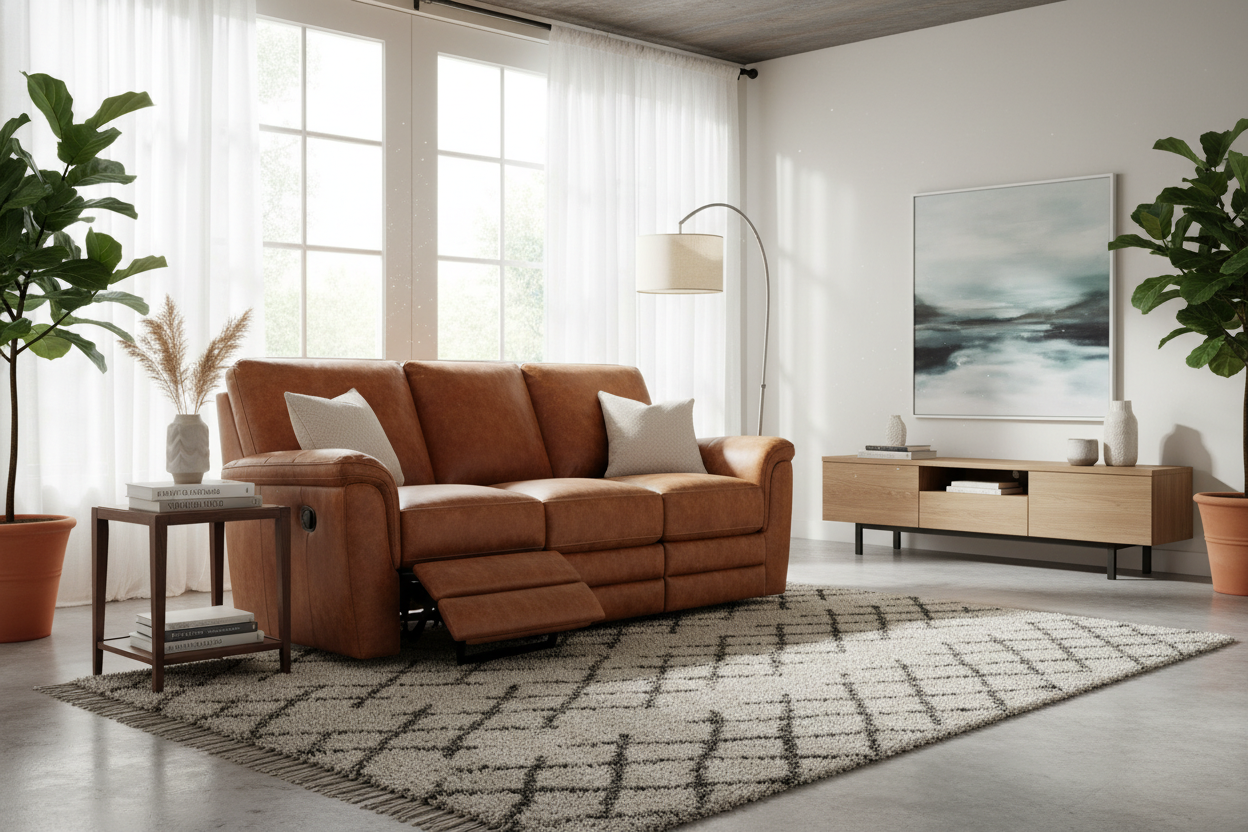
The eternal struggle in interior design often boils down to one conflict: the desire for supreme comfort versus the need for a sophisticated aesthetic. For years, the recliner was the villain in this story—bulky, overstuffed, and relegated to the basement. However, the modern genuine leather loveseat recliner has undergone a massive design evolution. It is no longer just a functional seat; it is a statement piece capable of anchoring a formal living room without sacrificing ergonomics.
Quick Decision Guide: Key Features to Look For
- Leather Grade: Prioritize Full-Grain or Top-Grain leather. Avoid "bonded" leather, which peels over time.
- Mechanism Type: Choose "Wall-Huggers" for tight spaces or "Power Recline" for infinite ergonomic positions.
- Frame Construction: Look for kiln-dried hardwood frames rather than plywood to prevent warping.
- Suspension: Sinuous springs or 8-way hand-tied springs offer the best longevity and support.
- Visual Weight: Opt for sleek arms and exposed legs if you want the room to feel larger.
Understanding the Hide: Material Quality Matters
When clients ask me for a "real leather recliner loveseat," we first need to define what "real" means in the furniture industry. This is where most homeowners get misled.
Full-Grain vs. Top-Grain
For a piece that ages beautifully, you want Full-Grain or Top-Grain leather. Full-grain retains the natural markings of the hide and develops a rich patina over time—a hallmark of luxury. Top-grain has been buffed to remove imperfections, resulting in a more uniform look and a softer hand immediately upon delivery. Both are excellent investments.
The "Bonded" Trap
I cannot stress this enough: avoid bonded leather. It is essentially leather dust mixed with vinyl and glued to a backing. While it looks pristine on the showroom floor, it lacks the structural integrity of a genuine hide and will crack within a few years of daily use.
Space Planning and Visual Weight
A loveseat recliner is a substantial piece of furniture. In design terms, it carries significant "visual weight." To ensure it doesn't dominate your room, consider the silhouette.
If you have a smaller footprint, look for a model with track arms (square, narrow arms) rather than rolled arms. Additionally, high-leg recliners—those that look like stationary sofas with visible wooden legs—allow light to pass underneath the furniture. This negative space tricks the eye into thinking the room is more spacious than it actually is.
Ergonomics and The "Sit"
Comfort is subjective, but support is objective. A high-quality genuine leather loveseat recliner should feature high-density foam wrapped in down or fiber. This prevents the "puddling" effect where the leather stretches and the seat sags permanently. Pay attention to the lumbar area; when fully reclined, there should be no gap between your lower back and the chair.
Lessons from My Own Projects: The "Cold Start" Reality
I want to share a detail I learned the hard way during a renovation for a client in a drafty Victorian home. We installed a stunning cognac aniline leather reclining loveseat. It looked incredible against the navy blue walls.
However, the client called me a week later mentioning something showrooms rarely tell you: the "cold start." Genuine leather adapts to room temperature. In the winter, that initial sit can be startlingly cool before your body heat warms the hide. We solved this by styling it with textured wool throws, which added a layer of warmth and softened the masculine lines of the leather.
Another thing to note is the "friction noise." I once placed two leather recliners too close to each other. When both occupants reclined, the leather-on-leather rubbing created a squeak that drove the homeowners crazy. Now, I always ensure there is at least three inches of clearance or a fabric barrier if the modules are separate. These are the tactile nuances that specs on a website won't tell you.
Final Thoughts
Investing in a genuine leather loveseat recliner is a commitment to both comfort and longevity. By focusing on the grade of the hide and the construction of the frame, you ensure that your furniture will not only serve you today but will look better ten years from now as the leather breaks in.
Frequently Asked Questions
How much clearance does a reclining loveseat need?
Standard recliners typically need 8 to 12 inches of wall clearance. However, "wall-hugger" or "zero-wall" models are designed to slide forward on a track, requiring as little as 2 to 4 inches of space behind them.
Does genuine leather require high maintenance?
Surprisingly, no. Real leather is incredibly durable. A simple dusting with a microfiber cloth and a leather conditioner application every 6 to 12 months is usually sufficient to keep the hide supple and prevent cracking.
Is a real leather recliner loveseat safe for pets?
Genuine leather is actually one of the best materials for pets because it doesn't trap odors or hair like fabric. However, claws can leave surface scratches. Many designers, myself included, view these marks as adding character to the piece, especially on distressed leather finishes.

Leave a comment
This site is protected by hCaptcha and the hCaptcha Privacy Policy and Terms of Service apply.