

















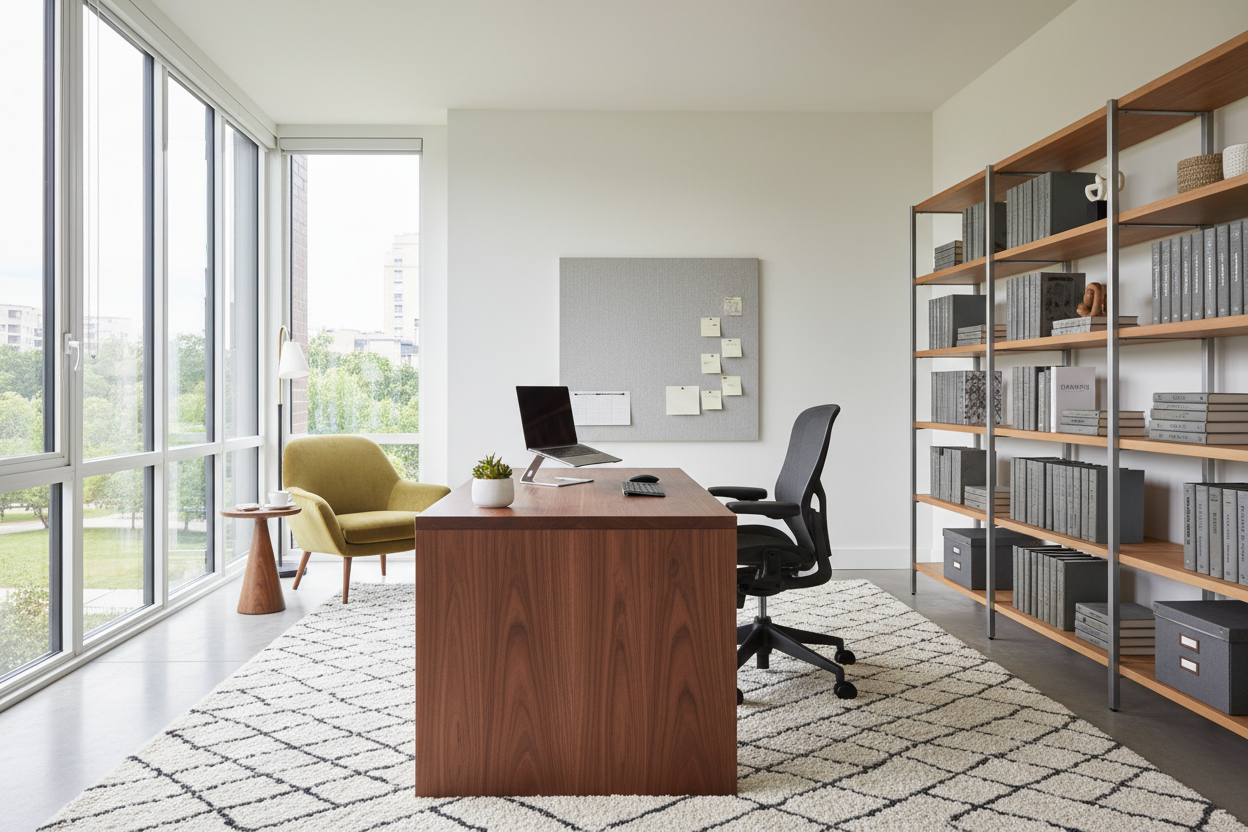
Working from the sofa sounds luxurious in theory, until the lumbar pain sets in and the distraction of household chores breaks your focus. As an interior designer, I see clients struggle daily with the makeshift workspace dilemma. They hesitate to commit a room or a significant corner to work, wondering if the square footage is better used elsewhere. However, the advantages of home office design extend far beyond simple functionality; they fundamentally alter how you interact with your home and your career.
Quick Decision Guide: Why Commit to the Space?
If you are debating whether to convert that guest room or alcove into a permanent workspace, consider these core factors that typically outweigh the initial setup costs:
- Ergonomic Longevity: Dedicated furniture prevents chronic strain associated with dining chairs and kitchen counters.
- Psychological Boundaries: Physical separation creates a necessary mental threshold between "work mode" and "rest mode."
- Property Value: Well-integrated office spaces are currently a top-tier selling point in real estate.
- Visual Control: A curated background and controlled lighting elevate your professional image during video calls.
The Ergonomic Envelope: Health Over Convenience
One of the primary benefits of a home office is the ability to curate an "ergonomic envelope." When we design corporate spaces, we adhere to strict standards; your home should be no different. Working from a dining table often forces a hunching posture because standard dining height (30 inches) is often too high for typing relative to the chair height.
In a dedicated space, we introduce task chairs with synchro-tilt mechanisms and adjustable lumbar support. We select desks at the correct typing height (or sit-stand variations) to maintain blood flow. This isn't just about comfort; it is about preventing long-term musculoskeletal injury.
Psychological Zoning and Focus
The home office advantages regarding mental health are profound. In design theory, we talk about "zoning." When you work in your living room, your brain struggles to switch off because the visual cues of work (laptop, papers) remain in your relaxation zone.
A dedicated office allows for a physical ritual of "going to work." Even if it is just a distinct corner with a specific rug and lighting change, that spatial delineation signals your brain to focus. Conversely, stepping away at the end of the day allows for genuine decompression, a critical component of work-life balance.
Aesthetic Authority and Materiality
Unlike a sterile corporate cubicle, home office benefits include total control over materiality and aesthetics. This is where you can blend function with your personal style narrative.
Choosing the Right Materials
For the desk surface, I often steer clients toward solid wood or high-grade architectural veneers rather than glass. Glass can feel cold to the touch and creates acoustic reflections that are harsh during calls. Walnut or white oak brings warmth and absorbs sound. Furthermore, a dedicated space allows for proper cable management solutions—grommets and vertebrae—that hide the visual clutter, keeping the mind clear.
My Personal Take on advantages of home office
I want to share a lesson from my own renovation that I rarely see mentioned in brochures. When I finally moved from a corner of my bedroom to a dedicated office room, I underestimated the importance of lighting temperature and surface glare.
I initially installed a stunning, high-gloss lacquer desk because it looked incredible in the showroom. However, within a week, I realized two things: first, the glare from my monitor bouncing off the glossy surface was causing significant eye strain by 2:00 PM. Second, on video calls, the reflection highlighted every smudge and fingerprint, looking unprofessional. I eventually swapped it for a matte-finish rift-sawn oak desk and switched my overhead bulbs to 3000K (warm white) rather than the clinical 4000K I thought I needed for focus. The difference in my energy levels at the end of the day was palpable. The real advantage wasn't just having a room; it was having a room tuned specifically to my sensory needs.
Conclusion
Ultimately, the decision to build a dedicated workspace is an investment in your most valuable asset: your attention. By prioritizing ergonomics, establishing psychological boundaries, and curating an environment that reflects your taste, you elevate your output and protect your peace. Don't just make space for work; design a space that works for you.
Frequently Asked Questions
Does a home office add value to my home?
Yes. In the current market, a functional home office is a highly sought-after feature. However, try to use modular furniture or reversible built-ins so the room can be staged as a bedroom if a future buyer prefers that layout.
What is the minimum space needed for a functional home office?
You don't need a massive room. A functional workspace can be achieved in a footprint as small as 48" x 30" for the desk and chair clearance. The key is vertical storage to keep the footprint minimal.
How do I handle lighting in a windowless home office?
Layer your lighting. Combine ambient lighting (ceiling fixtures) with task lighting (desk lamp) and accent lighting (LED strips behind shelves). Avoid a single overhead source, which creates harsh shadows and fatigue.


Leave a comment
This site is protected by hCaptcha and the hCaptcha Privacy Policy and Terms of Service apply.