

















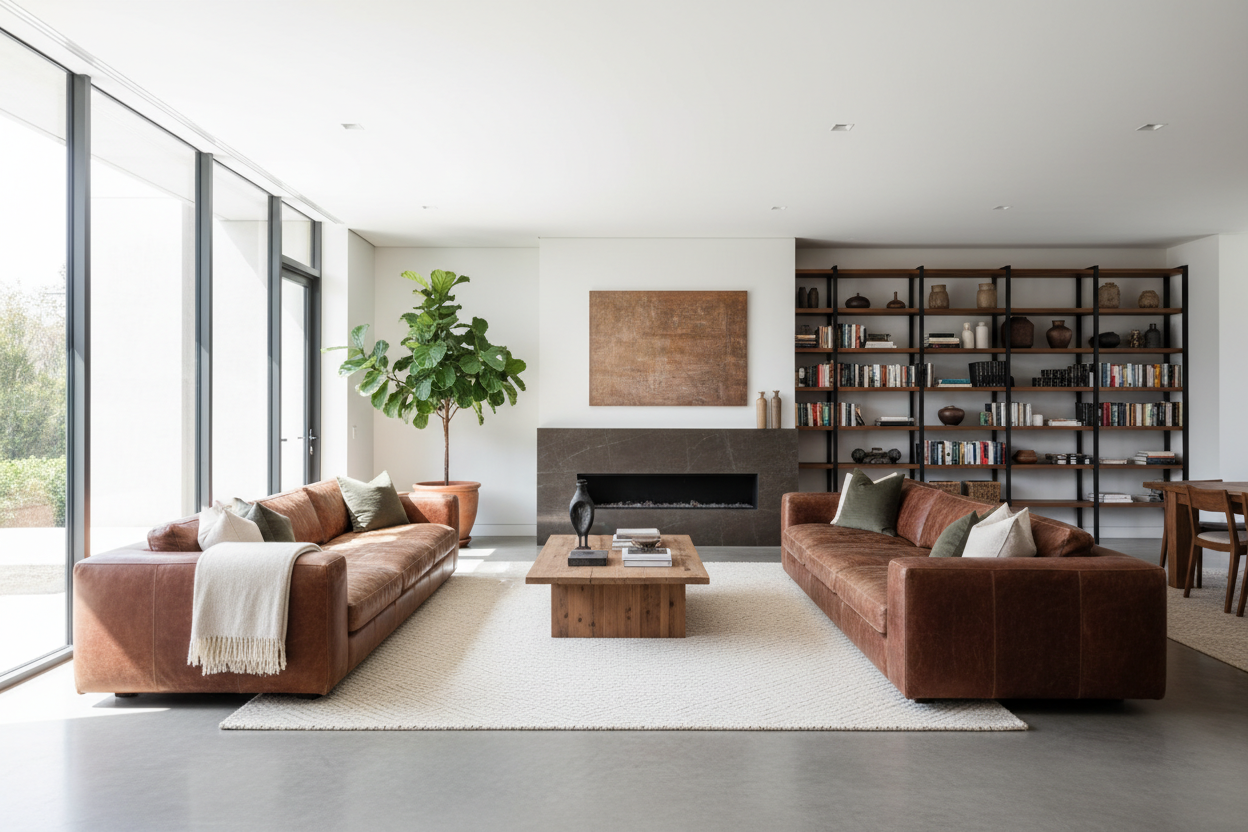
There is a specific gravity to walking into a showroom and falling in love with a massive, buttery-soft sectional. It promises comfort, status, and longevity. However, bringing that piece home often reveals a disconnect between the showroom floor and residential reality. When clients tell me they are hunting for a leather couch big enough to anchor their great room, my first instinct is to pause and evaluate the architecture, not just the upholstery. This article cuts through the marketing fluff to help you decide if a large-scale leather piece is the right anchor for your home.
Key Features to Look For
- Suspension System: Look for 8-way hand-tied springs for maximum longevity; avoid simple webbing for heavy pieces.
- Leather Grade: Prioritize Full-Grain or Top-Grain (Aniline or Semi-Aniline). Avoid "Bonded" leather at all costs.
- Frame Construction: Ensure the frame is kiln-dried hardwood to prevent warping under the weight of a large sofa.
- Cushion Fill: A high-density foam core wrapped in down provides the best balance of structure and "sink-in" comfort.
Choosing the Right Hide: Beyond the Color
In the world of big leather couches, the quality of the hide is the single most significant factor in price and performance. As a designer, I steer clients toward Top-Grain or Full-Grain leathers. Full-grain retains the hide's natural markings and develops a rich patina over time—essentially, it gets better with age. However, if you have a busy household with pets or young children, a Protected (Pigmented) leather might be a more practical choice as it offers a barrier against spills and scratches, even if it sacrifices a bit of that ultra-soft hand feel.
Scale and Proportion: The Volume Issue
A big leather sofa carries immense visual weight. Unlike fabric, which absorbs light, leather reflects it, making the furniture piece appear even larger than its physical dimensions. When space planning, you must account for the "breathing room" around the sofa.
If you jam a large leather piece against a wall in a standard 12x14 living room, the room will feel claustrophobic. I recommend floating the sofa off the wall by at least 18 inches. This creates a circulation path and allows the heavy silhouette of the leather to feel intentional rather than accidental.
Balancing the Heavy Aesthetic
To prevent your living room from looking like a dark cavern or a bachelor pad, you must counterbalance the leather's heaviness. Pair these sofas with lighter, textural elements. Think linen curtains, a high-pile wool rug, or a glass coffee table. This juxtaposition of materials—hard vs. soft, heavy vs. light—is what creates a sophisticated, curated interior.
My Personal Take on leather couch big
I want to share a reality that brochures never mention. A few years ago, I installed a stunning, camel-colored aniline leather sectional in my own den. It was visually perfect. However, I learned a hard lesson about the "slide factor."
For the first six months, that couch was incredibly slippery. If I sat down wearing silk or synthetic fabrics, I would slowly slide into a slouch. Furthermore, throw pillows refused to stay put; they would slide off the leather and end up on the floor daily. It took nearly a year of use for the leather to gain enough texture and grip to hold a pillow in place. Also, be prepared for the "temperature shock"—leather is cold in the winter for the first two minutes you sit on it, and sticky in the summer if you're wearing shorts. These are the unpolished nuances of living with leather that you only learn after the delivery truck drives away.
Conclusion
Investing in a large-scale leather sofa is a commitment to both a lifestyle and an aesthetic. When chosen correctly, it becomes a heirloom piece that anchors your home with sophistication. Focus on the frame and the grain, respect the scale of your room, and be patient with the break-in period. Your living space deserves that level of enduring quality.
Frequently Asked Questions
How do I maintain a large leather couch?
Dust it weekly with a microfiber cloth to prevent abrasion in the seams. Apply a high-quality leather conditioner every 6 to 12 months to keep the hide from drying out or cracking, especially if the sofa is near a heat source or direct sunlight.
Can I put a big leather sofa in a small room?
Yes, but focus on the profile. Choose a sofa with low arms and exposed legs (lifted off the floor). seeing the floor underneath the sofa tricks the eye into thinking the piece is lighter and the room is larger.
Is distressed leather better for pets?
Generally, yes. Distressed leather is designed to look worn, so new scratches from dog claws blend into the existing patina rather than looking like damage. It is a forgiving option for active households.



Leave a comment
This site is protected by hCaptcha and the hCaptcha Privacy Policy and Terms of Service apply.