

















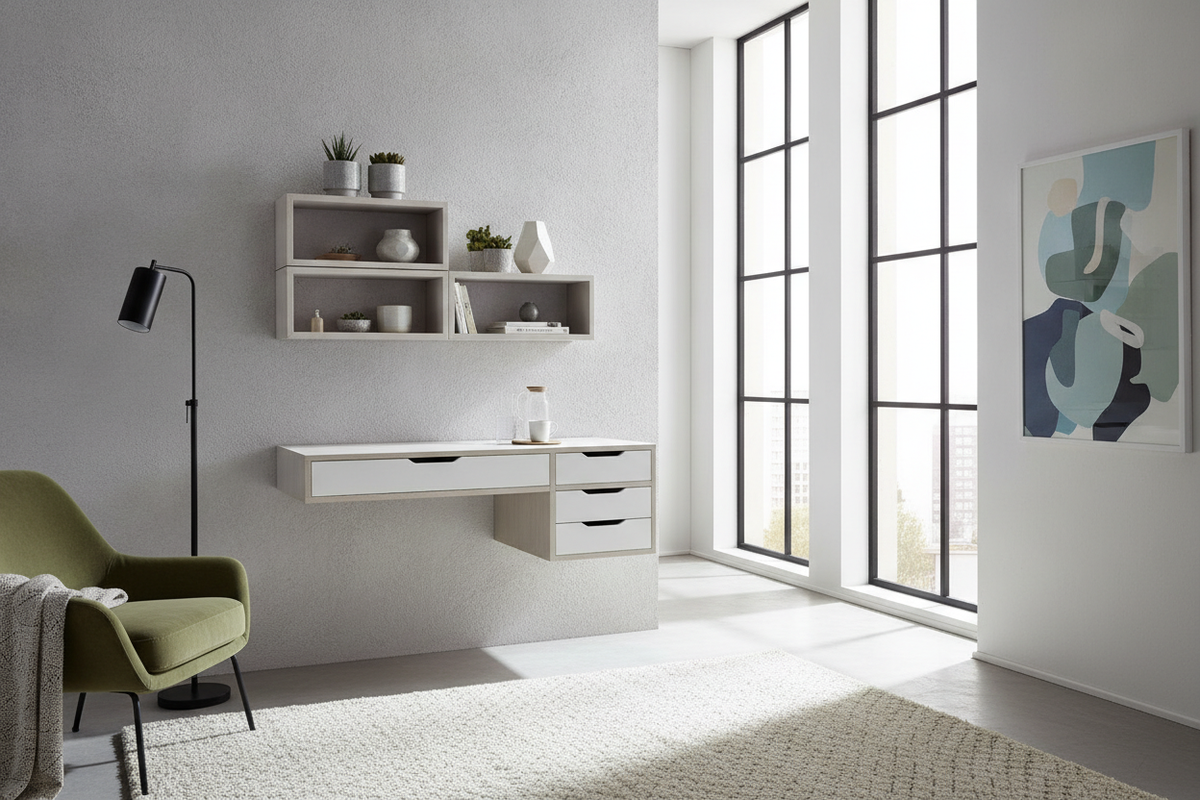
When square footage is at a premium, traditional floor-standing furniture can make a compact room feel crowded. Selecting an ikea floating desk with drawers offers a balance between functional workspace and minimal spatial footprint. By securing the work surface directly to the wall, you keep the floor underneath completely unobstructed, allowing sightlines to flow through the room while maintaining convenient concealed storage right at arm's reach.
Why Choose a Floating Desk with Integrated Drawers?
Wall-mounted work surfaces bring an architectural lightness that traditional desks often lack. In studio apartments, guest rooms, and compact home offices, visual floor space directly influences how open a room feels. When legs and bulky side panels are eliminated, the entire room reads as larger and easier to navigate.
Integrating built-in drawers beneath a cantilevered top solves the primary challenge of minimalist floating shelves: clutter control. An open surface quickly collects charging cords, writing instruments, and loose paperwork. Having shallow drawers built directly into the floating frame keeps essential tools organized and out of sight, preserving a clean work area throughout the day.
Anatomy of a Wall-Mounted Drawer Workstation
A wall-hung desk with drawers relies on several core components engineered to balance storage depth and structural stability:
- Top Work Surface: The main horizontal panel providing space for laptops, peripheral devices, or writing tasks.
- Shallow Drawer Casings: Slim profile storage boxes positioned flush beneath the work surface, designed to provide utility without encroaching on knee space.
- Concealed Suspension Hardware: Heavy-duty mounting brackets, structural cleats, or suspension rails anchored into wall studs.
- Integrated Cable Channels: Pass-through cutouts or recessed rear gaps that channel power cables neatly down along the wall.
Dimensional Tiers and Drawer Configurations
When selecting a floating desk with drawers ikea configuration, drawer layout dictates both ergonomic comfort and storage capacity. Because the unit is cantilevered, the vertical thickness of the drawer box directly impacts legroom clearance underneath.
Single-drawer spans provide a broad, shallow bay suited for wide accessories, tablets, or sketchbooks. Dual-drawer setups split the compartment down the center, which helps categorize tech accessories on one side and everyday stationery on the other. For those comparing wall-mounted options with free-standing designs, exploring dedicated integrated drawer workstations can help clarify how much horizontal surface area versus vertical drawer volume your daily workflow requires.
Wall Mounting, Load Distribution, and Structural Planning
Proper mounting is paramount for any floating furniture piece. Because floating desks support resting forearms, computing equipment, and internal storage weight, anchorage must be planned carefully prior to installation.
Locating Wall Studs
Securing the primary mounting brackets into solid structural timber studs provides the most reliable support. Using a stud finder across the intended installation zone ensures that screws bite into solid framing rather than relying solely on hollow drywall.
Drywall Anchors and Masonry
If stud locations do not align evenly with the mounting holes of the suspension rail, heavy-duty hollow-wall toggle bolts or specialized masonry anchors for brick and concrete walls can supplement the installation. Ensuring that load-bearing points are distributed evenly across the length of the bracket prevents sagging or tilt over time.
Room Blueprints: Integrating Floating Desks Across the Home
Because floating drawer desks do not rely on floor support, they can be adapted into areas where full-sized desks cannot easily fit.
Bedroom and Alcove Workspaces
Shallow wall alcoves between closets or beside a window serve as natural pockets for a wall-mounted desk. Mounting the unit at standard desk height allows a task chair or slim stool to tuck completely beneath the drawer casing when not in use. If your goal is to completely conceal your workspace behind doors at the end of the day, reviewing a concealed workstation planning guide provides alternative strategies for blending functional furniture into bedroom architecture.
Living Room Multi-Zone Corners
In open living rooms, a floating drawer unit can double as an entryway console or display shelf when the laptop is stored away. Selecting a neutral finish that matches surrounding cabinetry creates visual continuity, preventing the work zone from looking disjointed from the rest of the decor.
Maximizing Shallow Drawer Storage and Daily Workflow
The compact drawer depth typical of floating desks encourages mindful organization. To keep drawer interiors functional:
- Use Low-Profile Trays: Modular acrylic or felt compartment trays prevent pens, memory drives, and charging cables from shifting when the drawer is pulled open.
- Dedicate Zones by Frequency: Place daily essentials near the front edge of the drawer, reserving rear compartments for back-up supplies or spare adapters.
- Manage Surface Cables: Mount a low-profile power strip directly beneath the desk casing or inside a cable trough along the rear edge to keep cords elevated off the floor.
Styling, Finishes, and Vertical Wall Integration
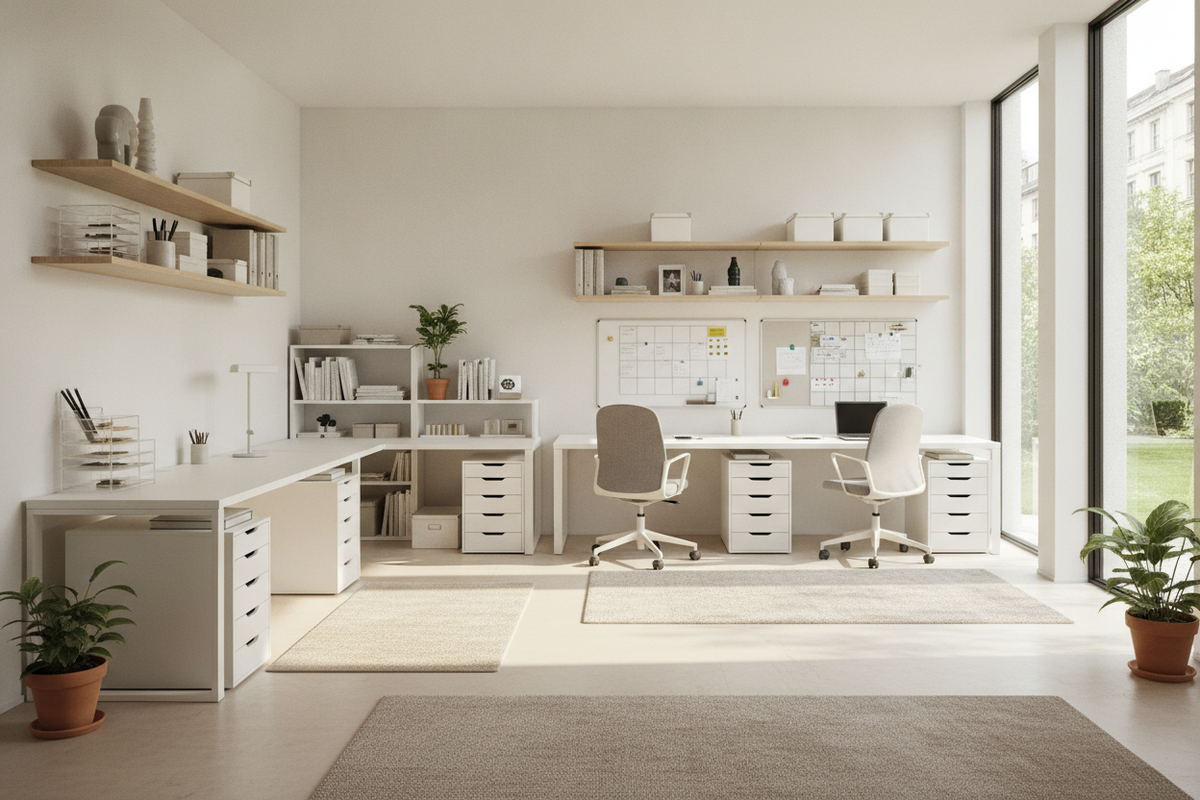
A floating desk functions best as part of a coordinated vertical wall system. Installing floating shelves or hanging pinboards directly above the desk surface draws the eye upward, expanding usable storage without consuming floor area. For those seeking a fully tailored aesthetic, exploring built-in desk and shelving integration can inspire cohesive wall-to-wall cabinetry treatments.
Complement the clean lines of a wall-mounted desk with directional task lighting, such as a plug-in wall sconce or an adjustable clamp-on desk lamp. Pairing the desk with an ergonomic chair featuring a compact base ensures seamless movement, creating an organized, comfortable, and clutter-free workstation in any home setting.

Leave a comment
This site is protected by hCaptcha and the hCaptcha Privacy Policy and Terms of Service apply.