

















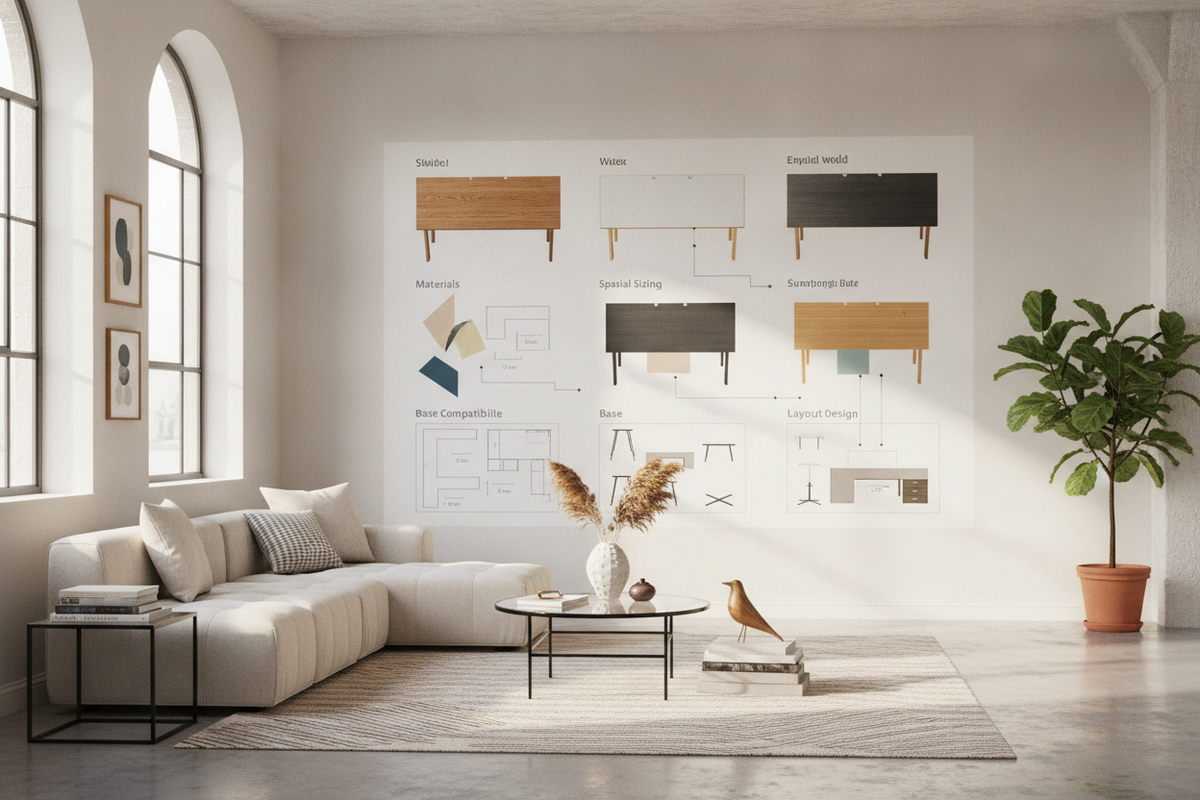
Understanding the Anatomy of an IKEA Desk Top
Modular furniture systems have transformed how homeowners and remote professionals conceptualize personal work areas. Selecting an independent desk top allows you to tailor your workstation to your physical space, technical gear, and aesthetic preferences. Instead of committing to a rigid, all-in-one desk unit, modular tabletops let you combine distinctive surface textures with customized leg arrangements, storage pedestals, and organizational accessories.
The choice of desk surface serves as the foundation for your daily productivity. The board material dictates tactile comfort, resistance to daily wear, resistance to sagging under distributed equipment loads, and compatibility with desktop accessories like clamp-on monitor arms. Understanding the composition, size categories, and structural support requirements of modular desk tops ensures you build an enduring, ergonomic workspace.
Core Material Profiles: Matching Composition to Use Case
Desk surfaces are engineered using several distinct manufacturing methods. Each construction type balances weight, structural rigidity, tactile presence, and maintenance requirements differently.
Solid Wood and Thick Veneer Slabs
Solid timber and thick wood veneer slabs provide substantial weight, natural grain character, and long-term durability. These dense boards offer superior resistance to deflection when supporting heavy items such as multi-monitor arrays, desktop computer towers, and audio equipment. Because the core contains dense fiber or solid lumber, it securely accepts threaded fasteners, undersurface cable trays, and heavy-duty C-clamps without crushing the internal structure.
For rooms where organic texture and timeless craftsmanship take center stage, choosing a natural timber board or opting for a dedicated solid wood writing desk introduces warmth that synthetic materials cannot easily duplicate. Natural wood surfaces can also be sanded and refinished over time if surface scratches or water marks occur, offering a prolonged lifespan in home studies. When coordinating interior tones, exploring solid wood finishes and wood grain aesthetics can help harmonize your desk surface with nearby media consoles and shelving.
Engineered Honeycomb Paper Core and Fiberboard Surfaces
Lightweight modular tops frequently utilize a sandwich structure featuring a honeycomb paper core encased in thin particleboard or high-density fiberboard framing with an outer printed or lacquered skin. This design keeps the tabletop exceptionally lightweight, making room rearrangement and relocation straightforward.
While highly practical for standard laptop work, study rooms, and craft tables, hollow-core surfaces require thoughtful hardware pairing. Concentrated pressure from heavy clamp-style monitor mounts can compress the lightweight internal structure if applied far from the reinforced perimeter frame. Using a wide reinforcement plate or positioning heavier loads directly over support legs preserves the structural integrity of fiberboard surfaces.
Laminate and Melamine Finishes
Melamine-faced particleboard and high-pressure laminate surfaces provide a durable, non-porous working layer suitable for multipurpose utility. These synthetic surface wraps resist daily pen marks, beverage condensation, and general scuffs better than unsealed natural wood. They wipe clean with mild soap and water, making them ideal for high-traffic student workstations, drafting areas, and shared family home offices.
Tabletop Dimension Classes and Spatial Planning
Selecting the right desk top dimensions involves balancing available room clearance with the spatial footprint of your daily work tools. Categorizing tops by dimension class helps streamline your selection process.
Compact and Square Surfaces for Tight Alcoves
Compact boards provide focused working areas for secondary bedrooms, urban apartments, and tight architectural nooks. These scaled-down surfaces accommodate a single laptop, a compact notebook, and basic task lighting without overwhelming room pathways. Homeowners seeking efficient spatial planning often evaluate corner desk and compact surface layouts to maximize perimeter walls while preserving central floor area.
Mid-Sized Workhorse Profiles for Standard Home Offices
Mid-sized tabletops represent the standard baseline for dedicated remote work environments. This dimension profile provides generous depth for placing an external display at a healthy viewing distance while leaving ample front clearance for a full-sized keyboard, wrist rest, and desk mat. The lateral width easily hosts desktop audio speakers, a document stand, and small desk accessories without feeling cluttered.
Expansive Spans and Dual-Station Formats
Extra-wide surfaces accommodate multifaceted creative workflows, ultrawide curved monitors, multiple desktop peripherals, or side-by-side collaborative seating. When setting up an expansive span, accounting for room traffic flow is essential. Ensure there is adequate clearance behind the seating position for chair movement and smooth room transit.
Under-Desk Support Systems and Modular Base Pairing
A tabletop requires an appropriate supporting foundation to maintain stability and prevent long-term sagging. Modular desks allow you to mix and match base elements according to your storage and ergonomics needs.
Drawer Pedestal and Hybrid Leg Layouts
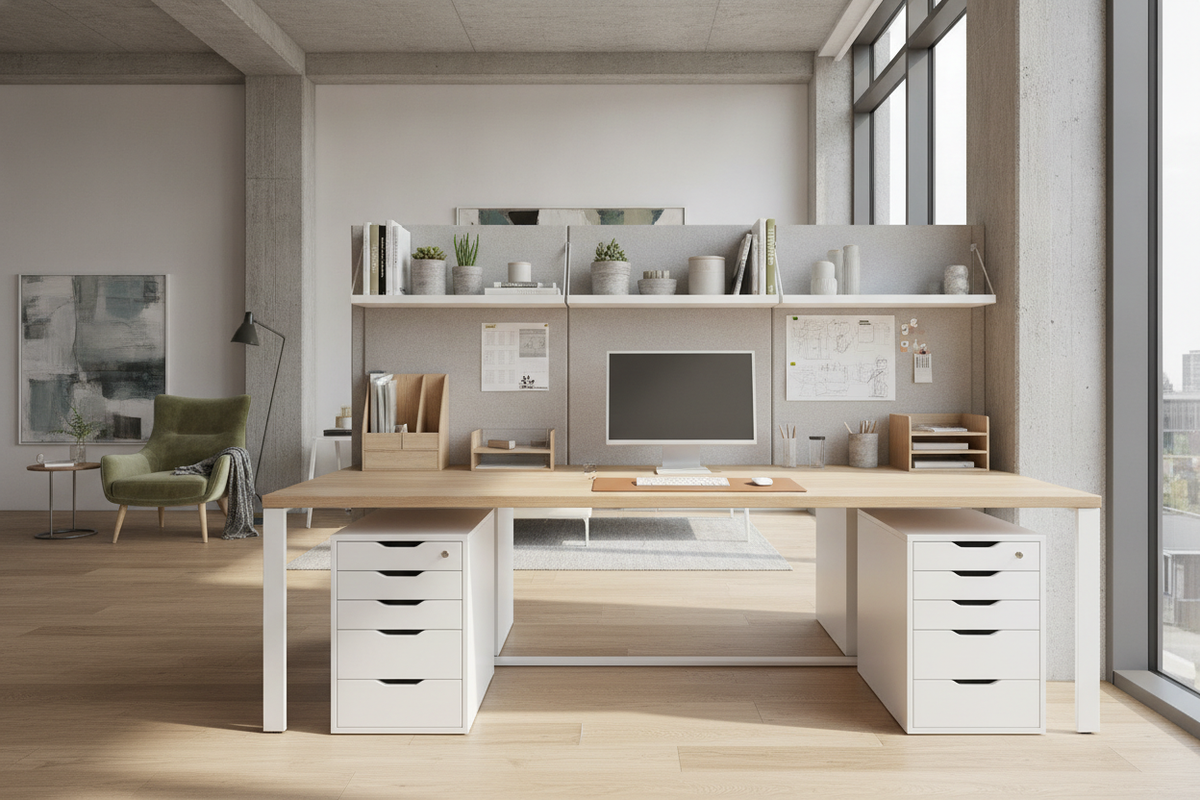
One of the most practical configurations combines standard cylindrical or square tubular legs with integrated drawer units. Placing a multi-drawer pedestal on one or both sides provides broad, stable contact points beneath the desk slab while concealing charging cables, paperwork, and office accessories. If you prefer a unified aesthetic without configuring separate parts, browsing a comprehensive writing and computer desk collection offers coordinated alternatives with pre-engineered support framing.
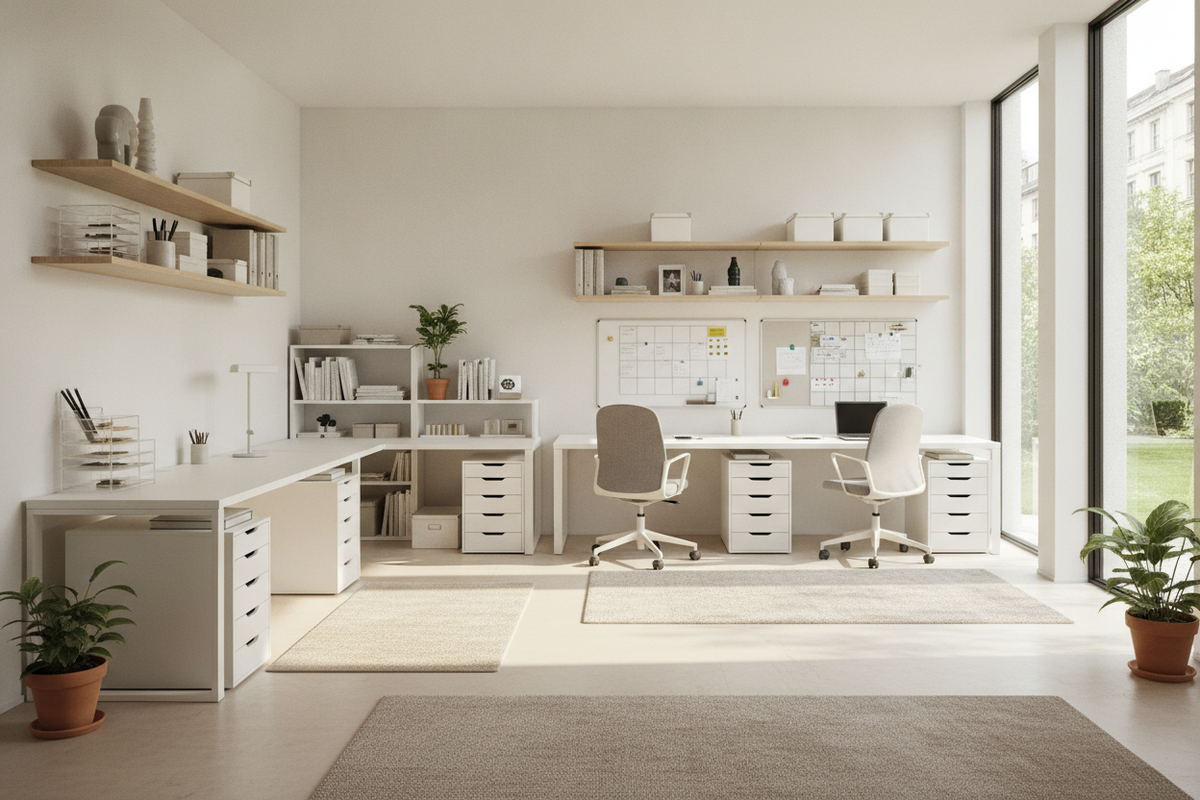
For angular room layouts where maximum surface area and integrated utility are paramount, exploring a corner computer desk with large storage provides expansive lateral support with built-in cabinetry.
Span Reinforcement and Deflection Prevention
Long desktop spans supported solely at the outer edges can experience center deflection over time, particularly under continuous equipment weight. Incorporating a center support leg toward the rear perimeter prevents structural sag without interfering with central knee clearance. Alternatively, mounting stiffener channels or stiffening aprons beneath the board reinforces wide spans while preserving an open, leg-free under-desk profile.
Room Integration and Layout Configurations
The positioning of your modular desk top establishes the visual balance and functional flow of your workspace:
- Perimeter Wall Alignment: Placing the long edge flush against a wall optimizes floor area, hides peripheral wiring behind the desk rear, and allows for wall-mounted shelving above the work plane.
- Window Orientation: Positioning the desk perpendicular to natural light sources reduces harsh screen glare while providing refreshing exterior views during breaks.
- Floating Centerpiece Layout: In spacious home offices, floating the desk centrally creates an executive presence, allowing dual-sided access and unobstructed sightlines toward room entry points.
Surface Care, Cable Management, and Ergonomic Optimization
Maintaining your desk top ensures long-term visual appeal and comfortable daily use. For solid wood surfaces, periodic applications of mineral or wood care oil maintain natural grain luster and protect against ambient humidity shifts. Laminate and lacquered boards require only gentle microfiber wiping with non-abrasive cleaners to preserve their smooth outer sheen.
Under-desk cable raceways, adhesive wire clips, and tabletop grommets keep power bricks and connectivity cords neatly organized. Pairing a clean, well-supported desk top with an adjustable ergonomic chair and appropriate monitor positioning completes a tailored, professional home workspace built for comfort and productivity.

Leave a comment
This site is protected by hCaptcha and the hCaptcha Privacy Policy and Terms of Service apply.