

















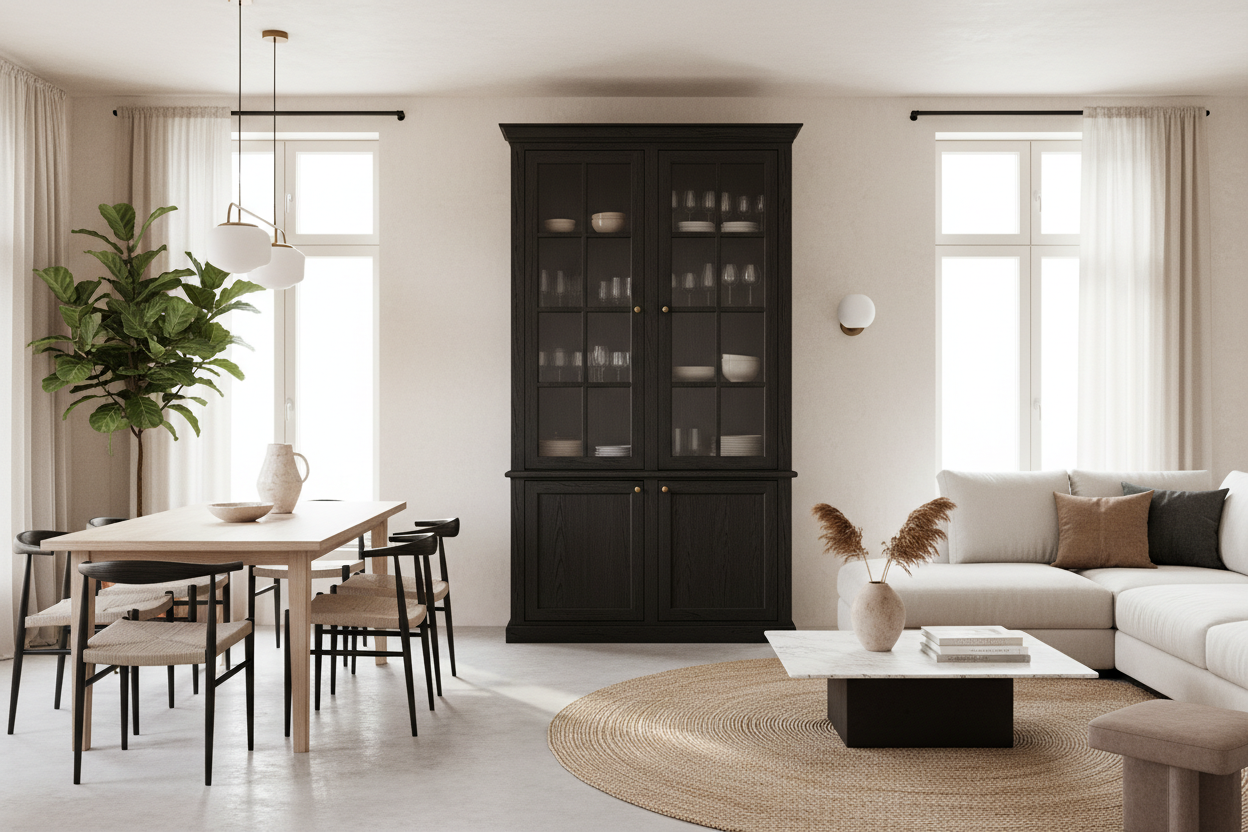
I spent three years trying to convince myself that a mid-century sideboard was all I needed. It looked great in photos—sleek, low-slung, and very 'adult.' But every time I hosted Thanksgiving or a simple Sunday dinner, I ended up in a low-stakes wrestling match with my own furniture. I was literally on my hands and knees, reaching into the dark recesses of a 30-inch-deep cabinet trying to find a salad spinner while my guests waited for their greens.
The reality is that most standard buffets are built for aesthetics, not for the sheer bulk of actual kitchen life. My turning point came when I realized I was storing my oversized serving platters in the coat closet because they wouldn't fit in the dining room. That is when I ditched the low-profile look for a dining cabinet tall enough to actually do some heavy lifting.
Quick Takeaways
- Vertical storage maximizes your footprint, giving you three times the capacity of a standard sideboard.
- Adjustable shelving is the only way to accommodate 'problem' items like tiered cake stands and tall carafes.
- Glass-front doors prevent a 72-inch piece of furniture from feeling like a giant wooden monolith in a small room.
- A tall cabinet actually improves room flow by keeping storage tight against the wall rather than sprawling horizontally.
The 'Waist-High' Trap: Why My Sideboard Was not Cutting It
We have been conditioned to think that every dining room needs a long, low console. While a modern brown sideboard buffet cabinet is a gorgeous choice for staging a bar tray or a pair of table lamps, it is often a functional nightmare for storage. The problem is simple geometry. You get maybe two shelves of height, and everything ends up buried three layers deep.
I found that my old sideboard was a graveyard for things I rarely used because getting them out was such a chore. If I wanted the platter at the bottom of the stack, I had to remove six other plates first. Lateral storage fails because it forces you to prioritize depth over accessibility. When you switch to a tall dining room cabinet, you stop digging and start reaching.
Enter the Tall Dish Cabinet: What Actually Fits Inside?
Once I moved to a tall dish cabinet, the storage math changed completely. Suddenly, I had five or six shelves instead of two. This meant I could dedicate entire levels to specific categories: one for daily glassware, one for the 'good' china, and a high-clearance shelf for the awkward stuff.
A tall cabinet for dining room layouts is a savior for things like 12-cup coffee makers, stand mixers, or those massive wooden salad bowls that never seem to fit in a standard kitchen cupboard. If you choose a tall dining room storage cabinet with adjustable shelves, you can customize the heights to the inch. I have one shelf set specifically to 16 inches just to house my oversized wine decanters and tall pitchers that used to live on top of my fridge gathering dust.
How to Style a Tall Dining Room Cabinet Without It Looking Heavy
The biggest fear people have with vertical furniture is that it will 'eat' the room. A 7-foot tall storage cabinet for dining room use can definitely feel imposing if it is just a solid block of dark wood. To avoid the 'Victorian library' vibe, I always look for pieces with glass-front upper doors. This creates a sense of depth and allows the eye to travel through the piece rather than hitting a wall of wood.
When researching dining room china cabinet sets, look for interior lighting. Integrated LEDs make a massive difference; they turn a storage unit into a display piece. I also recommend leaving some 'negative space' on the shelves. Do not pack every inch with plates. Mix in some cookbooks, a few pieces of pottery, or even a small plant to break up the visual weight of the dining room tall cabinet.
Why a Tall Storage Cabinet for Dining Room Layouts Actually Saves Floor Space
It sounds counterintuitive, but going big actually makes your room feel bigger. Most dining room tall storage cabinets take up about 36 to 48 inches of horizontal wall space. To get that same amount of storage in a low buffet, you would need a piece that is 8 or 9 feet long. That is a lot of floor real estate to sacrifice.
By going vertical, you open up the floor. This is a total win when updating your dining room because it creates more 'breathing room' around the table. My guests no longer have to turn sideways to squeeze past the buffet to get to their seats. The storage is all up high, leaving the floor clear for actual human movement. It is the smartest trade-off I have ever made in my home.
FAQ
Will a tall cabinet make my small dining room look cramped?
Actually, the opposite is usually true. By drawing the eye upward, a tall piece emphasizes the height of your ceilings. Just stick to lighter finishes or glass-front doors to keep the vibe airy.
How do I prevent a tall cabinet from tipping?
Never skip the wall anchor. Most quality cabinets come with an anti-tip kit. If yours does not, buy a heavy-duty one at the hardware store. It takes five minutes to install and is non-negotiable, especially if you have kids or pets.
Are glass shelves strong enough for heavy stacks of plates?
Check the weight rating. Most tempered glass shelves in dining room tall storage cabinets are rated for 20-30 lbs, which is plenty for a standard set of dishes. If you are storing a heavy cast-iron collection, look for a model with solid wood or reinforced metal shelving.

Leave a comment
This site is protected by hCaptcha and the hCaptcha Privacy Policy and Terms of Service apply.