

















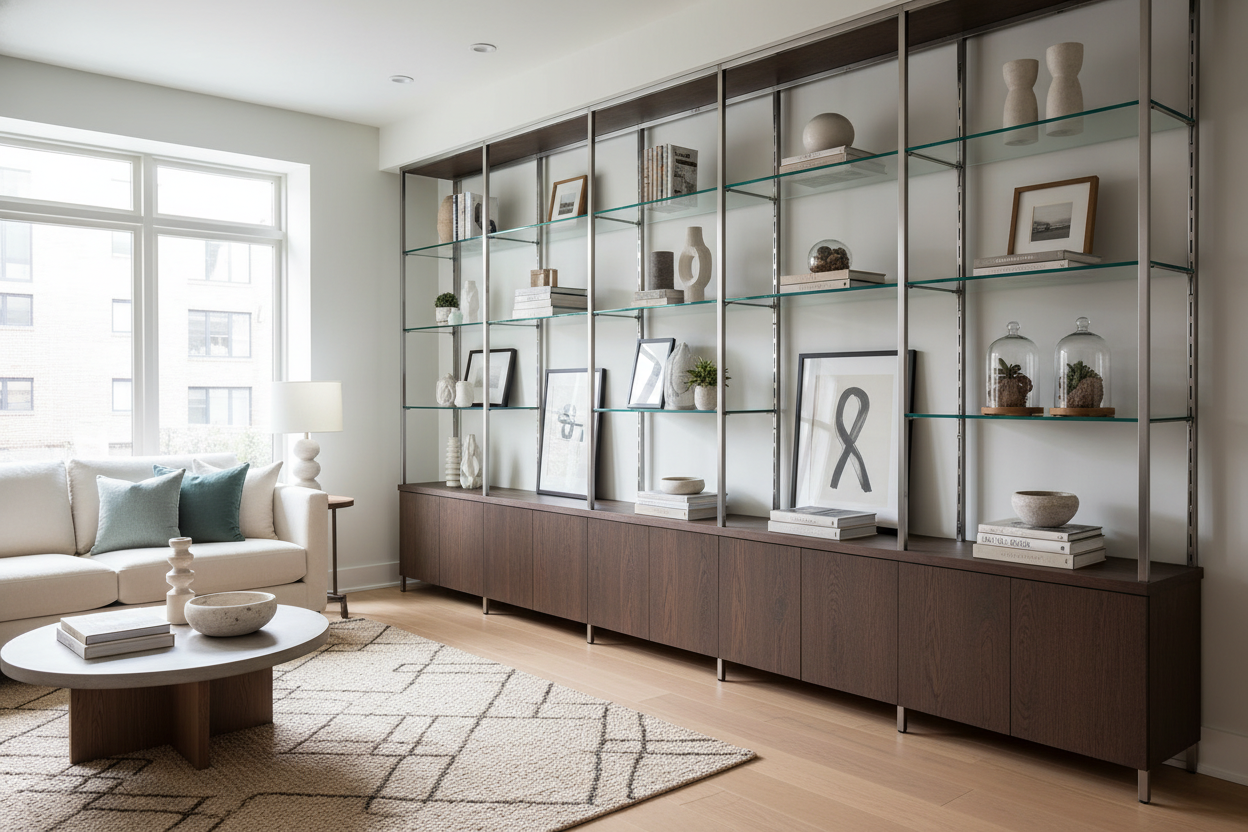
I spent five years as a visual merchandiser, which basically means I spent forty hours a week making things look expensive so people would buy them. When I eventually left that job, I looked at my own living room and felt like I was living in a cave. My heavy wooden bookshelves were eating all the light and making my ceramics look like they were in storage rather than on show. That's when I realized the most underrated trick in my arsenal was glass shelves for display.
- Light flows through the entire unit, eliminating dark corners.
- Glass doesn't compete with your decor; it highlights it.
- Tempered glass is surprisingly durable and holds way more weight than you'd think.
- It forces you to be more intentional about what you actually keep.
Why I Started Shopping at Commercial Fixture Supply Stores
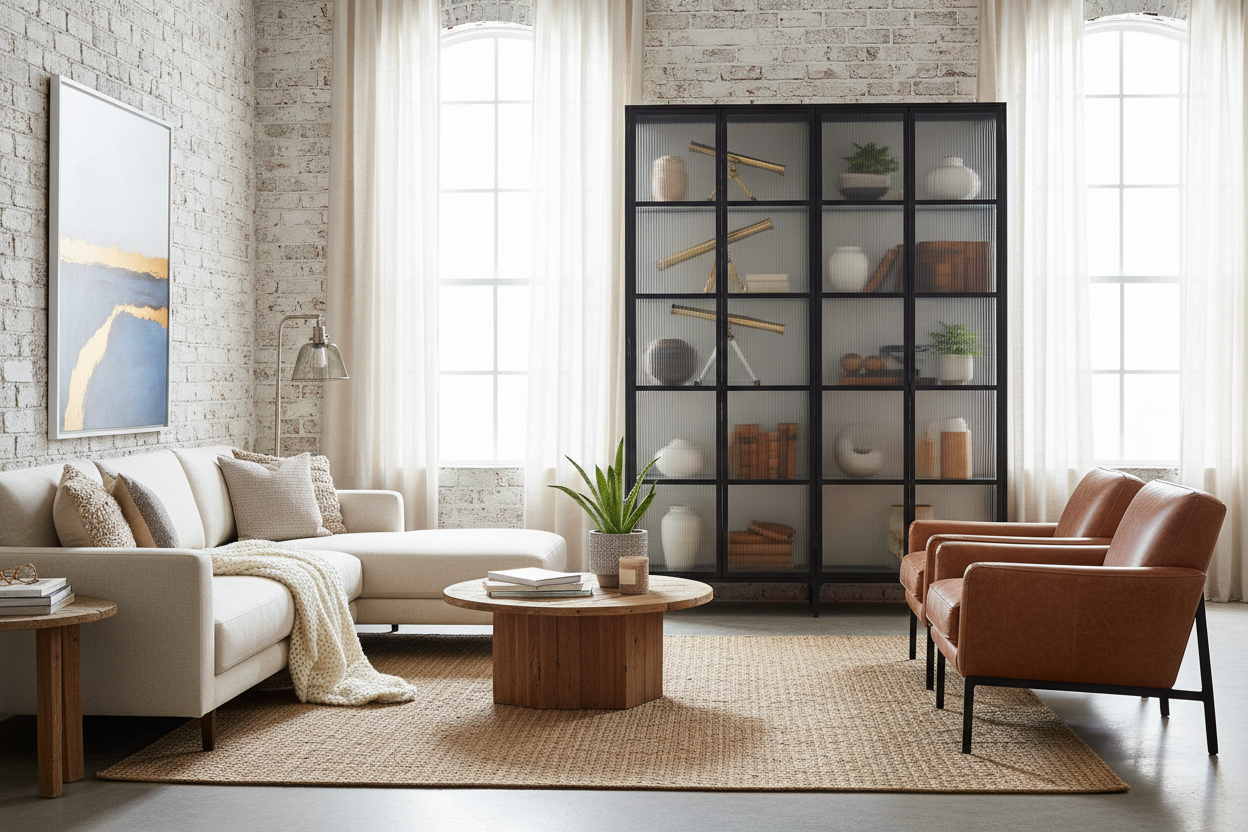
The 'aha' moment happened while I was setting up a luxury boutique downtown. I was using glass display shelves for retail that cost a fraction of high-end residential furniture but looked ten times sleeker. I went home and swapped my chunky oak unit for a display cabinet with glass doors and the room instantly felt five feet wider. Commercial fixtures prioritize visibility and durability over 'furniture-y' vibes, which is exactly what you want if you have a collection worth looking at.
Standard home furniture often feels like a giant box taking up floor space. When you switch to a glass shelving display, the 'visual weight' of the piece almost disappears. You see the wall behind it, you see the floor under it, and most importantly, you see your stuff. I’ve found that 6mm or 8mm tempered glass is the sweet spot—it’s thick enough to feel premium and sturdy but thin enough to stay elegant.
The Lighting Secret Behind Any Good Glass Shelving Display
Lighting is where most home decorators fail. If you have solid wood shelves, a light at the top only illuminates the top shelf. Everything below it sits in a muddy shadow. Retail display glass shelves solve this by letting light cascade down through every single level. If you place one spotlight at the top, the entire unit glows. It’s physics, but it feels like magic when you’re showing off a collection of glassware or vintage cameras.
I usually add a small LED strip at the back of each shelf or a single puck light at the top. Because the glass is transparent, the light bounces around and hits the underside of your objects, too. It creates a gallery-style depth that you just can't get with MDF or plywood. It’s the difference between looking at a shelf and looking at an exhibit.
How to Stop a Glass Shelf Retail Display From Looking Cold
The biggest fear people have is that glass makes a room feel like an airport sunglass kiosk or a sterile doctor's office. It can, if you aren't careful. The trick is to balance that cold transparency with grounding materials. I often recommend a large display cabinet storage shelf because it uses metal handles and solid drawers to anchor the look. You get the airy glass at eye level, but the unit still feels like a permanent piece of furniture.
Anchor the Bottom With Heavy Textures
Don't leave the bottom shelf empty or filled with more glass. Use the lowest tiers for things with physical weight. Think oversized coffee table books, a heavy woven seagrass basket for blankets, or a stack of wooden bowls. This 'grounds' the unit so it doesn't look like it's floating away. It creates a visual foundation that allows the upper glass shelves to feel intentional and light.
Use the 'Negative Space' Rule
In retail, we never cram a shelf from edge to edge unless we're selling clearance socks. For a high-end look, leave at least 30% of the shelf empty. This 'negative space' tells the eye that the objects on the shelf are important. If you crowd a glass shelf, it just looks like a messy pile of floating junk. Give your favorite vase some room to breathe.
Cabinet vs. Open Rack: Which Actually Works Better?
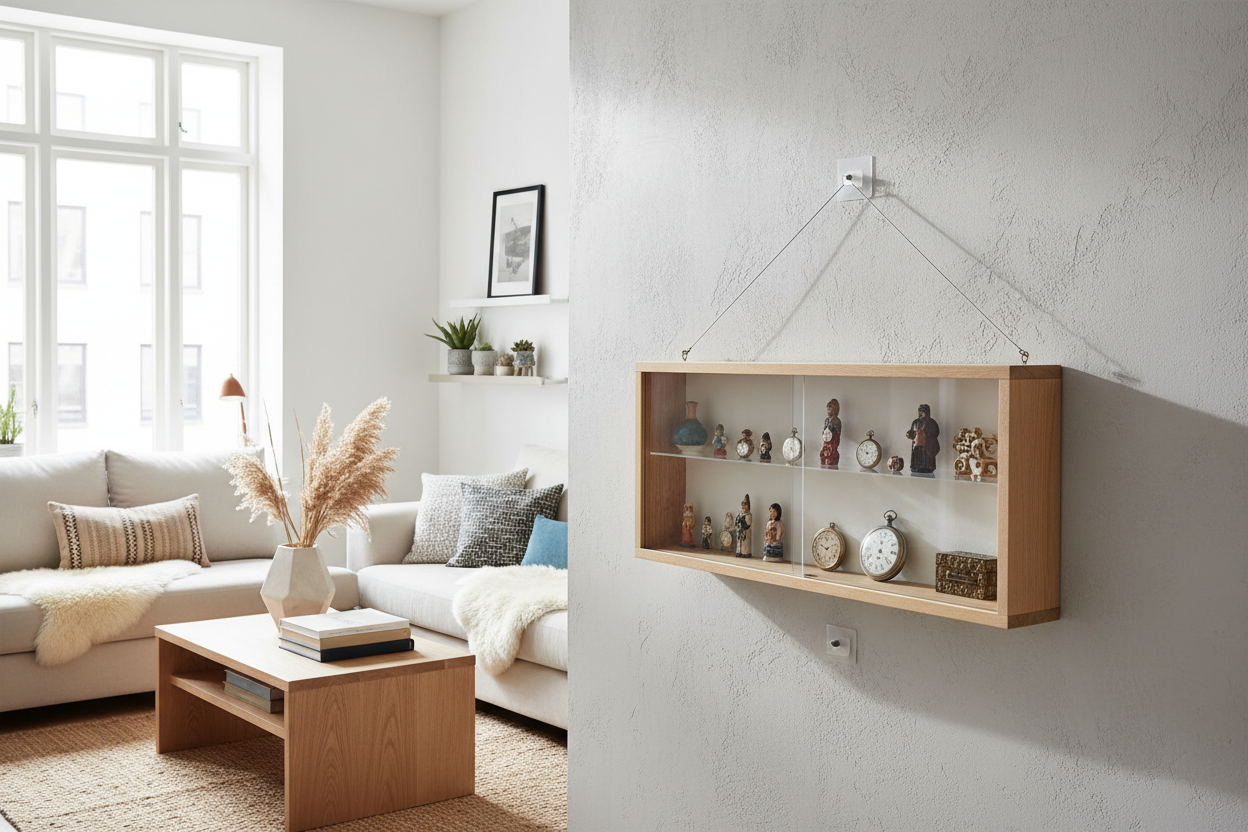
This is the great debate. An open rack is easier for grabbing things you use daily, but it’s a dust magnet. If you’re displaying high-maintenance items like delicate glass or Lego sets, go for a closed cabinet. It keeps the cat out and the dust off. However, if you have oddly shaped items, you absolutely need adjustable shelf storage. I once bought a fixed-height glass unit and realized my favorite 14-inch vase missed the clearance by half an inch. It was heartbreaking.
I personally prefer a hybrid approach—glass doors on top for the pretty stuff and solid drawers on the bottom for the things I don't want anyone to see. It’s the most functional way to bring that retail 'wow' factor into a real, messy home.
My Biggest Mistake
I once bought a cheap, non-tempered glass unit from a thrift store. Big mistake. I put a heavy stack of art books on the middle shelf, and it shattered in the middle of the night. It sounded like a gunshot. Now, I never buy glass shelving unless it specifically says 'tempered.' It's not worth the risk, especially if you have kids or pets running around.
FAQ
Are glass shelves hard to keep clean?
Honestly? Yes, fingerprints happen. But a quick wipe with a microfiber cloth and some Windex once a week is all it takes. It's a small price to pay for how much better they make your room look.
How much weight can a glass shelf actually hold?
If it's 6mm tempered glass with proper supports, most can easily hold 15-25 pounds. Just don't use them for your entire encyclopedia collection; keep the heavy stuff on the bottom or on the metal frame supports.
Will glass shelves make my small room look bigger?
Absolutely. Because you can see through them, they don't 'break' the room. Your eye travels all the way to the wall, which tricks your brain into thinking there's more square footage than there actually is.

Leave a comment
This site is protected by hCaptcha and the hCaptcha Privacy Policy and Terms of Service apply.