


















I was staring at a stack of 1960s French fashion magazines and a box of vintage lighters I’d spent three years hunting down. They were shoved into a drawer because my walls were already covered in art. My coffee table, a massive block of reclaimed oak, was doing nothing but holding a half-empty mug and a remote. It felt like a massive waste of prime real estate in a 700-square-foot apartment.
That is when I decided to pivot to flat display cases. I wanted my stuff where I could actually see it, but I also needed a place to put my drink. Swapping a traditional table for a glass-topped showcase is the smartest design move I’ve made in five years. I am never going back to a solid wood slab that just collects dust and junk mail.
- Showcases horizontal collections like jewelry or paper ephemera that don't work on walls.
- Glass tops create visual 'air' in small living rooms, making them feel less cramped.
- Locks keep curious pets and toddlers away from fragile antiques.
- Adding a wooden tray on top allows for normal coffee table use without scratching the glass.
The 'Aha' Moment: When I Ran Out of Wall Space
We’ve all been there. You collect something specific—maybe it’s pressed botanicals, vintage postcards, or enamel pins—and you eventually run out of vertical space. You can only hang so many frames before your living room looks like a Victorian parlor on steroids. I had items that were meant to be viewed from above, not from across the room, and they were languishing in acid-free boxes under my bed.
The problem with traditional shelving is that things get buried. If you put a flat object on a high shelf, you’re just looking at the edge of a piece of paper. I needed a horizontal solution that didn't involve buying another bulky dresser. I realized my coffee table was basically just a 40-inch by 40-inch dead zone. By replacing it with a low-profile case, I turned that dead zone into a rotating gallery of my favorite things. It changed the entire energy of the room from 'cluttered storage' to 'curated gallery.'
Why Flat Display Cases Actually Work as Furniture
Most people think these are just for jewelry shops or museums, but they are actually secret weapons for residential design. When you look at a display case for retail what designers actually look for in store fixtures, you see they prioritize durability and visibility. That translates perfectly to a home setting where you want to show off a collection without it getting covered in a layer of gray fuzz every three days.
Visually, these cases are a win. A heavy wooden table can 'anchor' a room, but in a small apartment, it often feels like a boulder sitting in the middle of the floor. A glass-topped case has a lightness to it. You see the floor through it, which tricks your brain into thinking the room is bigger than it actually is. Plus, the aluminum or steel frames add a modern, industrial edge that balances out a soft, velvet sofa perfectly. It’s about that contrast between the hard glass and the soft upholstery.
The Pet Proofing Secret: Getting a Flat Locking Display Case
If you have a cat, you know that any flat surface is a launchpad. If you have a toddler, any flat surface is a buffet. I learned the hard way that an open-top display is an invitation for disaster. My cat, Barnaby, once decided my collection of 1920s fountain pens were actually very expensive chew toys. I found one under the fridge with teeth marks in the celluloid.
This is why a flat locking display case is a non-negotiable for me. It’s not just about preventing theft; it’s about containment. Having a keyed lock means I can display fragile items without worrying about them being swiped onto the rug or swallowed. It gives you peace of mind that a standard glass-topped coffee table just can't provide. You get the museum look with the security of a vault, which is essential when you're living with a 12-pound predator who thinks your antiques are toys.
How to Style Them Without Looking Like a Pawn Shop
The biggest fear people have is that their living room will end up looking like a local hobby shop or a sketchy jewelry store. The key is in the surrounding textures. You have to soften the hard edges of the metal and glass. I keep a high-pile Moroccan rug underneath mine to create a contrast between the cold glass and the warm wool. It grounds the piece and makes it feel like 'home' rather than 'commercial.'
For day-to-day use, I don't just leave the glass bare. I use a small walnut tray to hold my coasters, candles, and remotes. This protects the glass from scratches and gives the eye a solid place to land. Also, watch your lighting. Harsh overhead lights will create a nasty glare on the glass that makes it impossible to see what's inside. Use floor lamps with warm bulbs to cast a soft glow from the side—it makes the items inside look curated and expensive, not just stored. Avoid those cheap LED strips that look like a gaming PC; stick to warm, indirect light.
Horizontal vs. Vertical: Which Setup Does Your Room Need?
Before you commit, look at your footprint. A flat case is great for center-of-the-room placement, but it does take up floor space. If you’re in a tiny studio where every inch of floor is a premium, you might find a corner display case is a better use of your square footage. It tucks away into that awkward 90-degree angle but still gives you that professional look without blocking the flow of traffic.
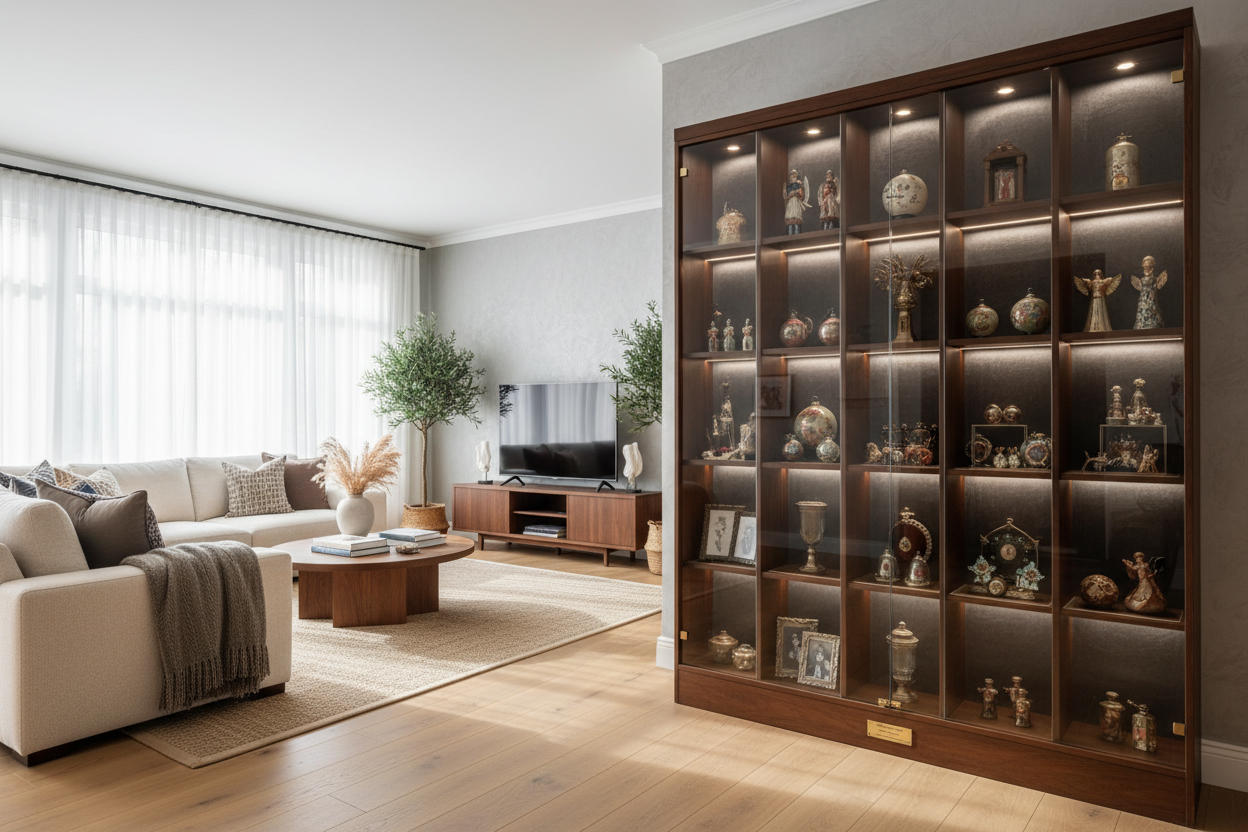
On the other hand, if you have high ceilings and a narrow room, go vertical. A 4 layer glass door display case with LED light draws the eye upward and uses vertical space that would otherwise be empty. I use the flat cases for things I want to look down at, like my coin collection or vintage magazines, and vertical cases for taller items like vintage cameras or ceramics. Choose the one that matches the 'height' of your collection. If your items are flat, your case should be too.
Personal Experience: The Smudge Struggle
I’ll be honest: the first week I had my display case, I almost threw it out. Fingerprints are the enemy of glass. If you’re the type of person who can’t stand a single smudge, you’re going to be carrying a microfiber cloth around like a security blanket. I eventually learned that using a high-quality glass cleaner once a week—and using that wooden tray for my drinks—solved 90% of the problem. Also, don't buy the cheap 1/8-inch glass; it rattles when you walk by. Go for tempered glass that’s at least 1/4-inch thick for that solid, high-end feel.
FAQ
Are they hard to assemble?
Most of the ones I've tested come mostly pre-assembled, but the glass panels can be heavy. You definitely want a second person to help you slide the glass into the tracks so you don't chip the edges or drop a panel on your toes.
Will the glass scratch easily?
Tempered glass is pretty tough, but it’s not invincible. Avoid dragging ceramic mugs or heavy metal objects directly across it. Use a tray or coasters with felt bottoms, and the surface will stay clear for years.
How do I keep the inside from getting dusty?
The beauty of a closed case is that dust stays out. I only have to clean the inside of my case about once every six months. Just make sure the seals are tight when you first put it together and avoid opening it constantly.


Leave a comment
This site is protected by hCaptcha and the hCaptcha Privacy Policy and Terms of Service apply.