

















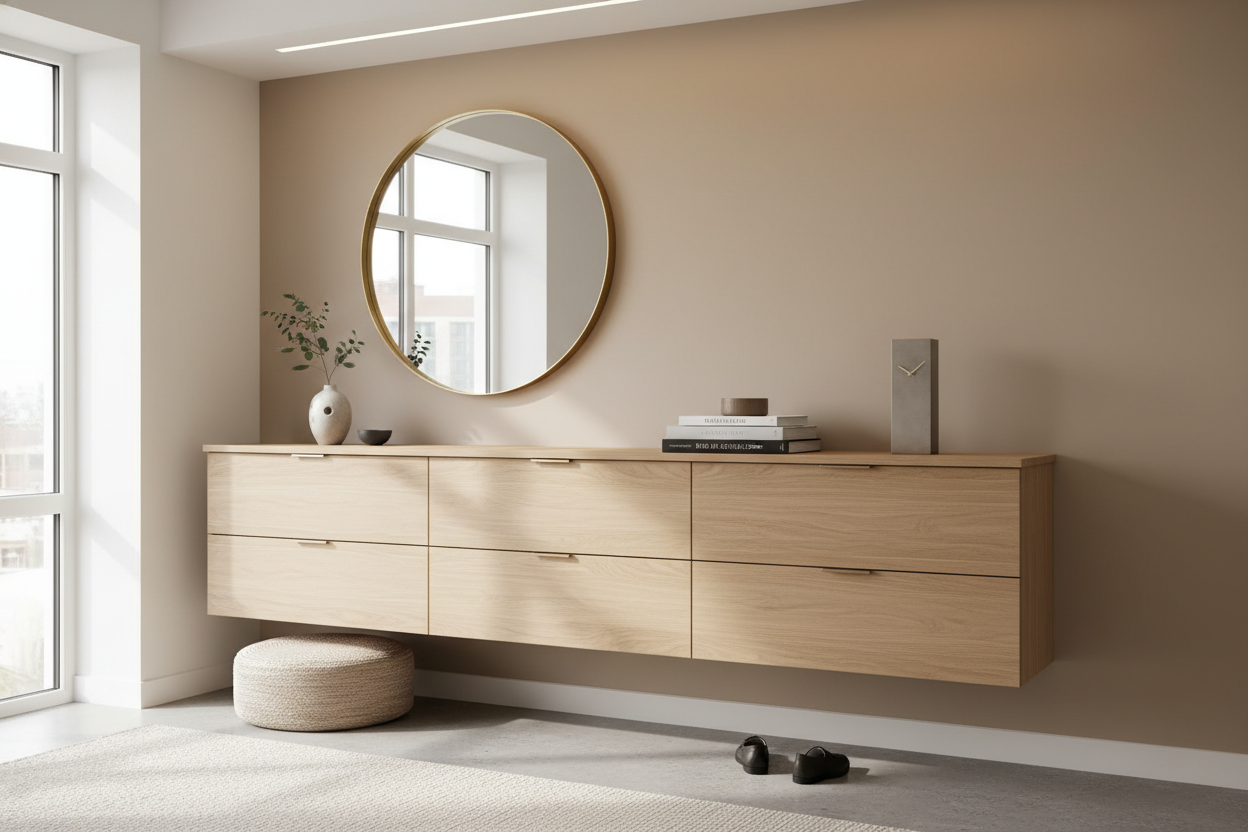
I spent three years performing a daily parkour routine in my own hallway. My 'entryway' was really just a three-foot-wide path between the front door and the kitchen, and my 48-inch acacia wood console table—while pretty—was a total space hog. I finally hit my breaking point when I tripped over a stray boot, knocked my keys behind the radiator, and realized I was sacrificing precious floor real estate for a piece of furniture that mostly just collected dust bunnies underneath.
The solution wasn't just 'less stuff.' It was getting that stuff off the ground. I started hunting for the perfect cabinet with drawers that could hang on the wall, and honestly, it's the smartest move I've made in this apartment. If you're tired of bruised hips and a cramped floor plan, it's time to look up.
- Clears floor space to make narrow rooms feel wider and longer.
- Hides 'junk drawer' items like mail, leashes, and batteries.
- Allows for easy cleaning since you can vacuum all the way to the baseboard.
- Provides a functional surface for decor without the heavy footprint.
The Day I Realized My Floor Was Shrinking
There is a specific kind of claustrophobia that sets in when you realize your furniture is winning the war for space. In my case, it was a heavy 80-pound behemoth of a console that looked great in the showroom but felt like a boulder in my narrow hallway. Every time I walked past it with groceries or a laundry basket, I had to do a weird sideways shuffle. It was a classic small-apartment trap: thinking you need a traditional floor-standing piece to have a 'proper' home.
I realized that if I could see the floorboards all the way to the wall, the room would instantly feel bigger. It's a basic design trick, but it works every time. I needed something that could hold my daily essentials without eating up a 12-inch wide strip of my limited square footage. I ditched the legs entirely. I needed a drawer wall cabinet that could handle my daily drop-zone chaos while letting the floor breathe.
The search wasn't easy. Most wall-mounted units were either flimsy plastic or massive office units. I wanted something that felt like real furniture—kiln-dried wood, smooth glides, and enough depth to actually hold a standard envelope without folding it. When I finally found a solid wood unit that I could mount at waist height, it felt like my hallway grew two feet overnight.
Enter the Floating Drawer Wall Cabinet
A wall cabinet with drawer functionality is basically a magic trick for your eyes. By mounting a unit about 36 inches off the ground, you create an unbroken line of flooring that tricks your brain into thinking the room is larger than it is. It's the same reason designers love 'floating' vanities in tiny bathrooms. It removes the visual weight that usually drags a small room down.
I opted for a sleek wall drawer unit that was only 10 inches deep. It sounds shallow, but for keys, a wallet, and three pairs of sunglasses, it's plenty. The weight of the piece is supported entirely by the wall, so you don't have those spindly legs getting in the way of your shoes or the vacuum. It’s clean, it’s modern, and it doesn't feel like a heavy anchor in the room. I can now slide my boots directly underneath it, which technically gives me more storage in the exact same footprint.
The 'floating' look also forces you to be more intentional. When you don't have a massive cabinet base to hide things behind, you tend to keep the area underneath much tidier. It’s a sanity-saver for anyone living in a studio or a pre-war apartment where every inch is a battleground.
Why Shelves Alone Weren't Going to Cut It
I know what you're thinking: 'Why not just put up a few floating shelves?' I tried that. It lasted exactly two days before it looked like a disaster zone. Open shelves in an entryway are a recipe for visual noise. Unless you are a minimalist monk who only owns one set of keys and no mail, your daily life is going to look like a pile of trash on an open shelf.
You need a wall unit with drawers and shelves to strike a balance. The drawer hides the ugly stuff—the half-used rolls of tape, the dog bags, and the mountain of receipts—while the top surface gives you a spot for a nice ceramic bowl or a plant. Choosing a cabinet with doors and drawers is the only way to keep a small space from looking like a cluttered warehouse. If you can't hide the mess, you'll never feel relaxed in your own home.
Wait, Should Kitchens Be Doing This Too?
Once I saw how much better my hallway looked, I started looking at my kitchen with a critical eye. Most of us have standard upper cabinets where things go to die in the very back. I'm talking about that jar of star anise you bought in 2019 that you've moved three times but never used. If you swap those for kitchen wall cabinet drawers, everything changes.
Using upper cabinets with drawers—especially for lower-mounted wall units—means you pull the storage to you. No more step stools or digging through dark corners with a flashlight. This concept of a kitchen wall cabinet with drawers is starting to catch on in high-end European designs because it's just objectively more ergonomic. Why reach into a dark box when the box can come to you?
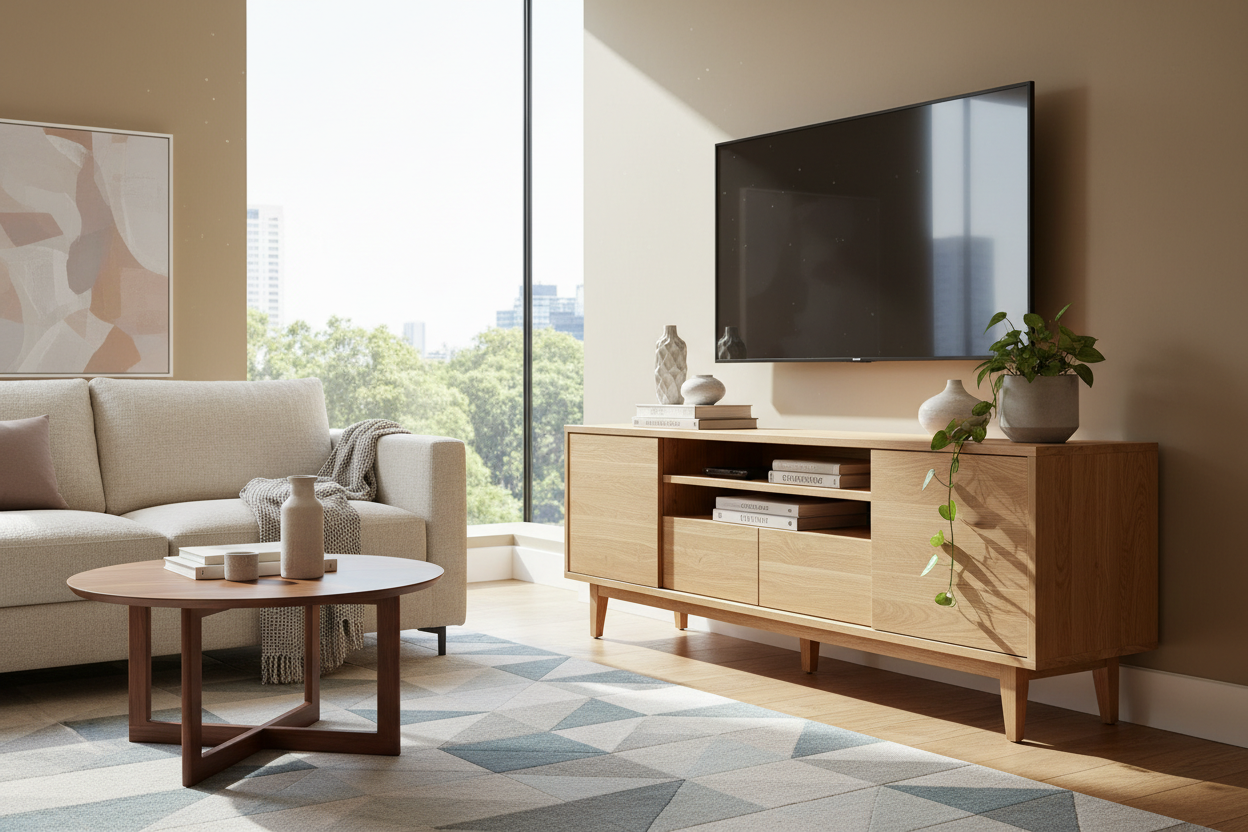
If you're a renter and can't start ripping out your landlord's cabinets, a display buffet with drawers is a great middle ground. It adds that much-needed organizational depth without a permanent renovation, and you can still get that sleek, organized look that a wall unit with drawers provides.
Will This Actually Rip My Drywall Down?
This is the number one fear people have about wall-mounted furniture. 'Is my wall unit with drawers going to end up on the floor at 3 AM?' If you just use plastic anchors and a prayer, yes, it probably will. But if you find your studs, it's not going anywhere. Most modern wall units are designed with a French cleat system, which is a slanted piece of wood or metal that distributes the weight across multiple points on your wall.
I used a heavy-duty cleat for my wall units with doors and drawers, and I can tell you, it's rock solid. I even leaned on it once (accidentally) and it didn't budge. If you're doing a full gut-job, you could even look into an in wall drawer cabinet that sits flush between the studs, which is the ultimate space-saving move. But for most of us, a sturdy external mount is the way to go. Just don't try to store your gym weights in there. Keep it to the essentials, and your drywall will be just fine.
FAQ
How high should I mount a wall cabinet with drawers?
Standard counter height is 36 inches, which feels natural for dropping keys or checking mail. If you’re taller or using it as a standing desk, you might go up to 40 inches, but 36 is the sweet spot for most people.
Can I install a wall drawer unit on plaster walls?
Yes, but skip the standard plastic anchors. You’ll want toggle bolts that can handle the weight, or better yet, find the wood lath or studs behind the plaster. Plaster is brittle, so drill your pilot holes slowly to avoid cracking.
Are kitchen wall cabinet drawers more expensive than doors?
They can be. You're paying for the drawer glides and the extra construction. However, the 'sanity tax' you save by not losing items in the back of a deep shelf makes it worth the extra $50-$100 per unit in the long run.


Leave a comment
This site is protected by hCaptcha and the hCaptcha Privacy Policy and Terms of Service apply.