
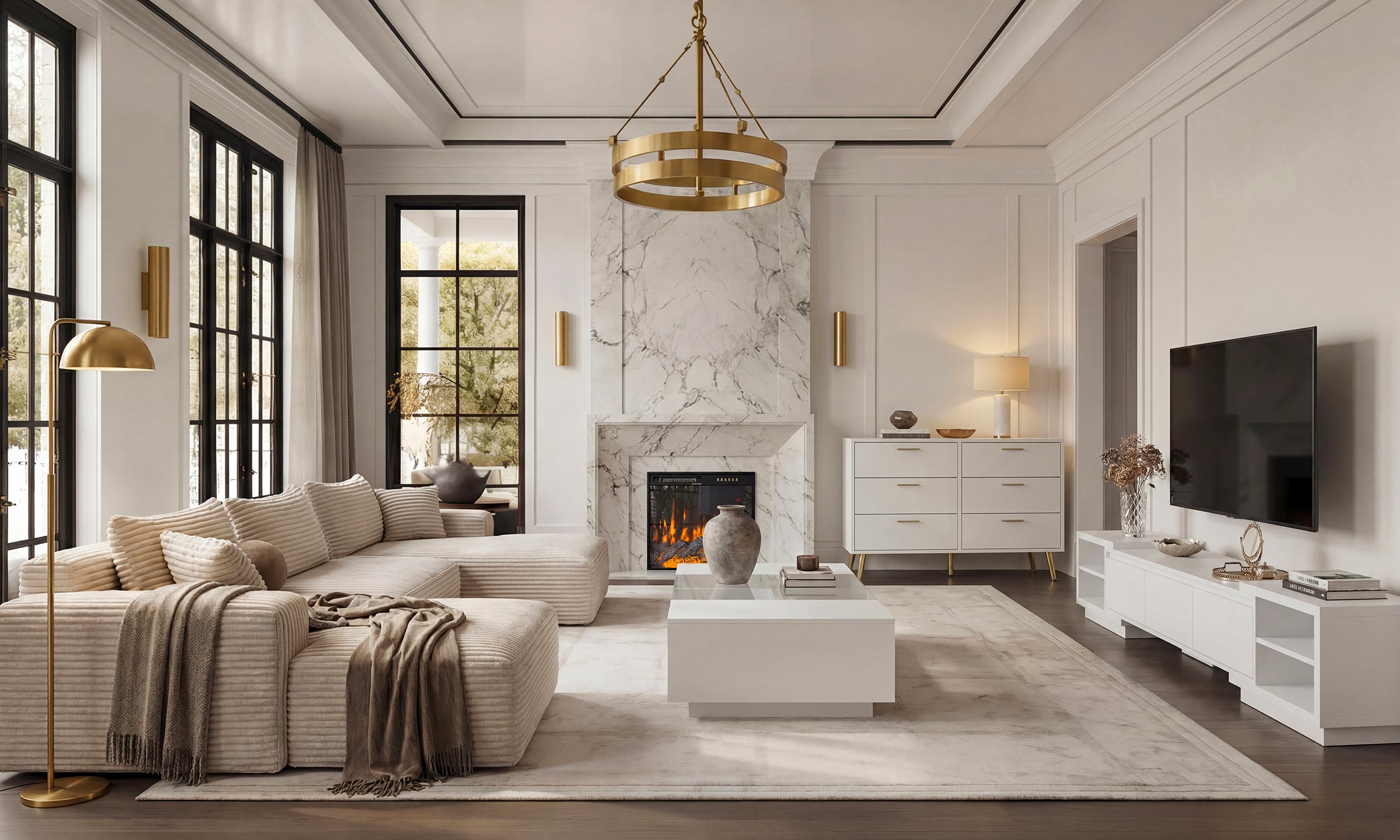
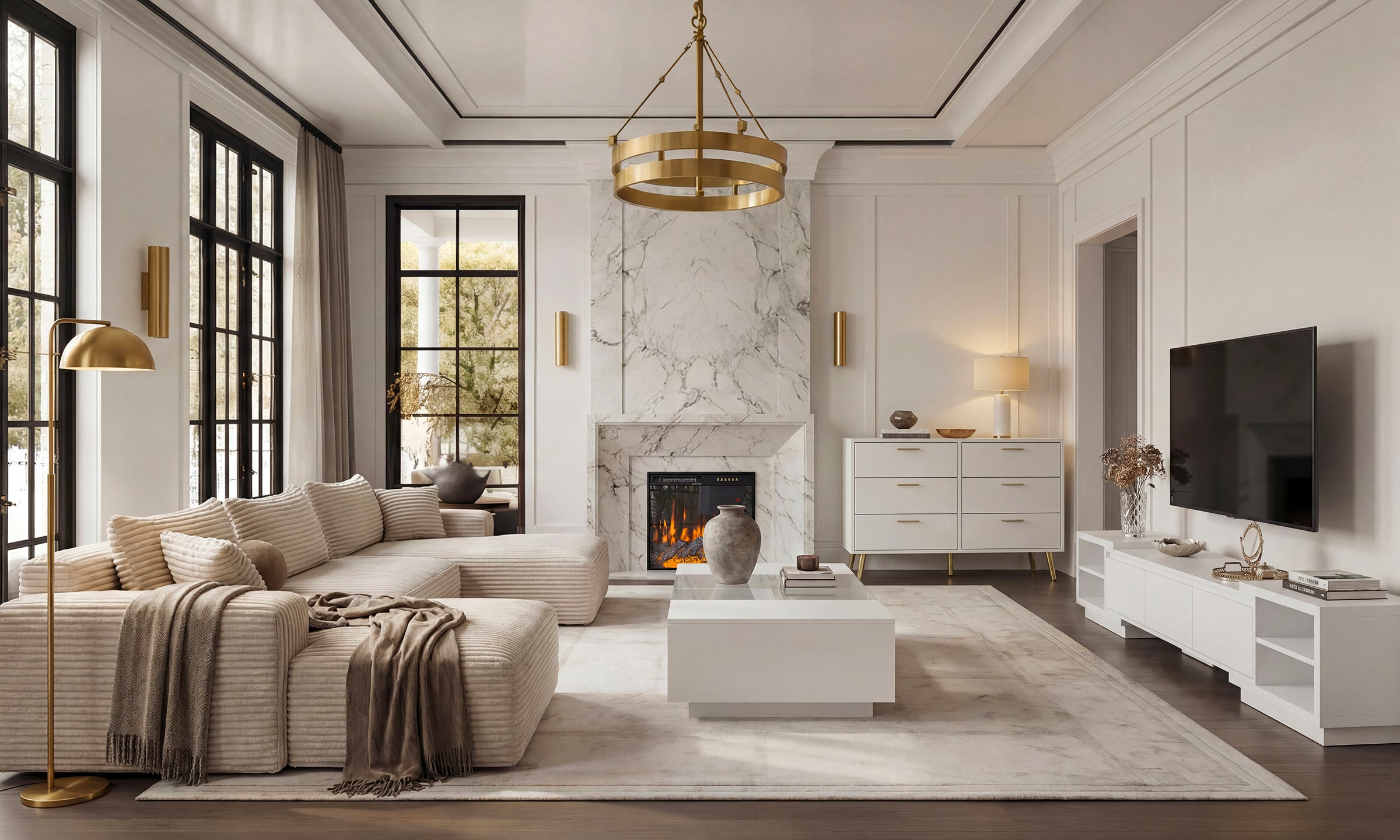




I have a confession: I used to be a serial console swapper. Every two years, like clockwork, I’d find myself scrolling through mid-century modern knockoffs or industrial metal carts, convinced that this piece would finally make my living room look like a grown-up lived there. Instead, my 65-inch TV always looked like it was balancing on a sad raft in the middle of an ocean of drywall.
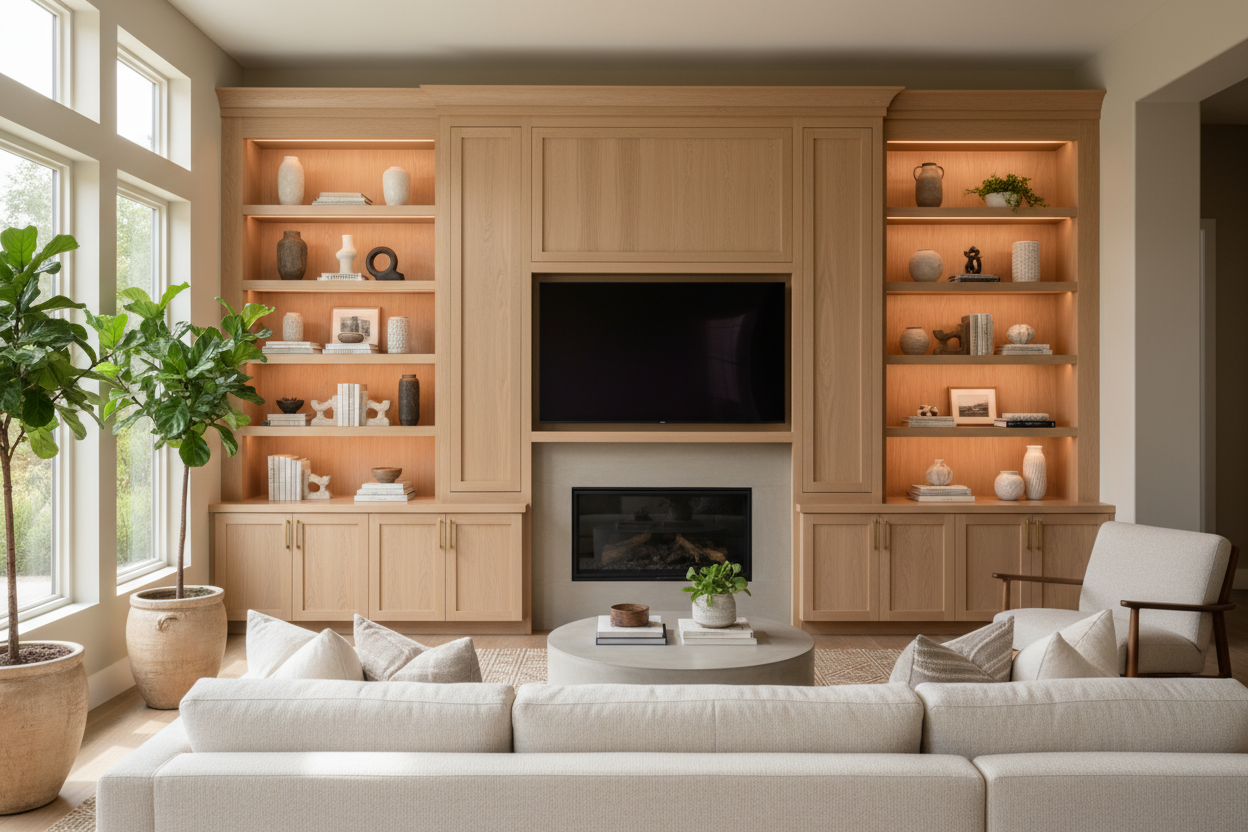
Eventually, the cycle of assembly and Craigslist-reselling broke me. I realized that no matter how much I spent on a standalone piece, it would never fix the fundamental problem of my room’s lack of architectural bones. That is when I finally committed to a permanent built-in tv stand cabinet. It was the most expensive furniture decision I’ve ever made, and it’s the only one I haven’t regretted for a single second.
Quick Takeaways
- Built-ins eliminate the visual 'clutter' of furniture legs and gaps between the wall.
- Floor-to-ceiling cabinetry makes standard 8-foot ceilings feel significantly taller.
- Custom depth allows for hiding bulky tech and office supplies that don't fit in standard consoles.
- Permanent structures add more resale value than any high-end standalone piece.
The Fast-Furniture Treadmill I Was Trapped On
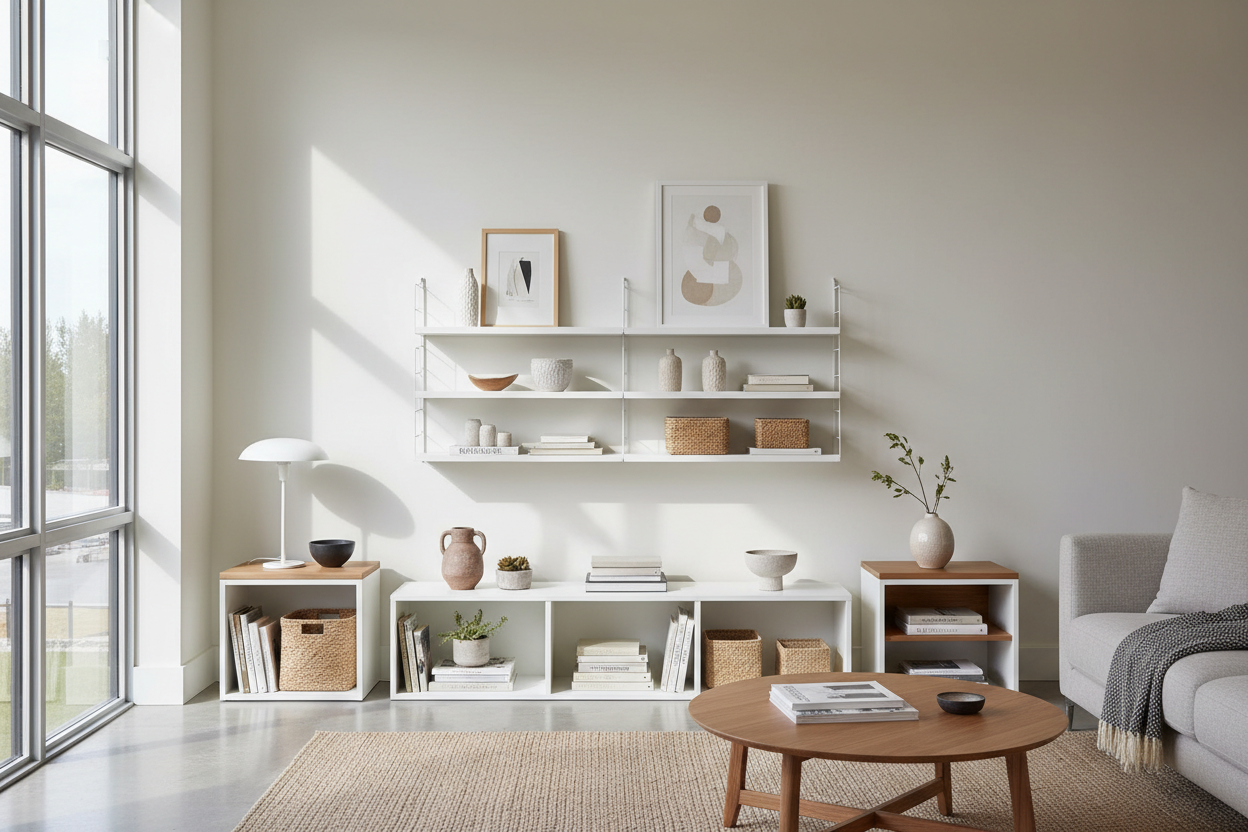
Before I went custom, I went through three different media setups in five years. First was a $200 particle board unit that bowed under the weight of a soundbar. Then came a 'vintage' find that was too narrow for the wall, making the TV look like a giant black hole. Finally, I fell for a trendy cane-door console that looked great on Instagram but felt like a toy in real life.
I kept making common design mistakes with media consoles, mostly because I was afraid of commitment. I thought a standalone piece gave me flexibility. In reality, it just gave me a perpetual feeling of 'unfinished-ness.' Every time I sat on my sofa, I wasn't looking at the movie; I was looking at the tangled cords peeking out from the side and the dust bunnies gathering in the two-inch gap between the console and the wall.
Why I Finally Chose a Built-In TV Stand Cabinet
The turning point happened when I visited a friend who had a wall of custom millwork. Her room felt grounded, quiet, and expensive—even though her sofa was cheaper than mine. I realized that a built-in isn't just a place to put a TV; it’s a way to reclaim the entire wall as a design feature rather than just a storage spot.
I’ll be honest, I spent weeks looking at modern standalone storage options as a compromise. Some of them were stunning, with solid walnut frames and soft-close hinges. But they still felt like they were just 'pushed' against the wall. I wanted something that felt like it was part of the house. I wanted the TV to be recessed so it didn't stick out into the walking path, and I wanted the storage to feel limitless.
The Magic of Floor-to-Ceiling Scale
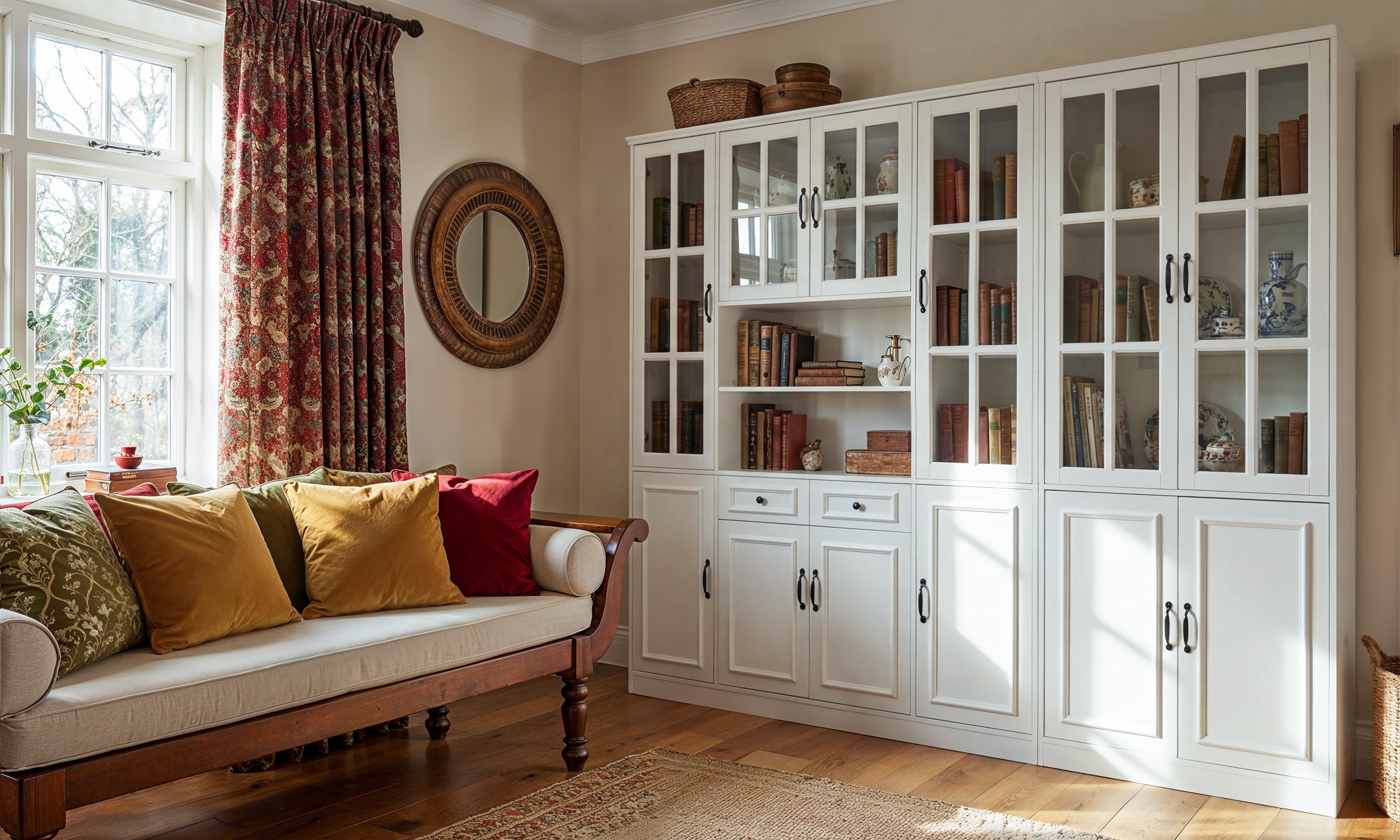
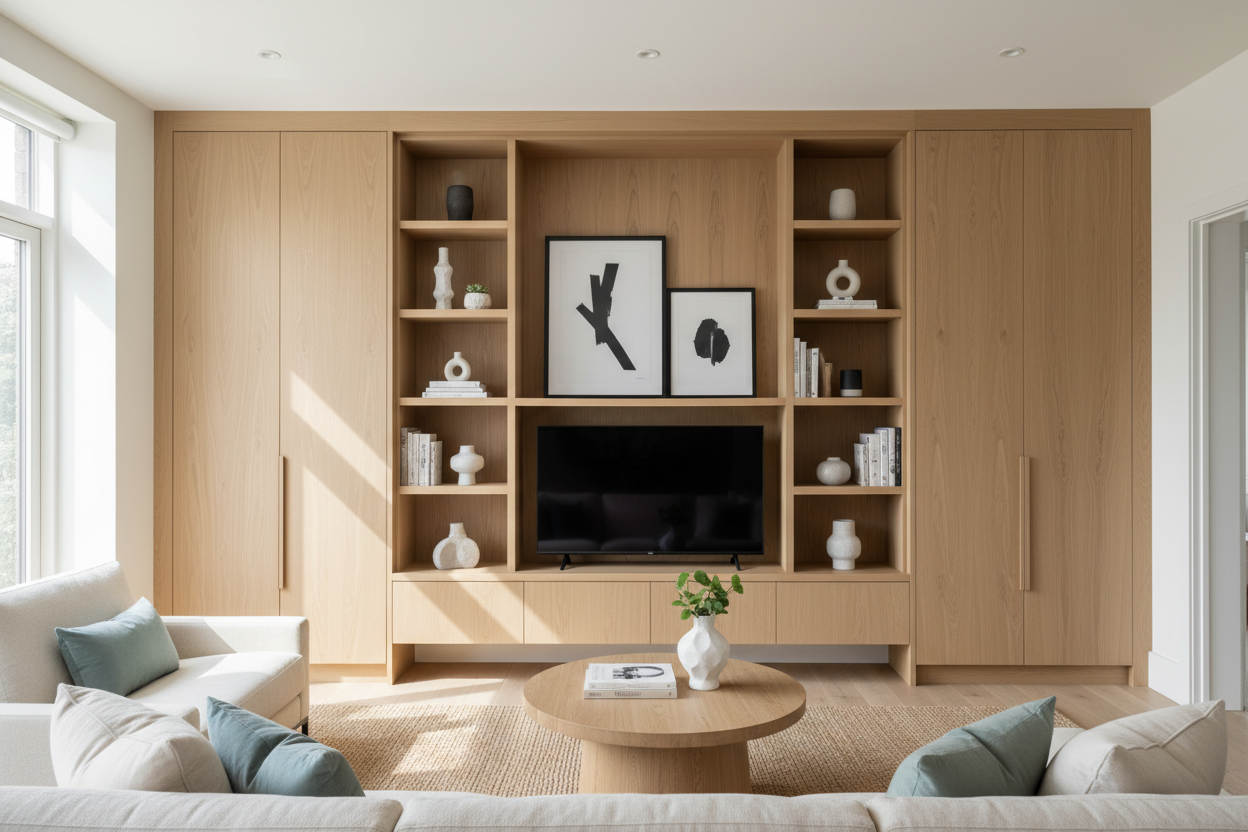
When the carpenter suggested taking the cabinets all the way to the ceiling, I hesitated. I thought it would make the room feel cramped. I was wrong. By drawing the eye upward and eliminating that awkward space above the furniture, the room suddenly felt massive. It turned a plain 8-foot wall into a grand architectural statement.
To keep it from feeling like a giant block of wood, I incorporated dark cabinets with glass fronts in the upper sections. This allowed me to display my collection of design books and ceramics without them becoming dust magnets. The contrast of the dark frames against the lighter walls gave the room the depth it had been missing for years.
Solving the 'Work From Home' Clutter Problem
Since I don't have a dedicated office, my living room usually looks like a Best Buy exploded by 3:00 PM. My old consoles never had the depth to hold a laptop stand or a stack of file folders. The built-in changed that. I designed the lower base cabinets to be 20 inches deep—standard kitchen depth—which is a total luxury for media storage.
I finally have a dedicated system for hiding office supplies in the living room. My printer is on a pull-out shelf, and my chargers are tucked into a velvet-lined drawer. When I close those doors at 5:00 PM, the 'office' disappears. You can't get that kind of psychological boundary from a flimsy flat-pack console.
What I Wish I Knew Before the Dust Settled
The process wasn't perfect. If you're doing this, move your outlets before the cabinets are installed. I had to cut a hole in the back of my brand-new unit because I forgot that my cable jack was positioned exactly where a structural vertical support needed to go. It’s a small detail that causes a huge headache if you miss it.
I also have one major 'shoulda-woulda-coulda.' I really wish I had looked into motorized lift mechanisms during the planning phase. Being able to hide the screen entirely when I have people over for dinner would have been the ultimate flex. As it stands, the TV is still visible, but because it's framed by beautiful cabinetry, it feels like an intentional part of the room rather than a tech eyesore.
FAQ
Is a built-in worth it for a small room?
Absolutely. In a small room, one large, cohesive piece of furniture actually makes the space feel bigger than three or four smaller, mismatched pieces that break up the visual flow.
How deep should a built-in media cabinet be?
Go for at least 18 to 20 inches for the base cabinets. This gives you enough room for modern receivers, gaming consoles, and even standard-sized storage bins or printers.
Can I do this on a budget?
You can 'fudge' the look using high-quality stock cabinets and adding custom crown molding to bridge the gap to the ceiling. It’s about 70% of the look for 30% of the price of full custom millwork.

Leave a comment
This site is protected by hCaptcha and the hCaptcha Privacy Policy and Terms of Service apply.