

















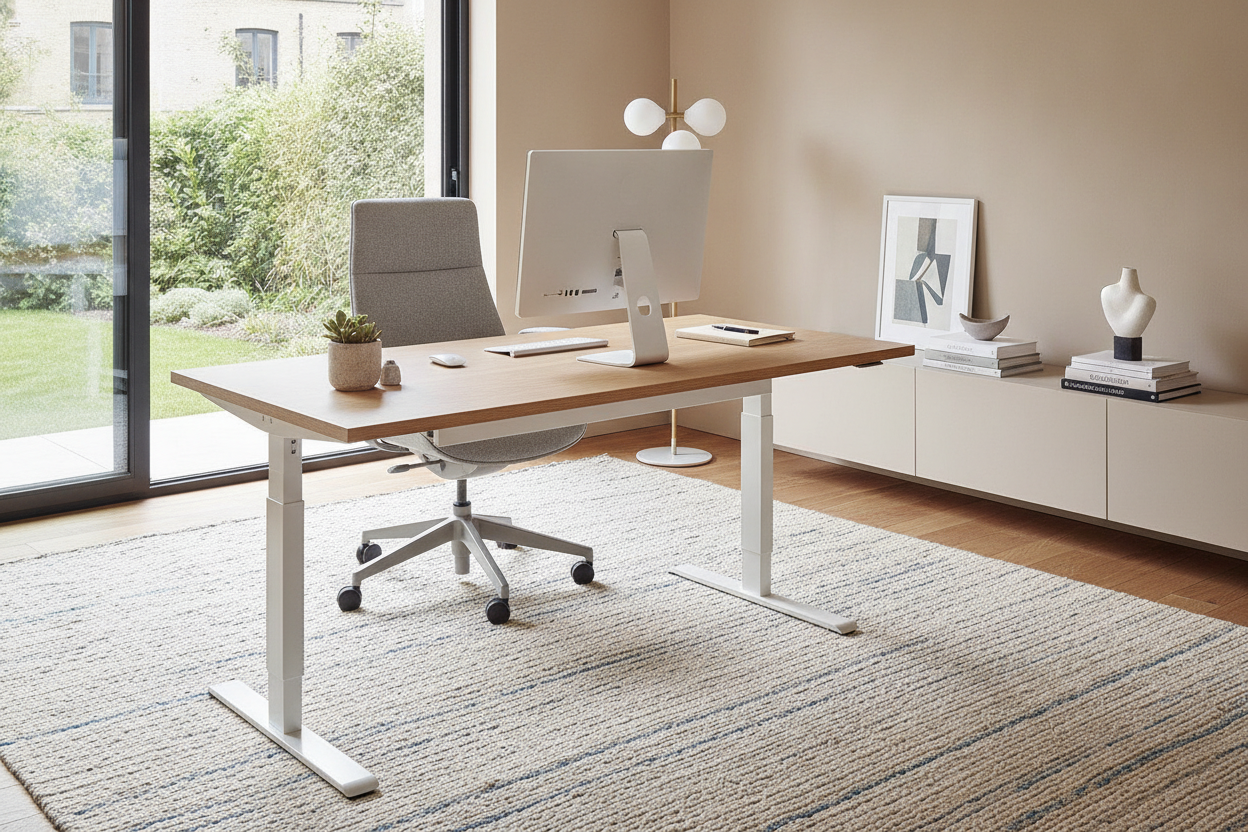
I spent three months staring at my living room, trying to figure out why it felt like a corporate cubicle farm. It was the desk. That gray, industrial slab of laminate looked like it belonged in a radiology lab, not next to my vintage velvet armchair. My back felt great, but my soul was dying a little every time I walked into the room.
Finding a height-adjustable desk design that doesn't look like a piece of hospital equipment is a surprisingly difficult task. Most manufacturers focus on the motor and the weight capacity, completely forgetting that some of us actually care about aesthetics. I’ve tested enough wobbly, ugly frames to know that you don't have to sacrifice your style for your posture.
- Prioritize Real Materials: Skip the cheap laminate and go for solid wood or high-quality veneers that age well.
- Integrated Storage: Look for drawers that move with the desktop to avoid reaching down to the floor.
- Cable Management is Key: If the wires are dangling, the design is incomplete.
- Discreet Controllers: Avoid bulky, plastic keypads that look like 90s calculators.
The 'Tech Bro' Aesthetic Problem
Most sit-stand desks on the market seem to be designed for people who live in a server room. They are all cold steel, sharp corners, and white plastic. It is a very specific, sterile look that works in a 50th-floor skyscraper but feels incredibly jarring in a cozy apartment or a 1920s bungalow.
I’m tired of furniture that looks like gym equipment. Just because a desk moves up and down doesn't mean it should look like a hydraulic lift. We are remote workers, not warehouse managers. We deserve furniture that reflects our personal taste while keeping our spines from turning into pretzels by 3 PM.
Can We Please Get Some Warmth In Here?
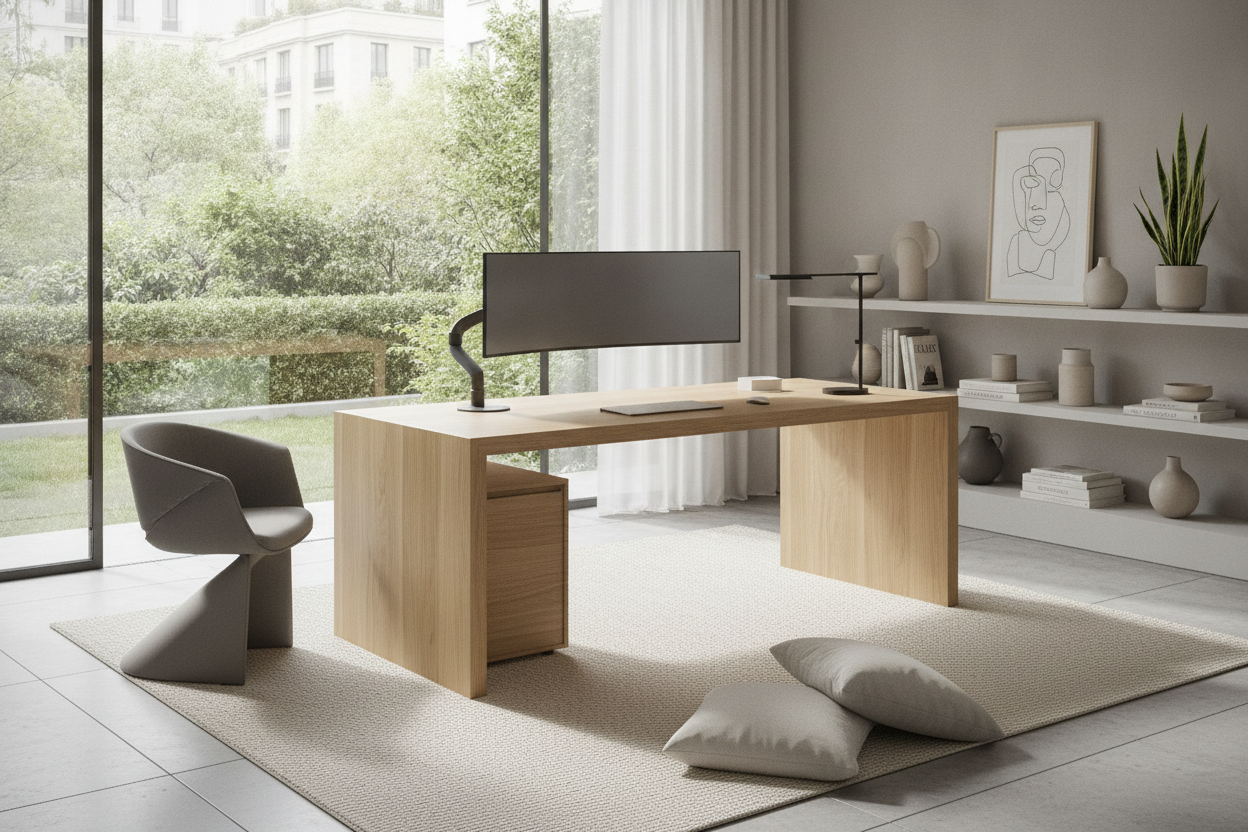
The easiest way to fix the sterile vibe is to lean into organic textures. Swap out that cold, white top for a rich walnut or a light, airy oak. Natural wood grain breaks up the visual monotony and makes the desk feel like a permanent part of the room rather than a temporary workstation.
I’ve found that you can capture the elegant look of traditional writing and computer desks by looking for tops with rounded corners or beveled edges. These small details soften the silhouette of the desk. When the wood has a matte finish rather than a shiny, plastic-looking coat, it blends seamlessly with your existing decor instead of screaming for attention.
The Storage Dilemma When Your Table Moves
The biggest design flaw in most standing desks is the total lack of storage. You end up with a 'floating' surface and a pile of hard drives and pens sitting on a separate rolling cart. It looks messy and cluttered. But adding a drawer to a moving desk is tricky—too much weight on one side can make the motor struggle or cause the whole thing to tip.
I prefer integrated drawers that are slim enough to stay out of the way of your knees but sturdy enough to hold your essentials. If you are struggling to figure out what works for your specific workflow, check out this guide to choosing desk drawers. It helps to understand the weight limits before you start bolting heavy oak cabinets to a motorized frame.
Hiding the Mechanics (Because Wires Are Ugly)
A height-adjustable desk needs power, which means there is a thick cord running to the wall. Then you have your monitor cables, your laptop charger, and your lamp. If you don't manage these, your beautiful wooden desk will just be a pedestal for a tangled mess of black rubber. It’s a visual nightmare.
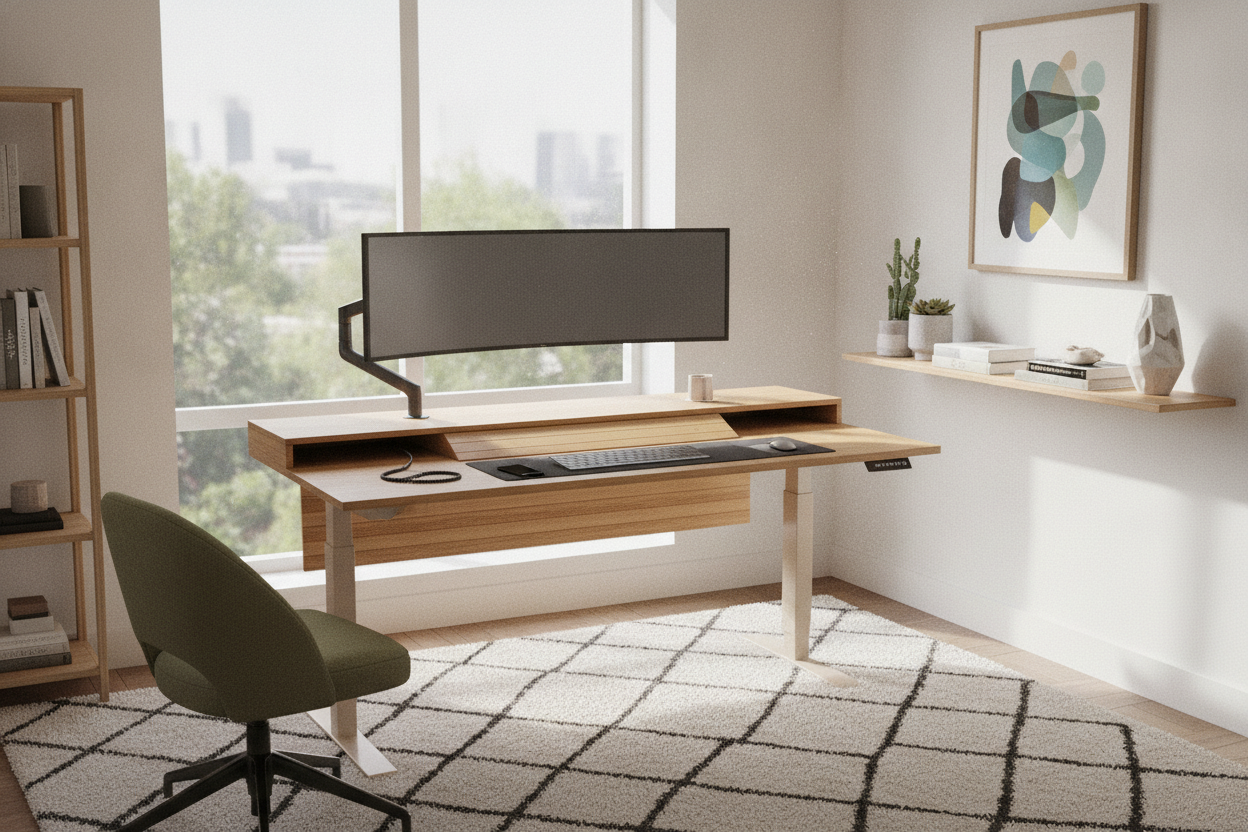
Look for frames that build cable management directly into the structure. Some of the best designs I’ve used have a hidden tray underneath the back edge to house a power strip. This way, only one 'snake' cord moves when the desk goes up. It’s a small detail that makes the difference between a professional setup and a DIY disaster.
My Current Fix for a Less Ugly Standing Setup
My biggest pet peeve is the controller. Why do they all have to be giant, glowing plastic boxes? I recently switched to a sit stand desk with memory presets that uses a much lower profile keypad. It’s tucked under the edge of the wood, so you don't even see it unless you're looking for it. It feels like a piece of furniture, not a gadget.
One mistake I made early on was buying a desk with a 'T-style' leg right in the middle. It looked fine in photos, but I kept hitting my shins on the crossbar. Now, I always look for 'C-frame' designs where the legs are set further back. It gives you more legroom and makes the desk look less like a piece of medical equipment and more like a proper table.
Is a solid wood top really worth the extra money?
Yes. Laminate chips and peels at the edges over time, especially where your arms rub against it. Solid wood can be sanded and refinished if it gets scratched, meaning the desk will actually last a decade instead of three years.
How do I hide the cables if my desk doesn't have a built-in tray?
Use a cable spine or a mesh net that screws into the underside of the wood. It keeps everything tight against the bottom of the desk so nothing dangles when you transition to standing height.
Do memory presets actually matter?
They are essential. Without them, you'll spend two minutes every time you move the desk trying to find that 'perfect' height again. Having one button for sitting and one for standing makes you much more likely to actually use the desk's features.

Leave a comment
This site is protected by hCaptcha and the hCaptcha Privacy Policy and Terms of Service apply.