

















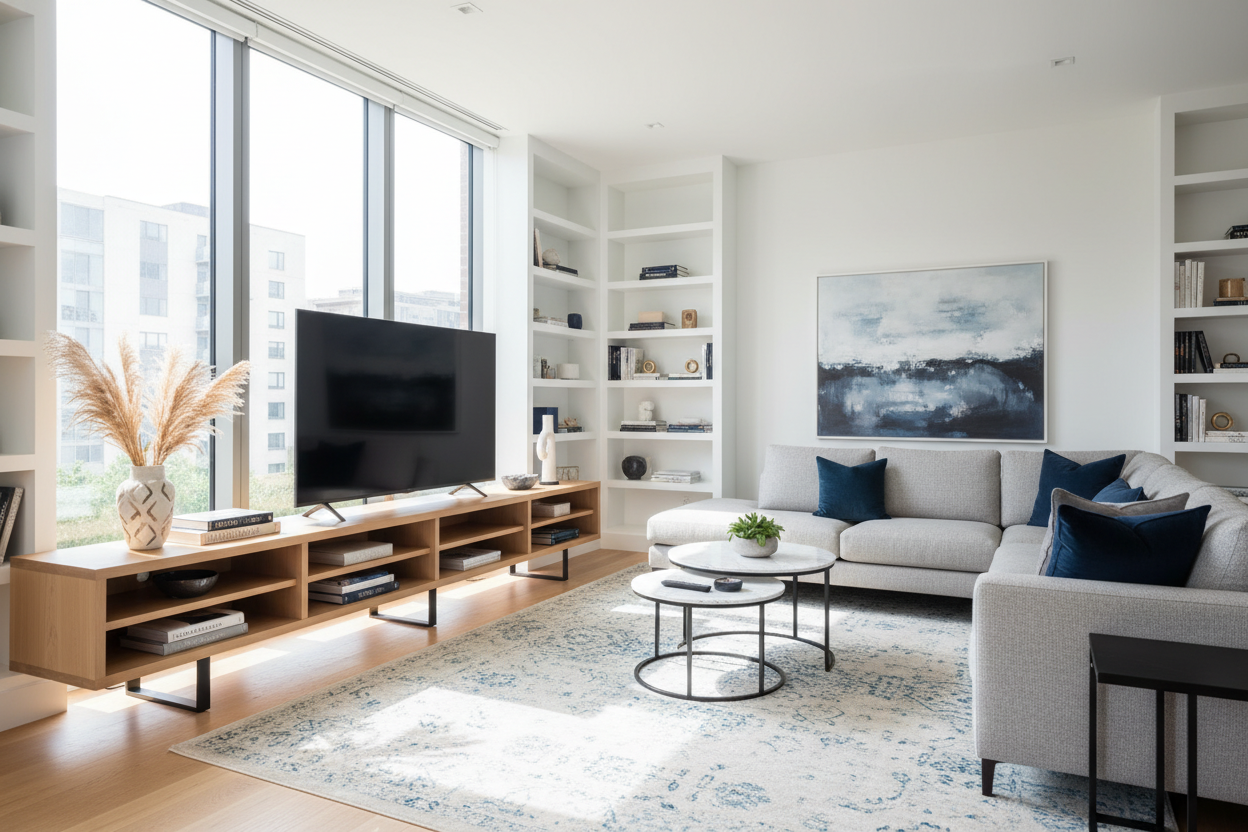
I spent three months staring at my living room wall, convinced I needed a bigger apartment. My 65-inch television was perched on a dinky 50-inch media unit I’d dragged from my college dorm, and the whole setup looked like a bodybuilder trying to balance on a barstool. It wasn't just ugly; it made the entire room feel cramped and cluttered. I’d fallen into the common trap of buying furniture to fit the TV's feet, rather than the room's scale. I finally pulled the trigger on a wide tv stand that spans nearly seven feet, and the change was instant. The room didn't get smaller—it actually felt like it doubled in size.
Quick Takeaways
- A TV stand should be at least 25% wider than the screen to avoid a top-heavy look.
- Extra width provides crucial space for hiding routers, gaming consoles, and messy cables.
- Floating consoles are better for small rooms; freestanding units offer more heavy-duty support.
- Modular or adjustable units are the best way to fill a long, empty wall without custom cabinetry.
The 'Bowling Pin' Effect: Why Your Current Setup Looks Wrong
If your television is the same width as the furniture underneath it, you have what I call the 'Bowling Pin' effect. It’s that precarious, visually unstable look where the screen seems like it might tip over at any second. When a TV overhangs the edges of a console—even by an inch—it creates a top-heavy silhouette that draws the eye to the corners of the screen rather than the room as a whole. This imbalance makes your ceilings feel lower and your walls feel narrower. I’ve seen 75-inch screens sitting on 60-inch stands, and it’s a design disaster every single time.
An extra wide media console fixes this by providing a visual 'landing pad.' When the furniture extends well beyond the screen, it creates a horizontal line that leads the eye across the room, making the wall appear wider. It’s a classic interior design trick: to make a small room feel bigger, use fewer, larger pieces of furniture rather than a bunch of small, leggy ones. My old setup was a wide tv console that barely met the minimum requirements, and the moment I swapped it for something with real presence, the 'anxious' energy of the room disappeared. You want your media area to look like a curated zone, not a piece of technology that just happened to land on a box.
The Designer's Rule for Screen-to-Console Ratios
Here is the math that most people get wrong. When you buy a 65-inch TV, that measurement is diagonal. The actual horizontal width is closer to 57 inches. If you put that on a 60-inch stand, you only have 1.5 inches of clearance on either side. That is not enough. Designers generally aim for the 25% rule: your extra wide tv stand should be about 25% wider than the actual width of the television. For a 65-inch screen, you should be looking at a unit that is at least 72 to 80 inches wide.
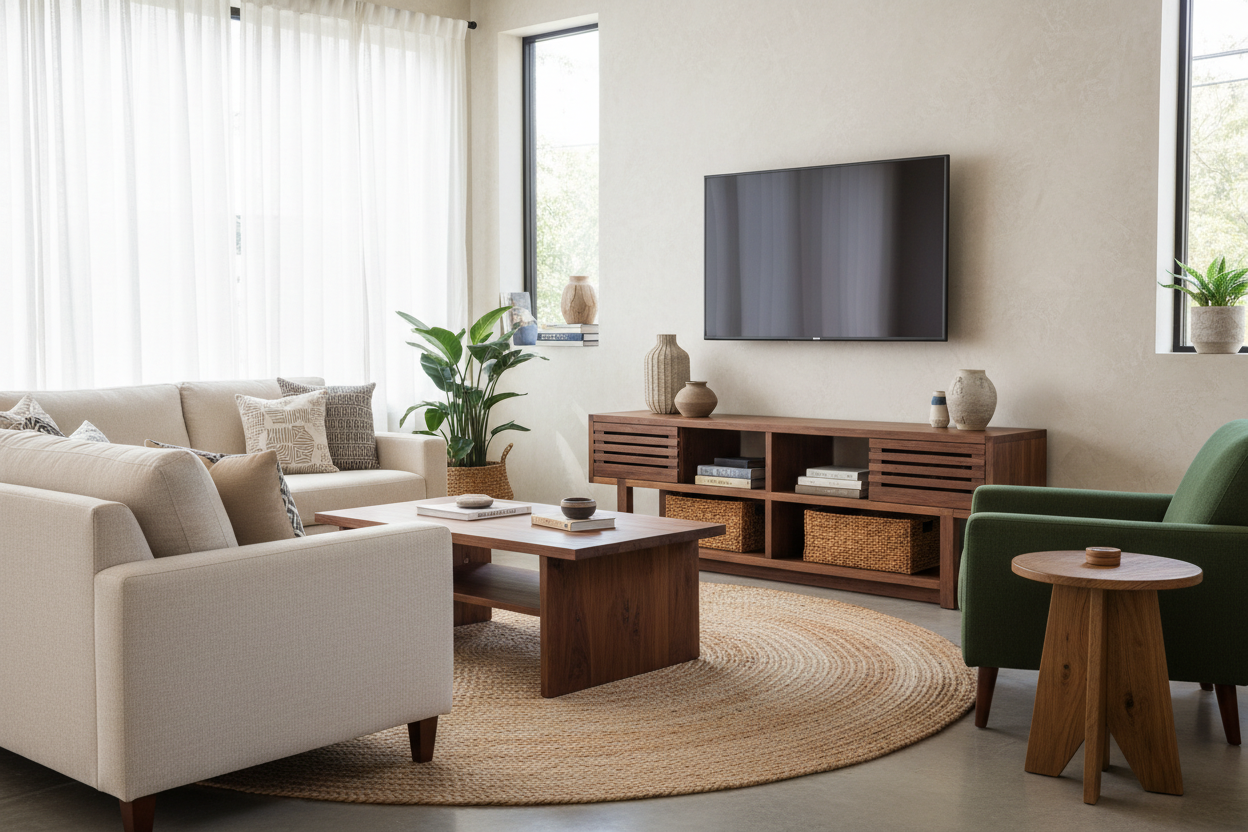
This extra breathing room allows you to anchor the screen with decor. You can actually place a lamp, a ceramic vase, or a stack of books on the ends without them looking like they’re being squeezed off the edge. When browsing for modern TV stands, I always filter by a minimum width of 70 inches, even for mid-sized rooms. People worry that an extra wide tv console will overwhelm the space, but the opposite is true. By filling more of the wall horizontally, you’re creating a foundation that supports the visual weight of the black rectangle hanging above it. I opted for a 18-inch deep unit, which is the sweet spot—it’s deep enough for a high-end receiver but shallow enough that it doesn't eat up your floor space.
More Width Means Better Hidden Storage
One thing I didn't expect when I upgraded to an extra large tv stand was how much it would clean up my digital life. My old stand was a mess of tangled HDMI cables, a dusty router, and a PS5 that looked like a futuristic skyscraper. Because the unit was small, everything had to be stacked or shoved into tiny cubbies with no airflow. An extra wide media cabinet gives you the lateral space to spread things out. I now have my router tucked in one far corner, the gaming console in another, and a massive center section dedicated entirely to cable management.
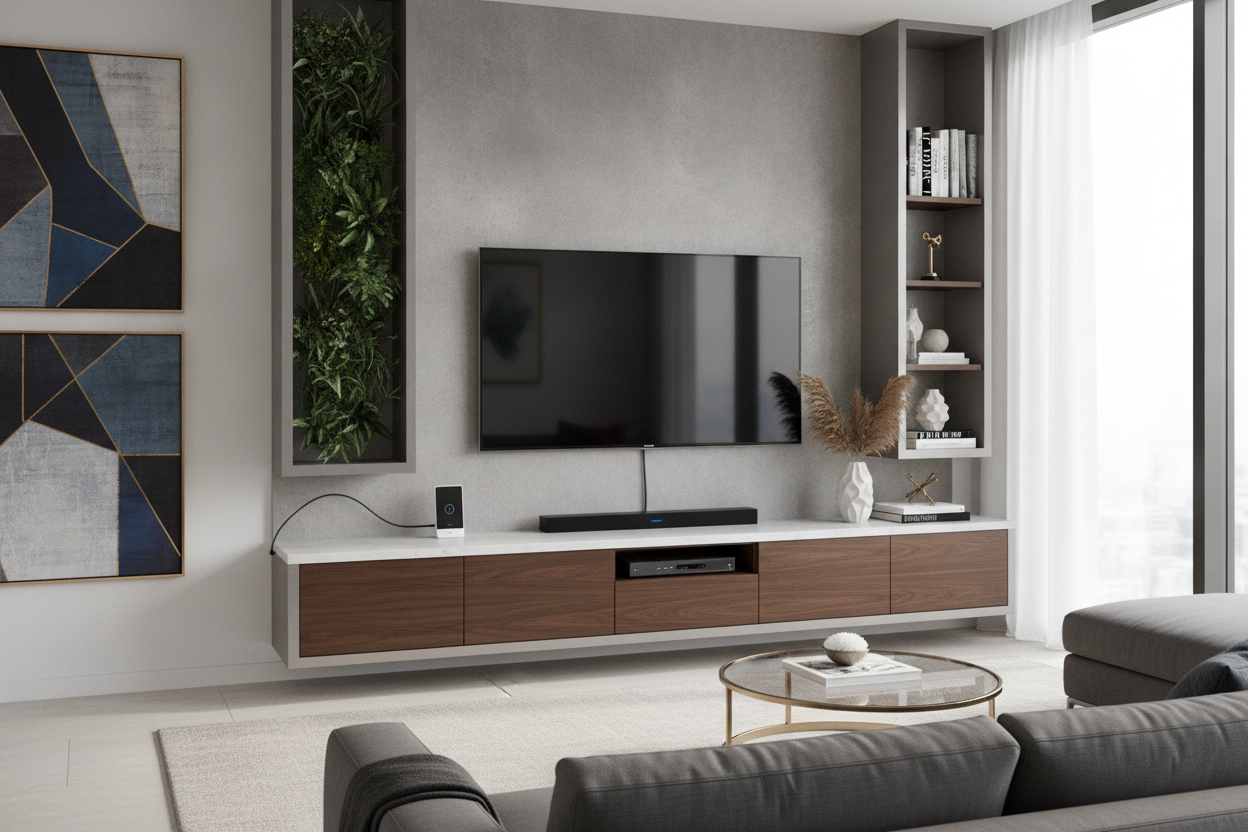
I’ve found that the best extra wide tv cabinet options are the ones with integrated cord cutouts and ventilated back panels. I actually wrote a whole piece about how I swapped my old open-shelf unit for a wide storage cabinet with drawers, and it was the best decision I ever made for my living room's 'zen.' Instead of looking at blinking green lights and tangled black wires, I see a clean, walnut-veneer surface. It’s also a lifesaver for soundbars. Most high-end soundbars are 40+ inches long; on a standard stand, they take up the whole surface. On an extra wide tv stand, you still have room for your keys and a drink.
Floating vs. Freestanding: Which Extra Wide Style Works Best?
Once you commit to the width, you have to decide if you want it on the floor or on the wall. A wide entertainment center that sits on the floor feels more traditional and 'grounded.' If you have a massive 85-inch screen that weighs 90 pounds, a freestanding extra wide entertainment center is usually the safest bet. I prefer solid wood or high-density MDF with a steel frame. Avoid the cheap particle board stuff that bows in the middle after six months—I’ve made that $200 mistake so you don't have to. If you see 'cam-lock' construction as the only thing holding the center together, keep walking.
On the flip side, if you’re in a tight apartment, a floating TV stand wall mounted media console is a total cheat code. Because you can see the floor underneath it, the brain perceives the room as having more square footage. It also makes cleaning a breeze—no more dust bunnies living behind the TV legs. However, be warned: mounting a 7-foot-wide console is a two-person job, and you absolutely must hit at least three studs. I tried to use drywall anchors for a smaller shelf once and nearly took down the whole wall. If you’re a renter, stick to a freestanding wide entertainment console with slim legs to get a similar airy look without the security deposit risk.
The Modular Trick for Hard-to-Fit Walls
Sometimes you have a wall that is so long a standard extra wide tv cabinet still looks like a postage stamp. If you’re staring at a 15-foot expanse of drywall, a single 72-inch unit won't cut it. This is where the modular trick comes in. Instead of hunting for a unicorn 120-inch widescreen tv stand, I often recommend buying two identical units and pushing them together. If they have flat sides, they’ll look like one seamless custom built-in for a fraction of the price.
Another option is an adjustable wide TV stand. These are brilliant because they usually consist of two or three pieces that slide over each other. You can expand them to the exact width of your wall. This is a great 'future-proof' investment. If you move from a house with a huge basement to a smaller condo, you can just slide the units together to shrink the footprint. It’s the most versatile way to handle a tv stand extra wide requirement without being locked into a single dimension. I used an adjustable unit in my last place, and it allowed me to perfectly center the TV between two windows that were an awkward 94 inches apart. It looked like it was custom-made for the house.
FAQ
How much wider should a stand be than the TV?
Ideally, your stand should be at least 6 to 10 inches wider than the TV on both sides. This creates a balanced look and gives you room for speakers or decor without the surface looking cluttered.
Can a TV stand be too wide?
Rarely. As long as it doesn't block doorways or walkways, a wider stand usually makes a room look more high-end. The only limit is the length of your wall.
What is the best height for a wide TV console?
For most setups, you want the center of the TV at eye level when seated. This usually means a console height of 18 to 24 inches. If you go extra wide, lower is usually better to keep the proportions from feeling like a wall of furniture.

Leave a comment
This site is protected by hCaptcha and the hCaptcha Privacy Policy and Terms of Service apply.