

















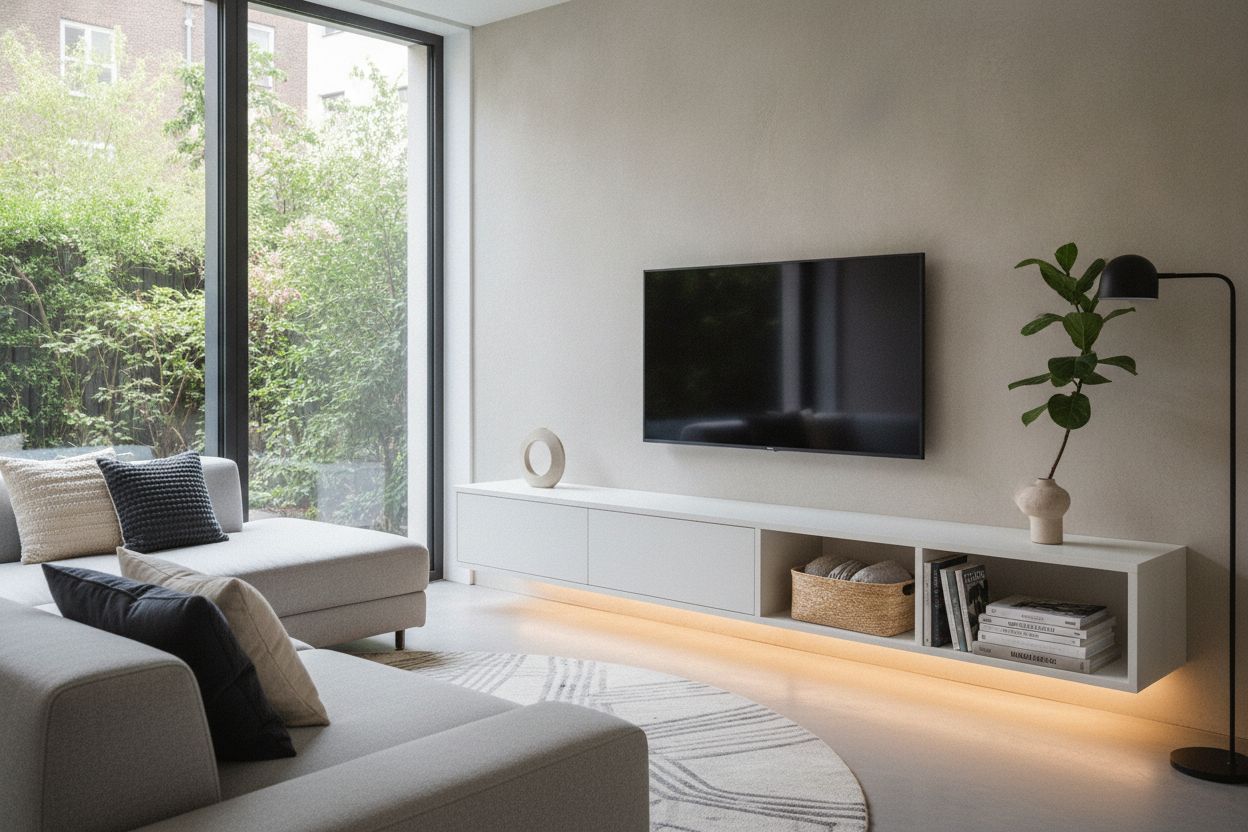
I spent three hours perfectly leveling my wall mount, hiding the cables behind the drywall, and stepping back to admire my handiwork. Instead of a sleek, modern setup, I had a giant black rectangle hovering over a sad, empty patch of floor. It looked like a billboard in a parking lot. My living room felt unfinished, like I’d forgotten to put on pants before leaving the house.
That's when I realized that even if you don't need a stand to hold the weight of the screen, you still need an under tv table. Without one, the room feels top-heavy and the 'floating' effect just looks accidental. I needed something slim, functional, and light enough to keep my small living room from feeling like a storage locker.
Quick Takeaways
- Skip the Depth: Standard consoles are 18-22 inches deep; a slim table only needs 10-14 inches to ground the TV.
- Visual Weight: Leggy tables make a room feel larger by showing more floor space.
- Cable Reality: Even with a wall mount, you still need a place for a soundbar or a stray controller.
- Proportions Matter: Your table should be at least 6-10 inches wider than the TV itself.
The Floating Screen Dilemma (Why Your Wall Looks Weird)
There is a specific kind of interior design 'uncanny valley' that happens when you mount a TV and leave the floor beneath it bare. It’s the visual void. Your eyes expect a foundation, and when they don't find one, the TV looks like it’s drifting away. This is especially true in apartments where the wall-to-sofa distance is tight. A bare floor makes the wall feel towering and aggressive.
Adding an under tv unit isn't just about having a place to put your keys; it's about anchoring the room. When I left my wall bare, the acoustics even felt off—sound bounced off the floor and walls in a way that felt hollow. By adding a low-profile table, you create a dedicated 'media zone' that feels intentional. It defines the space as a living area rather than just a wall with a screen on it. This is the simplest under the tv storage hack to make a rental feel like a custom-designed home.
Why I Ditched My Traditional Console
For years, I lived with a massive black tv stand entertainment center. It was a beast—solid MDF, deep enough to house a 1990s VCR, and heavy enough to require two people to move it an inch. In my current apartment, that thing was a space-killer. It ate up nearly two feet of floor depth, forcing my coffee table closer to the sofa and making the whole room feel cramped.
The traditional under tv entertainment center is designed for a world where we had bulky cable boxes, DVD players, and receivers. Today, most of us have a streaming stick and maybe a slim gaming console. We don't need the bulk. Switching to a leggy, streamlined table changed the entire energy of the room. It’s airier, easier to vacuum under, and it doesn't dominate the visual landscape. I realized I didn't need a 'stand' anymore; I needed a surface that complemented the wall-mounted aesthetic without the 18-inch-deep footprint.
How to Actually Handle Storage for Under TV Spaces
The biggest fear people have when ditching a big cabinet is the loss of storage for under tv essentials. But let’s be honest: half the stuff in your old console was probably old HDMI cables and manuals for appliances you don't even own anymore. When I moved to a slim table, I had to get smart about my under tv drawers and organization.
I started using tv stand shelving unit layouts that utilized baskets. Felt or seagrass baskets are a lifesaver here. They hide the plastic-heavy look of controllers and chargers while adding texture to the room. If your table has an open lower shelf, I highly recommend looking into adjustable shelf storage options. This allows you to tuck a soundbar or a Nintendo Switch dock at exactly the right height without wasting space. I also added a small under tv organizer tray for remotes—it keeps them from disappearing into the sofa cushions and makes the table look styled rather than cluttered.
My Favorite Hacks for Sneaky Under Television Storage
If you need more than just a surface, don't feel like you're stuck with a 'media' piece. Some of the best under television storage solutions aren't even sold in the TV department. I’ve seen people use entryway consoles or even low bookshelves to great effect. If you have a lot of tech, a wide storage cabinet with drawers can offer a massive amount of hidden space while maintaining a slim profile that doesn't protrude into the room.
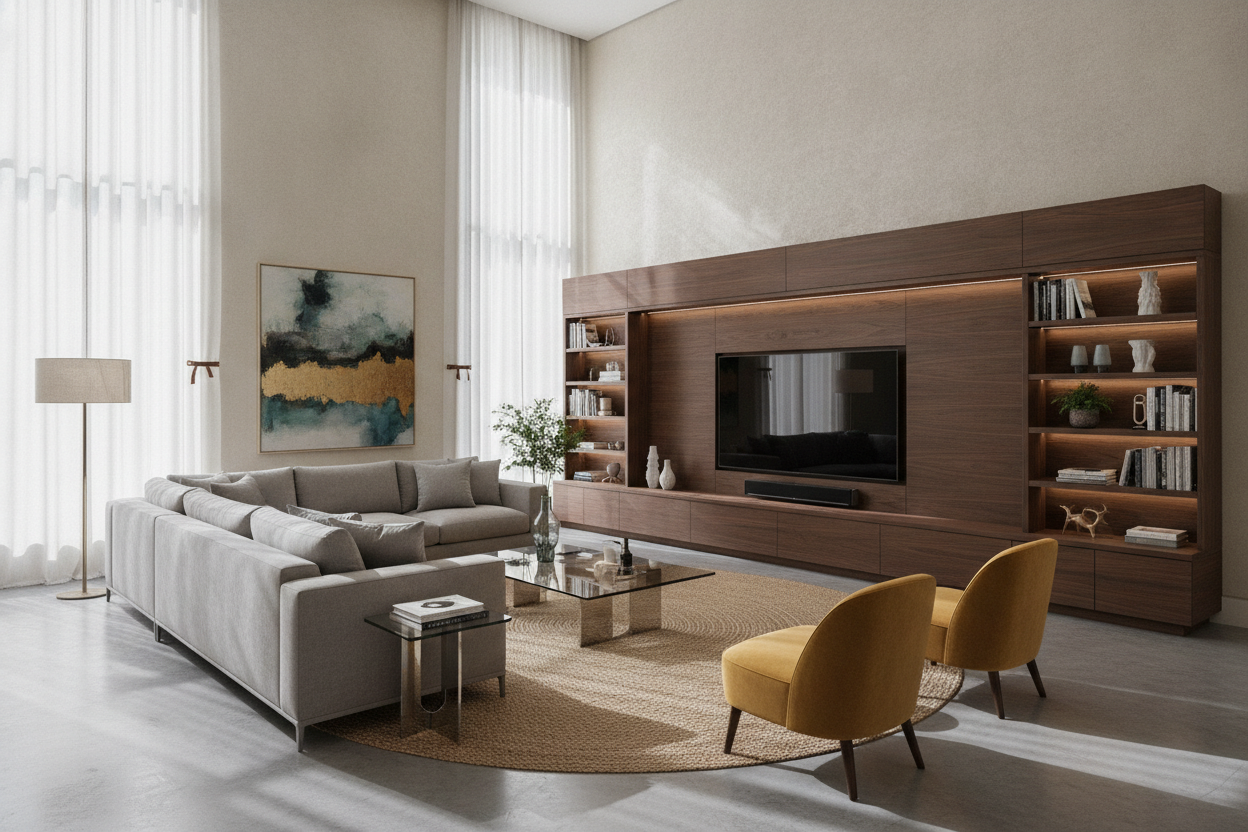
For those who still have a sprawling collection of physical media or high-end audio gear, a large tv cabinet spacious storage unit is still the gold standard, but the key is to find one with a modern, 'floating' leg design. A storage cabinet under tv should never look like a heavy box sitting on the carpet. You want something that creates a shadow line underneath. This keeps the under tv storage unit from feeling like a permanent wall, which is vital for keeping a small room feeling breathable.
The Golden Rules of Spacing and Proportions
The most common mistake I see is mounting the TV too high and the under tv organizer table too low. It creates a 'gap tooth' look that is incredibly distracting. The golden rule is to keep the gap between the bottom of your TV and the top of the table between 4 and 8 inches. Anything more and they look disconnected; anything less and you can't fit a decorative bowl or a soundbar.
Width is the other deal-breaker. Your table should be significantly wider than your screen. If you have a 55-inch TV (which is about 48 inches wide), your table should be at least 60 inches. This follows the 'rule of thirds' and prevents the setup from looking like a mushroom. A wider table allows you to place a lamp or a plant on one side, which balances the 'tech' feel of the screen with some organic, homey elements.
FAQ
How high should I mount my TV above the table?
Aim for a 6-inch gap. This is the 'Goldilocks' zone—it’s enough space to prevent the area from looking crowded, but close enough that the table and TV feel like a single cohesive unit.
Can I use a console table as an under tv table?
Absolutely. Console tables are usually 12-15 inches deep, which is perfect for wall-mounted setups. Just check the height; you don't want the TV to end up near the ceiling because the table was too tall.
How do I hide cables if the table is open?
Use a cable management box that matches your wall color or hide the wires behind a stack of books. You can also buy paintable wire channels that stick to the wall and blend right in.

Leave a comment
This site is protected by hCaptcha and the hCaptcha Privacy Policy and Terms of Service apply.