

















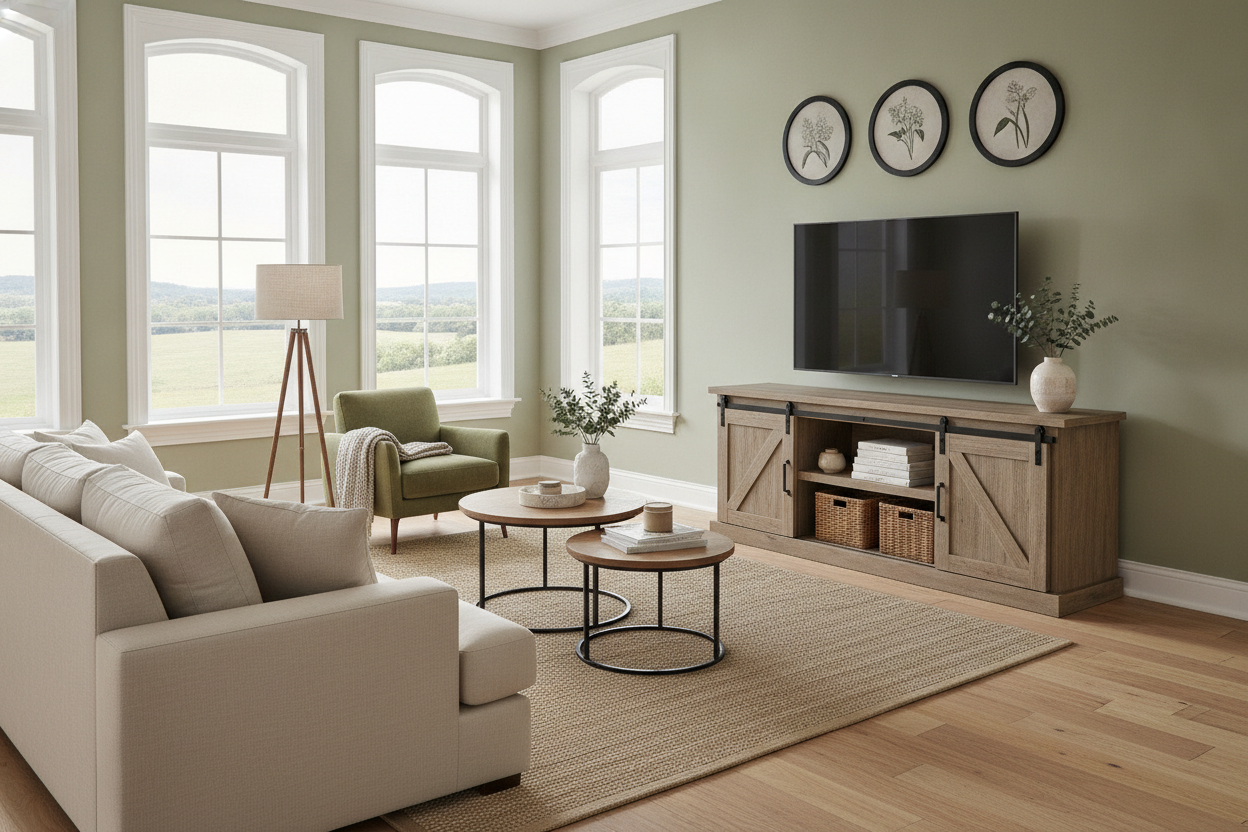
I remember the day my 75-inch TV arrived. I was so excited until I set it on my old 50-inch console. It looked like a bodybuilder standing on a footstool—hilariously top-heavy and genuinely unstable. I realized quickly that to make a massive screen work, I needed an 80 farmhouse tv stand to ground the room and keep my living space from looking like a dorm room.
Quick Takeaways
- Visual balance is everything; your stand should always be wider than your TV screen.
- Farmhouse style provides the 'visual weight' needed to anchor large electronics.
- Sliding doors are the ultimate hack for hiding messy gaming consoles and routers.
- Always check for a center support leg to prevent the dreaded 'middle sag' over time.
The Big Screen Dilemma
Upgrading to a 75 or 85-inch screen is great for movie night, but it’s a total disaster for your interior design if you don't plan for the footprint. Most people make the mistake of buying a stand that is the exact same width as the TV. This creates a weird, vertical 'stack' effect that makes your ceiling feel lower and your TV feel like it's about to tip over.
A massive screen is essentially a giant black rectangle that sucks the light out of a room. To counter that, you need a piece of furniture that feels substantial. My old unit was a flimsy mid-century piece with spindly legs that looked like they were screaming for mercy under the weight of the LED panel. You need something with a wide base to create a sense of permanence and scale.
Why I Went With an 80 Farmhouse TV Stand
I chose an '80' farmhouse tv stand because the aesthetic naturally leans into 'chunky' proportions. While a modern glass stand looks thin and clinical, the thick wood grain and mitered edges of farmhouse furniture provide a heavy visual anchor. It turns the TV into a part of the room’s architecture rather than just a piece of tech hanging on a wall.
The key is finding a balance in the finish. If you go too 'distressed,' your living room starts to look like a Pinterest board from 2012. I prefer a clean oak or a moody charcoal finish. If you have an even larger screen, remember that a farmhouse TV stand for 85 inch TV needs to be incredibly sturdy—look for kiln-dried wood rather than thin MDF, which will bow within a year.
The Magic of Sliding Barn Doors
The barn door tv stand 80 inch design is a functional masterpiece for one reason: it hides the ugly stuff. I have a PS5, a Nintendo Switch, and a mess of HDMI cables that I never want to see. With sliding doors, I can tuck the tech away on the ends and keep the center shelves open for a soundbar or a few curated books.
If you have a particularly long wall, an extra long barn door TV stand is a lifesaver for hiding tech clutter while filling out the space. The sliding mechanism also means you don't need 'swing room' for cabinet doors, which is a blessing if you have a coffee table sitting close to the console.
Styling Your Console So It Doesn't Look Dated
To keep the farmhouse look from feeling like a dusty antique shop, keep your styling minimalist. I skip the 'Bless This Mess' signs and go for matte black ceramics, a single sculptural branch in a tall vase, or a stack of linen-bound books. The goal is to contrast the rustic texture of the wood with clean, modern lines.
Lighting also matters. I tucked a small LED strip behind the back edge of my 80-inch stand to create a soft glow on the wall. It makes the whole unit feel integrated into the room and helps reduce eye strain during late-night Netflix binges. Avoid cluttering the top surface; let the TV have its space so the area doesn't feel claustrophobic.
Before You Buy: Measure Your Wall
An 80-inch stand is roughly 6.6 feet long. Before you pull the trigger, tape out that dimension on your wall with painter's tape. You need at least 12 to 18 inches of breathing room on either side of the stand so it doesn't look like it's wedged into a corner. If your wall is too short, you might need to browse a different collection of TV stands to find a 60 or 70-inch model that actually fits your floor plan.
Don't forget to check the depth. Many farmhouse units are 18 to 20 inches deep. In a narrow living room, that's a lot of floor space to give up. Ensure your walking paths are still at least 30 inches wide so you aren't shimmying past the TV every time you go to the kitchen.
Personal Experience: The Sagging Mistake
I once bought a cheap, 80-inch 'wood-look' console from a big-box retailer because it was a steal. Within six months, the center started to dip by nearly an inch because it lacked a center support leg. My TV started to lean, and the barn doors wouldn't slide properly because the track was warped. Now, I only buy units with at least five points of contact with the floor. If it doesn't have a center leg, don't buy it for a heavy TV.
FAQ
How much wider should the stand be than the TV?
Ideally, your stand should be at least 6 to 10 inches wider than the actual width of the TV screen to provide proper visual balance.
Are barn doors loud?
Only if they use cheap plastic wheels. Look for units with metal ball-bearing rollers and a steel track for a smooth, silent glide.
Can I put an 85-inch TV on an 80-inch stand?
Yes, as long as the TV's legs fit on the surface and the weight doesn't exceed the stand's capacity. Most 85-inch TVs have a width of about 75 inches, so an 80-inch stand provides a small 2.5-inch overhang on each side.

Leave a comment
This site is protected by hCaptcha and the hCaptcha Privacy Policy and Terms of Service apply.