

















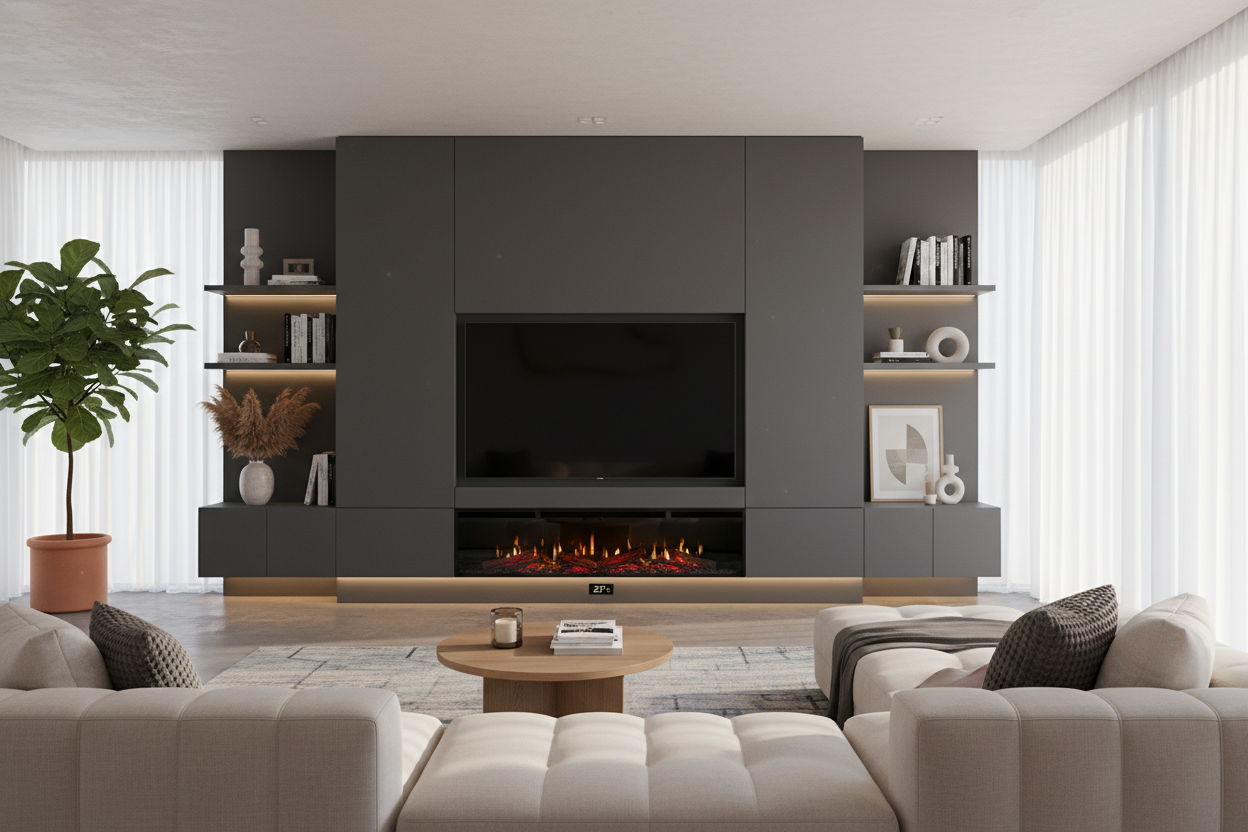
I spent three winters in my current apartment shivering on the sofa because I refused to buy anything that looked like a prop from a low-budget Christmas movie. My living room aesthetic was strictly 'warm minimalist,' which in reality just meant I was cold and miserable. I spent months staring at 47 browser tabs of sleek, mid-century consoles, but none of them solved the fact that my 1920s windows have the insulation value of a wet paper bag.
Finally, I stopped being a snob and looked at an entertainment unit with electric fireplace. I expected to hate it. I expected to feel like I was living in a themed hotel room in the Poconos. Instead, I found a piece that actually grounded the room and, more importantly, stopped my toes from turning blue during Netflix marathons. If you’re on the fence because you think faux-flames are the height of kitsch, let me tell you why I was wrong.
Quick Takeaways
- Modern LED technology has replaced those flickering orange lightbulbs with surprisingly realistic resin logs and depth.
- A thermostat-controlled unit is far more efficient than a standard space heater for maintaining a steady room temp.
- Scale is everything—always buy a unit at least 10 inches wider than your TV to avoid the 'top-heavy' look.
- Infrared heaters are the gold standard because they don't dry out the air as much as fan-forced coils.
Confession: I Thought Faux Fireplaces Were Cheesy
I’ll admit it: I used to be a total fire snob. To me, a fireplace meant real wood, soot, and the constant fear of a chimney fire. Anything else felt like a cheap imitation. I had visions of those early 2000s units with the plastic logs and a single, sad lightbulb spinning behind a piece of red film. It wasn’t just a style issue; it was a matter of principle. I didn’t want my living room to look like a waiting room at a budget dental clinic.
But the furniture industry has actually stepped up. When I started looking at high-end furniture with fireplace insert options, I realized the tech had caught up with the design. We’re talking about tempered glass, adjustable flame colors (that actually look like fire, not neon signs), and sleek, matte finishes that hide the heating element entirely. These pieces are redefining living rooms by blending mid-century modern silhouettes with functional heat. I realized that a well-built console doesn't scream 'fake heater'—it just looks like a solid piece of furniture that happens to glow.
The shift for me was seeing a unit in person that used 3D flame effects. The light reflects off the 'logs' in a way that creates shadows and depth. It’s not a real fire, sure, but when you’re three episodes deep into a documentary and the room is a steady 72 degrees, you really stop caring about the lack of real ash to clean up.
The Drafty Room Problem (And Why Space Heaters Failed)
My living room is a gorgeous disaster. It has high ceilings and original windows that let in every breeze from the tri-state area. For years, I tried to solve this with a rotating cast of plastic space heaters. You know the ones—the grey oscillating towers that look like a robot’s leg and make a clicking sound every time they turn. They are eyesores. No matter how much you spend on a velvet sofa or a hand-knotted rug, an ugly plastic heater sitting in the middle of the floor ruins the vibe.
Beyond the aesthetics, space heaters are binary: they are either blasting you with Sahara-level heat or they are off and you’re freezing. I needed a fireplace tv stand with thermostat capabilities. The beauty of a built-in unit is the climate control. You set it to 70 degrees, and the heater kicks on and off quietly to maintain that specific temperature. It’s a gentle heat, usually powered by infrared quartz that can warm up to 1,000 square feet without sucking all the humidity out of the room.
I once made the mistake of buying a cheap $80 heater from a big-box store that smelled like burning dust every time I turned it on. Moving to a dedicated furniture piece with a high-BTU insert changed the air quality and the noise level. It’s the difference between a loud fan blowing on you and a warm hug from the room itself.
Finding the Right Proportions for the Screen
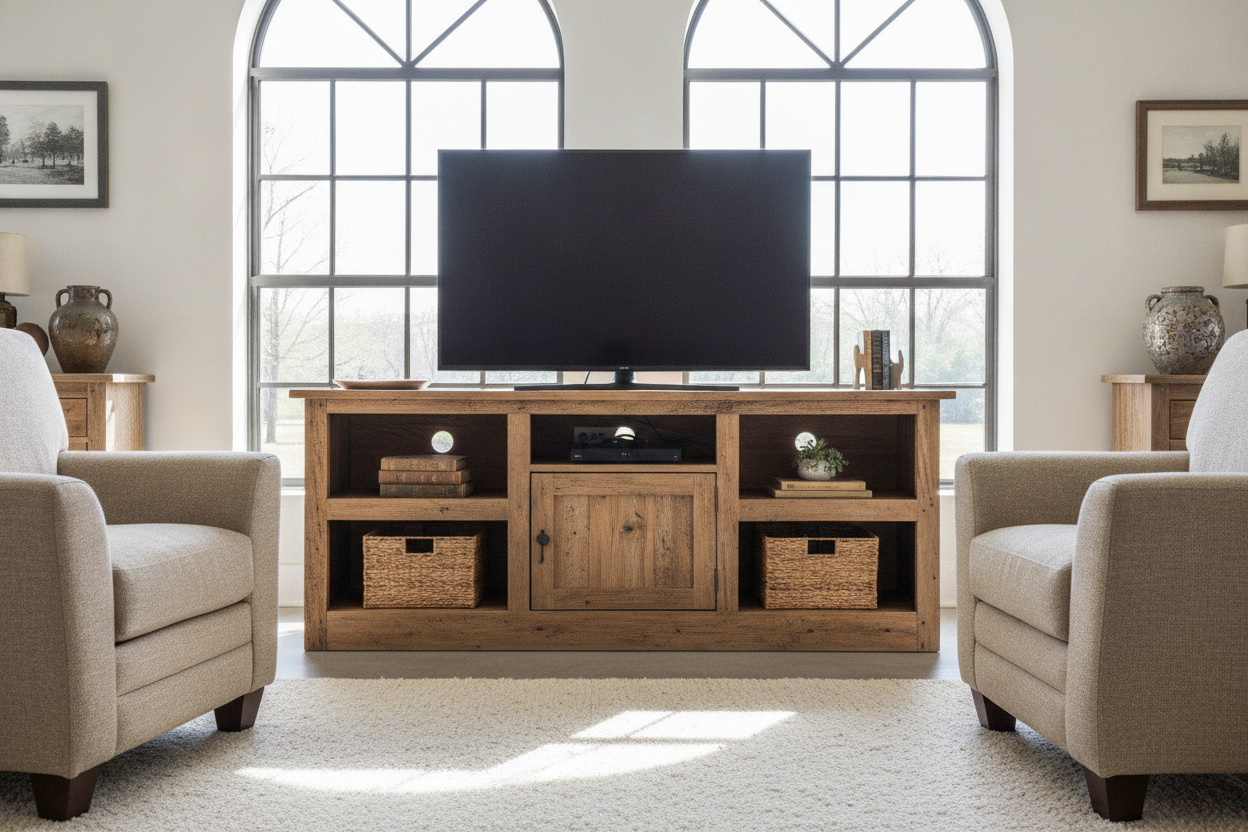
Size is where most people mess up. I see so many people buy a fireplace tv stand 45 inches wide and then try to perch a 65-inch TV on top of it. It looks like a lollipop—top-heavy and visually unstable. In a small apartment bedroom, a 45-inch unit is a great way to add heat without taking up a footprint, but for a living room, you need mass. You want the console to be the anchor of the wall.
I went with a wide electric fireplace tv stand that stretched nearly 70 inches. Treating the piece as a large credenza with fireplace rather than just a 'TV stand' made the room feel more expensive. You want enough surface area on the sides of the TV for a lamp or a few books so the screen doesn't feel like it's suffocating the fireplace. If you have a massive wall to fill, look at something like this media console with electric fireplace heater which provides enough visual weight to balance a large-format television.
If you're unsure about the math, you should really take the time to choose the perfect TV stand by measuring your wall and your screen width first. I always recommend that the stand be at least 6 to 10 inches wider than the TV itself. This creates a balanced 'golden ratio' that keeps the fireplace from looking like a tiny glowing box under a giant black mirror.
The 'Smart' Features I Actually Use Every Day
The tech is what finally sold me. My unit came with a tv stand with fireplace remote that allows me to toggle the heat, the flame brightness, and even the 'flicker speed' from the comfort of my sofa. It sounds lazy until you’re tucked under a weighted blanket and realize you’re a little too warm. Being able to dim the 'fire' to a low ember glow for movie night is a small luxury I didn't know I needed.
The biggest revelation, though, was the 'flame-only' mode. Since it's a tv stand with chimney free electric fireplace, the heating element is completely independent of the visuals. I can have the cozy glow of a fire on a rainy Tuesday in May without actually turning the heater on. It’s essentially a smart fireplace tv stand that functions as a mood-setter year-round. Most modern units also come with a timer, so I don't have to worry about accidentally leaving the heater on when I go to bed.
One thing to look for is a unit with 'cool-touch' glass. Even when the heater is blasting out 5,000 BTUs, the glass front stays cool. If you have a dog that likes to sleep directly in front of anything warm (like my terrier), or kids with wandering hands, this is a non-negotiable safety feature that real fireplaces just can't offer.
Is It Actually Worth the Hype?
After a month of use, I’m a total convert. My living room finally feels finished. By replacing my flimsy old media console with a substantial, heated unit, I solved two problems at once: I hid all my unsightly cable clutter in the side cabinets and I turned my draftiest room into the warmest spot in the house. It’s become the place where everyone gravitates.
If you are still rocking a basic metal rack or one of those wobbling modern TV stands that doesn't offer any extra utility, it might be time to upgrade. My only regret? I spent three years being a 'minimalist snob' when I could have been warm this whole time. Just make sure you check the BTU rating before you buy—anything under 4,000 won't do much for a large room.
FAQ
Can I put a TV directly on a fireplace stand?
Yes, as long as the weight capacity matches your TV. The heat is usually vented out the front or the bottom, so it won't damage the electronics sitting on top. Just ensure there is a small gap for airflow.
Does it run up the electric bill?
It’s comparable to a standard space heater. If you run the heat on high for 8 hours a day, you’ll notice it, but using it as supplemental heat for a few hours in the evening usually only adds a few dollars a month.
Do I need a special outlet?
Most standard units plug into a regular 120V household outlet. However, you should never use an extension cord or power strip—plug it directly into the wall to prevent overheating the wires.

Leave a comment
This site is protected by hCaptcha and the hCaptcha Privacy Policy and Terms of Service apply.