

















I spent three years staring at a 'temporary' metal TV stand that looked like it belonged in a high school AV club. Every time I sat down to watch a movie, my eyes would wander from the screen to the tangled nest of dust-caked HDMI cables and the blinking blue light of a router that refused to be tucked away. It didn’t matter how many expensive candles I lit; the room felt chaotic because the focal point was a mess of plastic and copper.
The shift happened when I stopped treating my media setup as a utility and started treating it as architecture. I finally committed to building a beautiful entertainment center that actually hides the mess, and the difference in my mental clarity—and my living room’s vibe—is staggering. Here is how I moved past the basic console and created a setup that actually looks like a grown-up lives here.
- Prioritize Height: A low-slung console leaves too much dead space on the wall, making your TV look like an afterthought.
- The 70/30 Rule: Use 70% closed storage for tech and 30% open shelving for personality.
- Texture Over Paint: Natural wood grains or slatted doors add depth that flat white or black finishes lack.
- Cable Management is Non-Negotiable: If you don't have a plan for the wires before you buy the furniture, you've already lost.
The Problem With Merely Functional TV Furniture
Most people buy a TV stand based on one metric: will the TV fit on top? This is a trap. When you buy a piece of furniture that is purely functional, you end up with a 'floating' screen on a bare wall. It looks clinical and cold. Even worse, these basic units rarely account for the sheer volume of peripherals we own today. Between the gaming consoles, the soundbar, the router, and the smart home hubs, you end up with a 'tech graveyard' that spills out onto the floor.
I’ve found that the biggest mistake is choosing a unit that is the same width as the TV. It creates a top-heavy, awkward silhouette. You want your furniture to be at least 10 to 12 inches wider than the screen on both sides. This gives the TV room to breathe and allows the furniture to anchor the wall rather than just supporting a screen. When the furniture is too small, it highlights the cords and the clutter because there’s nowhere else for your eye to go.
Beyond the size, there is the issue of the 'black hole' effect. A large TV is a giant black rectangle. If it’s sitting on a flimsy, nondescript stand, it sucks the life out of the room. You need a piece with enough visual weight to compete with that screen. Without it, your living room feels like a waiting room rather than a home.
What Makes a Media Wall Actually Look Good?
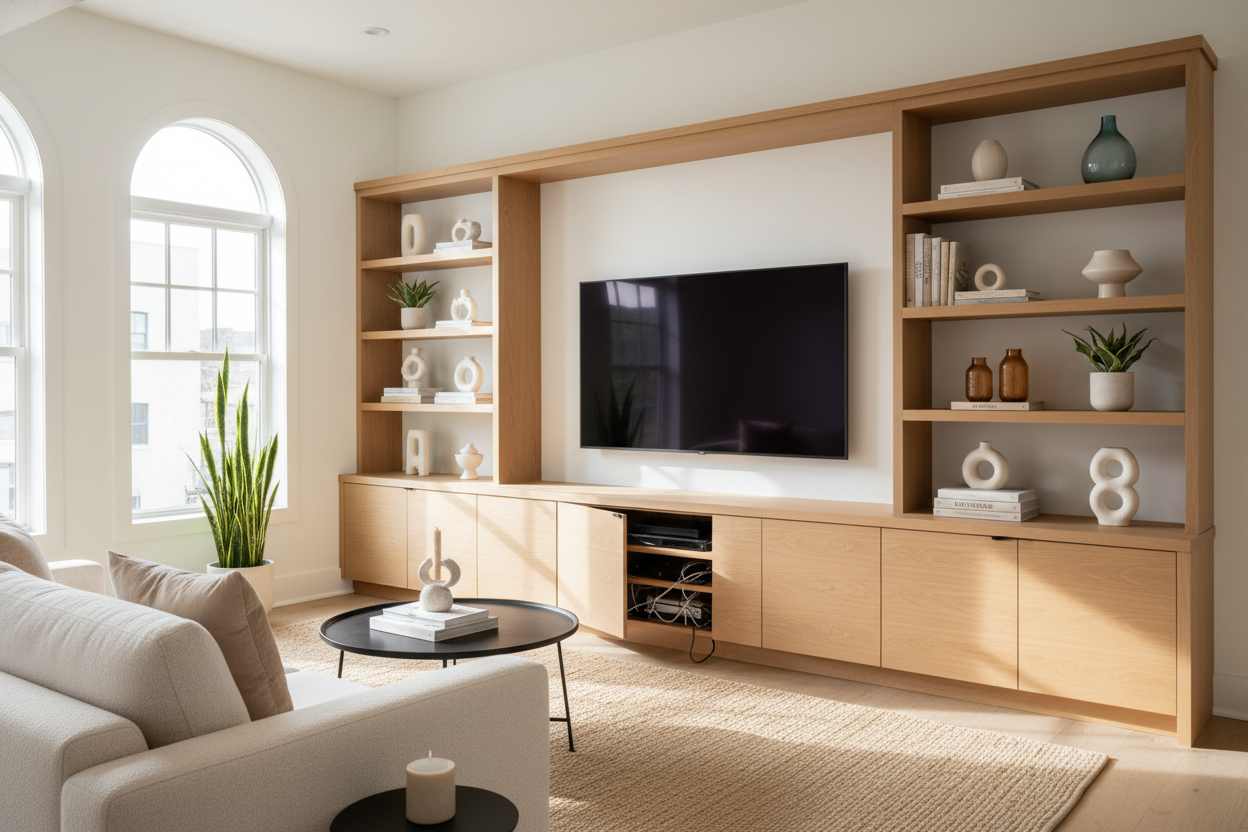
The secret to a media wall that looks intentional rather than accidental is a mix of scale and texture. I’m a huge advocate for pieces that use organic materials to soften the hard edges of our electronics. A wood grain color entertainment center with pull-down doors is a perfect example of this. The natural variation in the wood grain breaks up the monotony of the wall and adds a layer of warmth that plastic or metal just can’t provide.
You also have to think about the 'heft' of the piece. I used to think slim legs were the way to go to keep the room feeling airy, but I’ve changed my mind. A more substantial, grounded unit provides a sense of permanence. It feels like a part of the house's bones rather than a piece of kit you picked up on a whim. Pull-down doors are particularly clever because they offer a sleek, hardware-free look while making it incredibly easy to access your gear without swinging wide doors into your walking path.
Scale is the final piece of the puzzle. If you have high ceilings, go tall. If you have a long wall, go wide. Don't be afraid to let the entertainment center take up space. When a piece of furniture fits the proportions of the room, it actually makes the space feel larger and more organized, even if the piece itself is massive.
The Art of Mixing Open Styling with Closed Storage
This is where most people get stuck. If you hide everything behind closed doors, the unit looks like a giant, boring box. If everything is on open shelves, it looks like a cluttered garage. I follow a strict 70/30 ratio: 70% of the unit should be closed storage to hide the routers, the messy stacks of games, and the tangle of power strips. The remaining 30% should be open for styling.
When you are styling a bookcase and entertainment center, you want to avoid the 'Best Buy' look. This means no rows of plastic DVD cases or stacks of controllers on display. Instead, use those open shelves for things that have nothing to do with technology. Think vintage ceramics, a trailing pothos plant, or a stack of hardcover books with the spines facing out. This creates a 'curated library' vibe that happens to have a TV in the middle of it.
I personally like to group items in odd numbers—threes and fives work best. Place a tall vase on one side and a low bowl on the other to create a visual triangle. This draws the eye across the unit and away from the screen. It turns the entertainment center into a piece of art rather than just a tech rack. Remember, the goal is to make the TV the least interesting thing on the wall when it’s turned off.
Dark vs. Light: Choosing the Right Finish
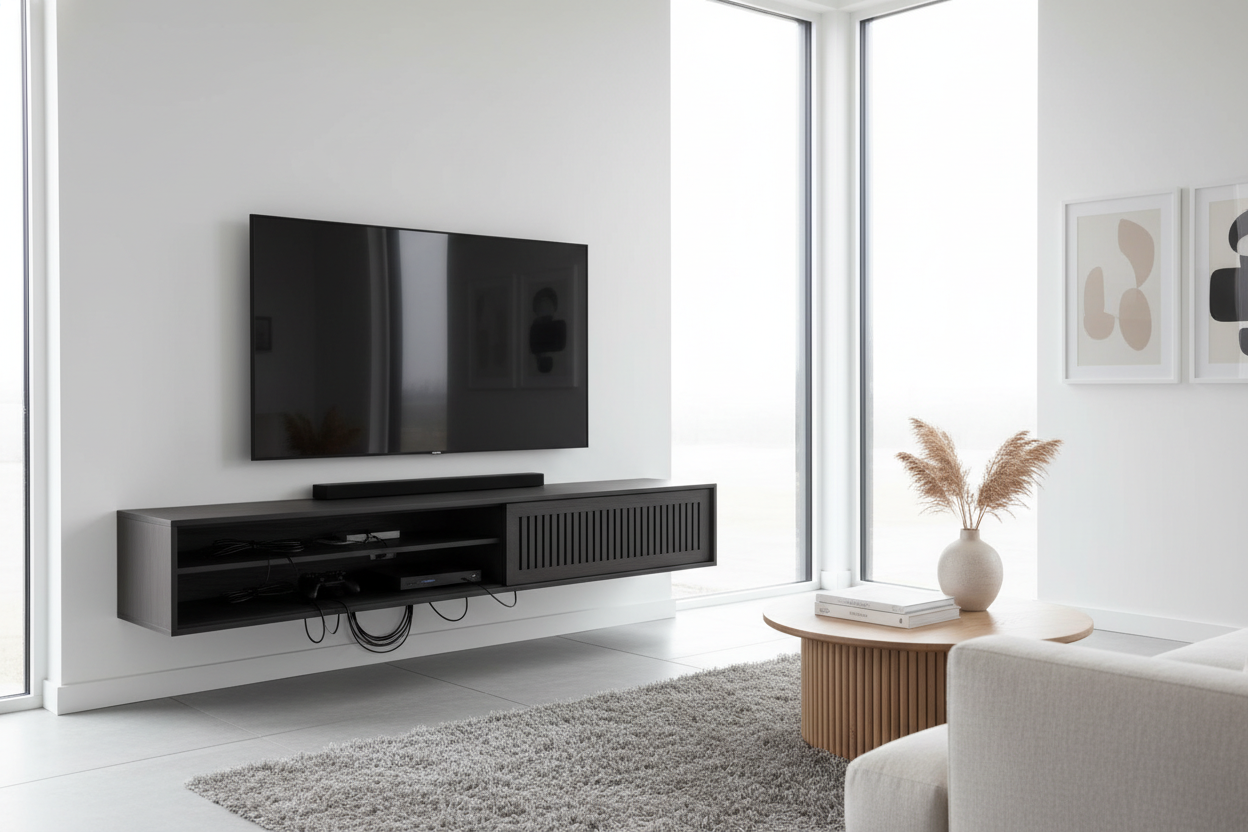
The finish you choose determines how much the TV dominates the room. If you have a bright, airy room and you want to keep it that way, a light oak or white finish works well, but be prepared for the TV to stand out like a sore thumb. If you want a more cinematic, cozy feel, I always recommend going darker. A stylish black tv stand entertainment center can be a design masterstroke because the black frame of the TV blends into the dark finish of the wood.
When the TV is off, it almost disappears into the furniture. This is a great trick for smaller apartments where a giant screen can feel overwhelming. A dark, modern finish also hides those tiny gaps where wires might peek through and provides a high-contrast backdrop for any colorful decor you place on the shelves. I’ve found that matte black or deep charcoal finishes look much more expensive than glossy ones, which tend to show every fingerprint and speck of dust.
Don't be afraid of 'moody' furniture. A dark unit creates a sophisticated anchor for the room. Just make sure you balance it with some brass hardware or a few warm-toned decorative pieces so it doesn't feel too heavy or 'dorm-room chic.'
Is the Visual Upgrade Really Worth the Floor Space?
The most common pushback I hear is, 'I don't have room for a giant entertainment center.' But here’s the reality: a larger unit usually saves you space in the long run. When people ask if an entertainment center worth the space, I point to the vertical real estate. A standard TV stand uses the floor but gives you nothing back. A full-scale entertainment center uses that same floor footprint but gives you six feet of vertical storage.
By moving my books, my tech, and my random living room clutter into one large, beautiful unit, I was able to get rid of two smaller bookshelves and a side table. The room actually felt bigger because the visual clutter was consolidated into one intentional zone. It grounds the room. Instead of having five small things competing for attention, you have one stunning piece that does all the work.
My biggest mistake during my first build? I didn't account for the baseboards. I bought a unit that was exactly the width of my alcove, but I forgot that the baseboards stick out half an inch on each side. I had to spend a Saturday afternoon with a wood saw and a lot of patience to make it fit. Measure twice, then measure the baseboards, then buy.
FAQ
How do I stop my gaming console from overheating in a closed cabinet?
Don't just shove it in there. You need airflow. I usually leave the back panel off the section where the console sits, or I use a hole saw to create a 3-inch vent in the back. Some high-end units come with slatted doors that allow air to circulate even when closed.
What is the ideal height for a TV?
Stop mounting your TVs above the fireplace. Your neck will thank you. The center of the screen should be at eye level when you are sitting on your sofa. For most people, that means the top of your entertainment center should be between 24 and 30 inches off the ground.
How do I hide the 'rat's nest' of wires?
Velcro ties are your best friend. Bundle your cables together and use adhesive clips to run them along the back edges of the furniture. If you have a power strip, mount it to the inside wall of the cabinet using command strips so it’s off the floor and out of sight.

Leave a comment
This site is protected by hCaptcha and the hCaptcha Privacy Policy and Terms of Service apply.