

















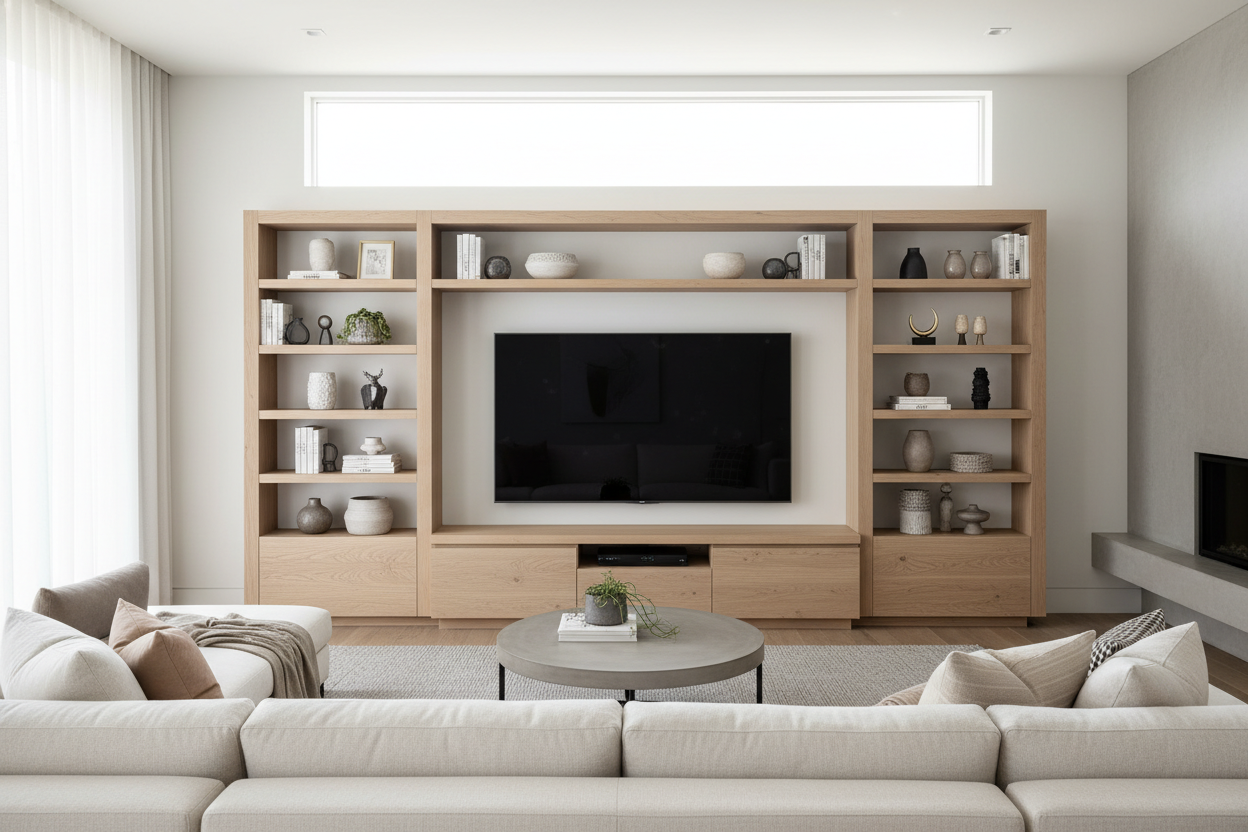
I spent three months staring at a living room wall that felt more like a runway than a home. My 55-inch television looked like a postage stamp stuck to a billboard. Every time I sat on the sofa, the sheer amount of empty drywall made the room feel cold, echoey, and completely unfinished.
I finally realized I didn't need a bigger TV; I needed a massive 88 inch tv stand to anchor the entire room. I wanted that high-end, custom look without the four-figure contractor bill, and after some trial and error, I found that going ultra-wide is the only way to fix a 'bowling alley' floor plan.
- Scale Over Stuff: One massive piece of furniture looks more intentional than three small ones trying to fill the same gap.
- Budget Win: A high-quality console costs about 20% of what a custom millwork unit does.
- Storage Bonus: Seven feet of cabinetry hides a lot of messy cables, gaming consoles, and board games.
- Measure Twice: If your hallway has a 90-degree turn, an 88-inch box might not make it into the room.
The 'Bowling Alley' Living Room Problem
My living room is long, narrow, and has a 16-foot wall that is completely uninterrupted by windows or doors. When I first moved in, I bought a standard 60-inch media console. It was fine, I guess, but it looked like a tiny floating island in the middle of a vast ocean of beige paint. The visual imbalance was physically bothering me every time I sat down to watch a movie.
The problem with a standard 88 tv stand search is that most people think 'big' means 70 inches. In a cavernous room, 70 inches is still too small. You need something that spans nearly half the length of the wall to ground the space. Without that horizontal weight, your furniture just feels like it's drifting away in the void.
Why I Ditched the Custom Millwork Idea
I called three different contractors for quotes on wall-to-wall built-ins. The lowest bid was $5,800, and that was for basic MDF, not even real oak or walnut. I love a good home project, but spending six grand on a wall in a house I might not live in forever felt like a bad investment. I needed a pivot that I could take with me.
I had an epiphany: a highly specific, extra-long piece of furniture could deliver 90% of the architectural impact for a fraction of the cost. By choosing a low-profile tv stand 88 inch model, I could mimic the look of a custom floating shelf or a built-in credenza. It stays with me if I move, and I didn't have to deal with drywall dust for two weeks or contractors who never show up on time.
Enter the Giant: Finding the Perfect Fit
The hunt was harder than I expected. Most big-box retailers stop at 72 or 75 inches, which still feels dinky on a 16-foot wall. I spent way too many nights shopping for long tv stands before I stumbled upon the darborn tv stand. It was exactly what the room needed—sleek, mid-century inspired, and most importantly, huge.
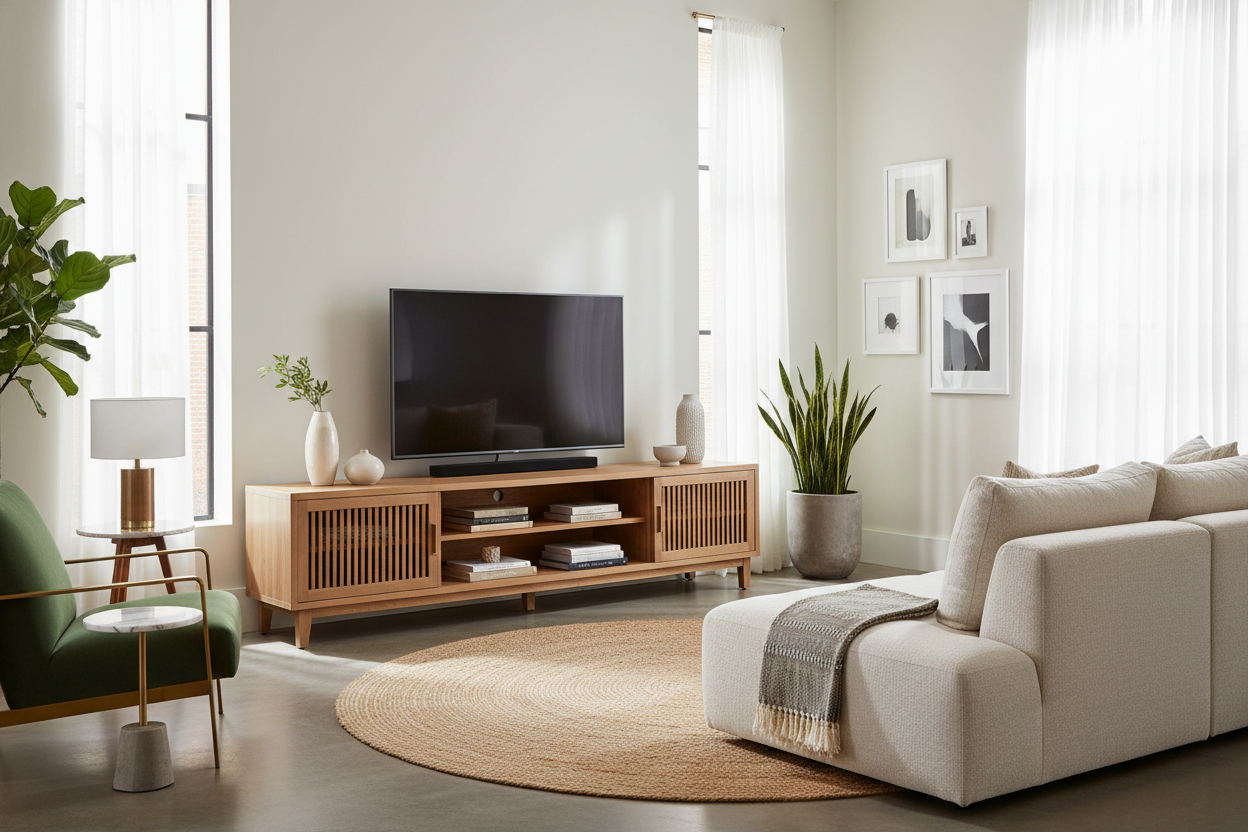
The darborn 88 tv stand bridges the gap between 'just a place for the TV' and an actual piece of architecture. It has this continuous grain pattern that makes it feel like one solid slab of wood rather than three cabinets bolted together. It’s heavy, it’s sturdy, and it doesn't have that annoying 'sag' in the middle that cheaper, long units often develop after a month of holding a heavy screen.
The Golden Ratio of Styling Seven Feet of Furniture
Once the beast was assembled, I realized I had a new problem: seven feet of surface area is a lot of space to fill. If you just put a TV in the middle and leave the sides empty, it looks like a runway. You have to treat the ends of the console like their own vignettes to make it look expensive.
I went with a 'high-low' approach. On one side, I put a massive ceramic lamp to add vertical height. On the other, I layered some leaning art and a trailing Pothos plant. I've found that mastering a larger layout means ignoring the TV itself and focusing on the outer thirds of the stand. It makes the whole setup look curated rather than just functional.
The Logistics of Delivery Day
Before you hit 'buy' on a darborn 88" tv stand, we need to talk about the 'pivot' moment. This box is nearly eight feet long. I live in a house with a standard front door, but if you're in an apartment, you need to measure your elevator depth immediately. I've seen people have to unbox these on the sidewalk just to get them around a tight hallway corner.
Also, check your baseboard heaters. Because these units are so long, they often have to sit flush against the wall to look like built-ins. If you have bulky heaters, you might need to look for a model with taller legs. Avoid common furniture sizing mistakes by using blue painter's tape to outline the footprint on your floor before the delivery truck arrives. It's much easier to realize it's too big when it's just tape on the floor.
How much wider should a TV stand be than the TV?
Ideally, your stand should be at least 6 to 12 inches wider than your TV on both sides. An 88-inch stand is the perfect companion for a 75-inch or 85-inch television, preventing that top-heavy look that makes a room feel cramped.
Is the Darborn stand hard to assemble?
It's a two-person job. Not because it's complicated, but because the top panel is over seven feet long and surprisingly heavy. Don't try to be a hero; get a friend to help you flip it over so you don't snap the legs.
Does a long TV stand make a room look smaller?
Actually, the opposite. Low, wide furniture draws the eye across the room, making the walls feel wider. It's the same trick designers use with striped rugs or long curtains to trick the brain into seeing more square footage.

Leave a comment
This site is protected by hCaptcha and the hCaptcha Privacy Policy and Terms of Service apply.