

















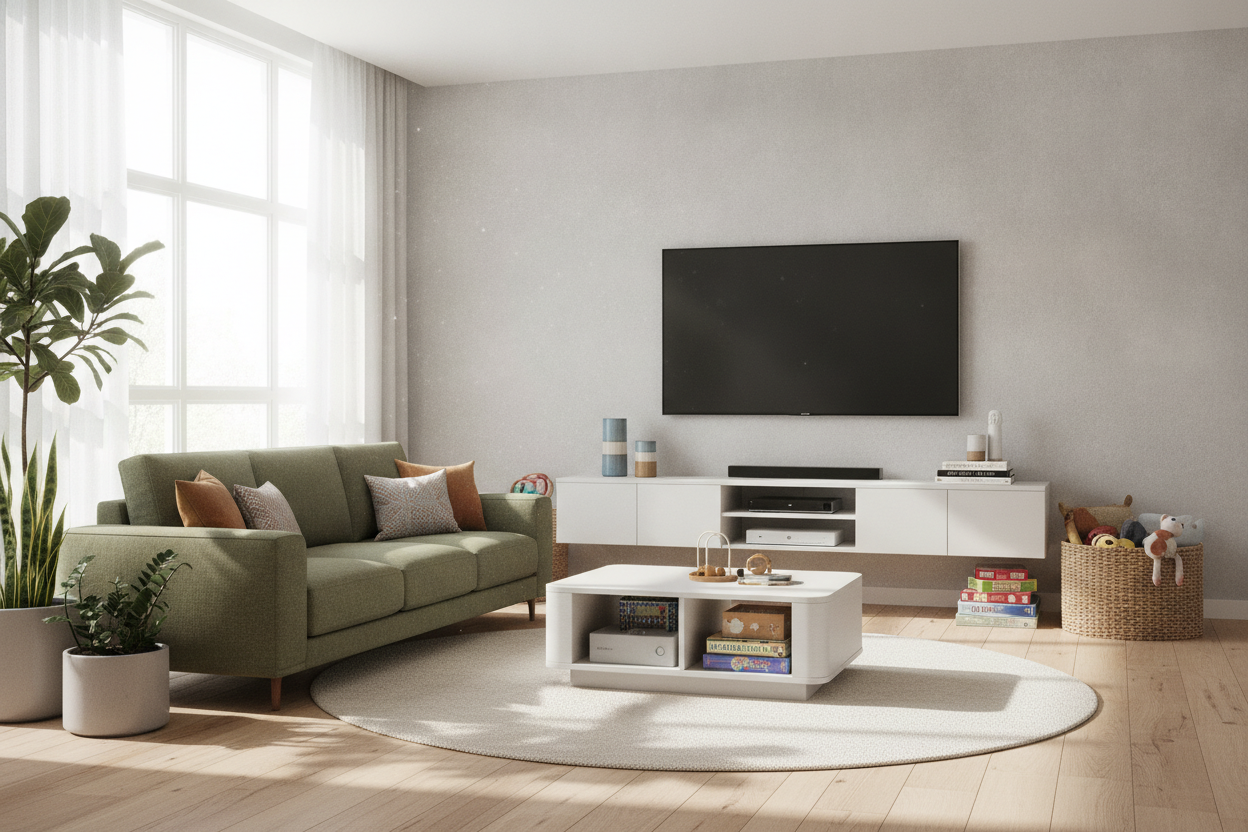
My living room used to look like a crime scene, but the victim was always my PlayStation 5. My two-year-old discovered that the glowing blue light on the console was a button that made a 'beep' sound, and suddenly, every movie night became a series of abrupt restarts. I realized my low-slung, mid-century media console was basically a playground for sticky fingers and curiosity.
I finally gave up and bought a floating wall tv shelf to move the entire operation four feet off the ground. It was the only way to save my sanity and my hardware.
- Mounting height is everything; aim for 42-50 inches from the floor to keep tech out of reach.
- Studs are non-negotiable—drywall anchors will eventually fail under the weight of a receiver.
- Cable management is the difference between a sleek look and a dangling hazard.
- Getting furniture off the floor makes a small room feel twice as big.
My Floor-Level Console Was a Magnet for Sticky Fingers
I spent nearly a thousand dollars on a solid oak sideboard three years ago. It was beautiful, but it was also the perfect height for a toddler to use as a coloring desk. Between the crumbs in the disc drive and the mysterious sticky residue on the router, I was losing the battle. The floor-level setup was a magnet for dust, dog hair, and chaos.
When I finally decided to replace your media console with something wall-mounted, it was a total ego hit. I loved that sideboard. But the moment I cleared that floor space, the room breathed again. No more hiding wires behind a heavy cabinet or fishing pacifiers out from underneath the legs.
Why a Floating Wall TV Shelf is the Ultimate Parenting Hack
The trick to making this work is the 'out of sight, out of mind' principle. By mounting the shelf high enough, the glowing lights of the cable box and the Xbox are no longer at eye level for a toddler. I mounted mine at 48 inches high, which is just above the reach of a standing three-year-old. It feels a bit high at first, but when you're sitting on the sofa, it creates a clean, cinematic sightline.
An added bonus I didn't expect was how it helped save space in my 12x14 living room. Without a bulky piece of furniture sitting on the rug, the floor looks continuous, which trick the eye into thinking the room is much larger than it actually is. It’s a design win disguised as a parenting survival tactic.
The Reality of Cord Hiding (Because Dangling Wires Are a Hazard)
Buying a floating tv shelf for wall mounting is only half the battle. If you leave five different black cables dangling down to the outlet, you haven't solved the toddler problem—you've just created a more dangerous game of 'pull the wire.' I learned this the hard way when my son tried to use the HDMI cable as a swing rope.
You have two real options: go behind the drywall or use a raceway. I opted for a recessed media box that lets me plug everything in behind the TV and the shelf. If you're renting, get a paintable cord cover. Sand it, prime it, and paint it the exact color of your walls. If those wires aren't invisible, the whole 'floating' aesthetic falls apart instantly.
Can It Actually Hold a Heavy Receiver Without Crashing Down?
I’ve seen too many horror stories of people using plastic drywall anchors for a 15-pound shelf. Don't do it. A heavy receiver, a soundbar, and a couple of gaming consoles add up quickly. You must find the studs. I use a magnetic stud finder to locate the center of the wood and use 3-inch lag bolts. If your shelf pulls away even a millimeter, it’s a hazard.
For the truly heavy gear—like those massive vintage amplifiers that weigh 40 pounds—I wouldn't trust a floating shelf. In those cases, I recommend using adjustable shelf storage inside a nearby closet or a locked cabinet. Keep the floating shelf for the sleek, modern tech that won't test the structural integrity of your home's framing.
Making Your High-Up Tech Setup Look Intentional, Not Awkward
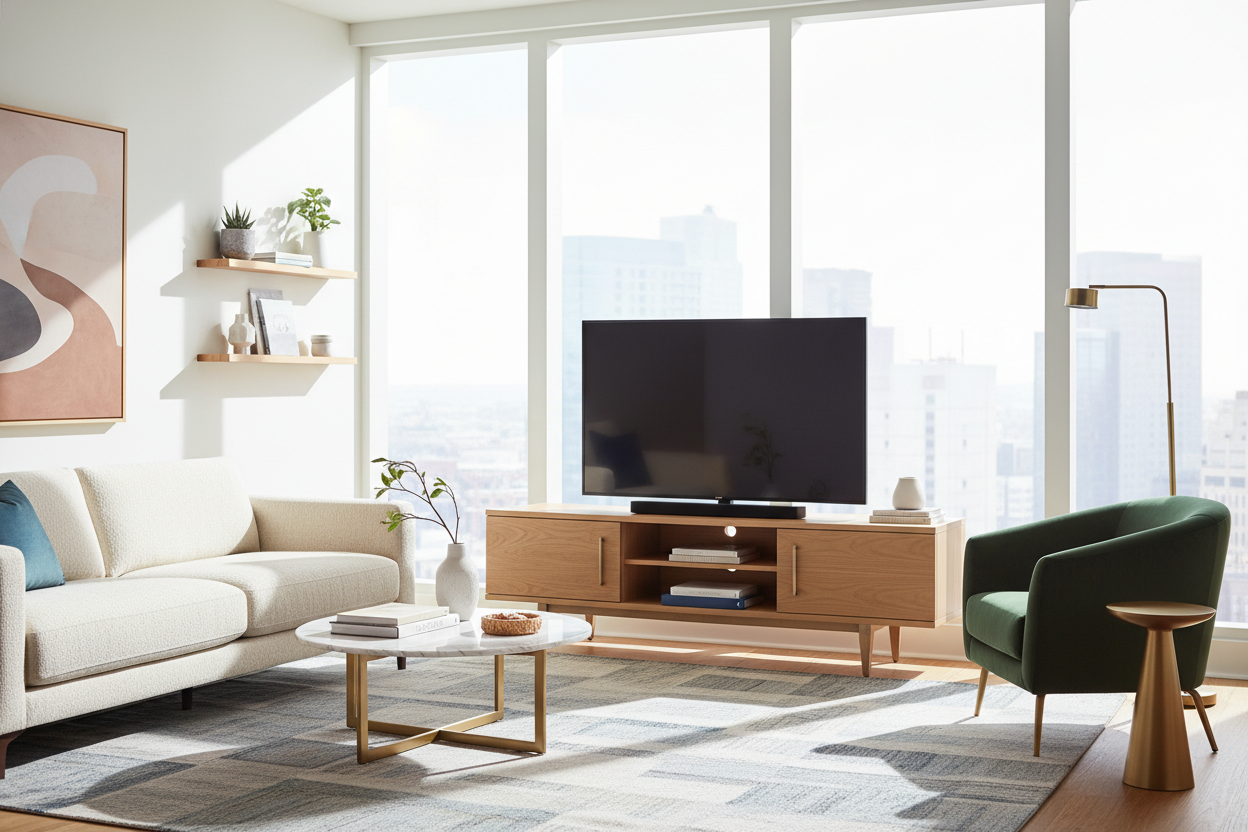
The biggest risk with a high-mounted shelf is that it looks like a TV in a hospital waiting room. To avoid this, you need to balance the visual weight. I chose a shelf that is at least 10 inches wider than the TV itself. This prevents the 'top-heavy' look. I also added a single, trailing plant like a Pothos on the end to soften the hard edges of the electronics.
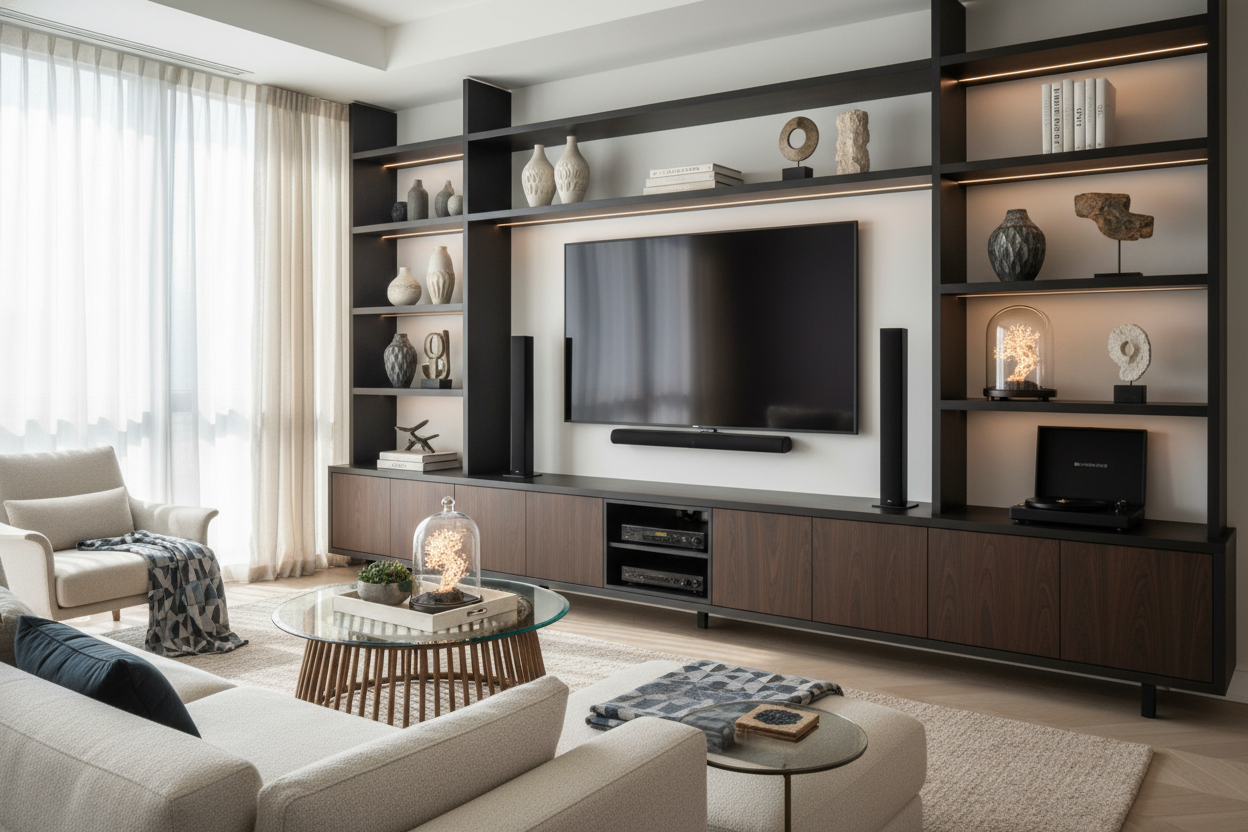
Keep the decor minimal. One or two coffee table books or a small ceramic bowl is enough. If you clutter a floating shelf, it starts to look like a junk drawer that happened to get bolted to the wall. Keep it clean, keep it high, and enjoy the fact that you can finally watch a movie without someone pressing the power button mid-scene.
FAQ
How high should I mount my floating shelf?
For most setups, 42 to 48 inches from the floor is the sweet spot. It keeps it out of reach for kids but stays within a comfortable viewing angle when you're seated on a standard sofa.
Can a floating shelf hold a soundbar?
Yes, but make sure the shelf depth is at least 6 inches. Most soundbars are around 4-5 inches deep, and you need room for the cables to plug into the back without hitting the wall.
What if my studs aren't centered with the TV?
This is the most common headache. Use a mounting bracket that has a wide backplate with multiple holes. This allows you to bolt into the studs even if they are offset, while still centering the shelf under the TV.

Leave a comment
This site is protected by hCaptcha and the hCaptcha Privacy Policy and Terms of Service apply.