

















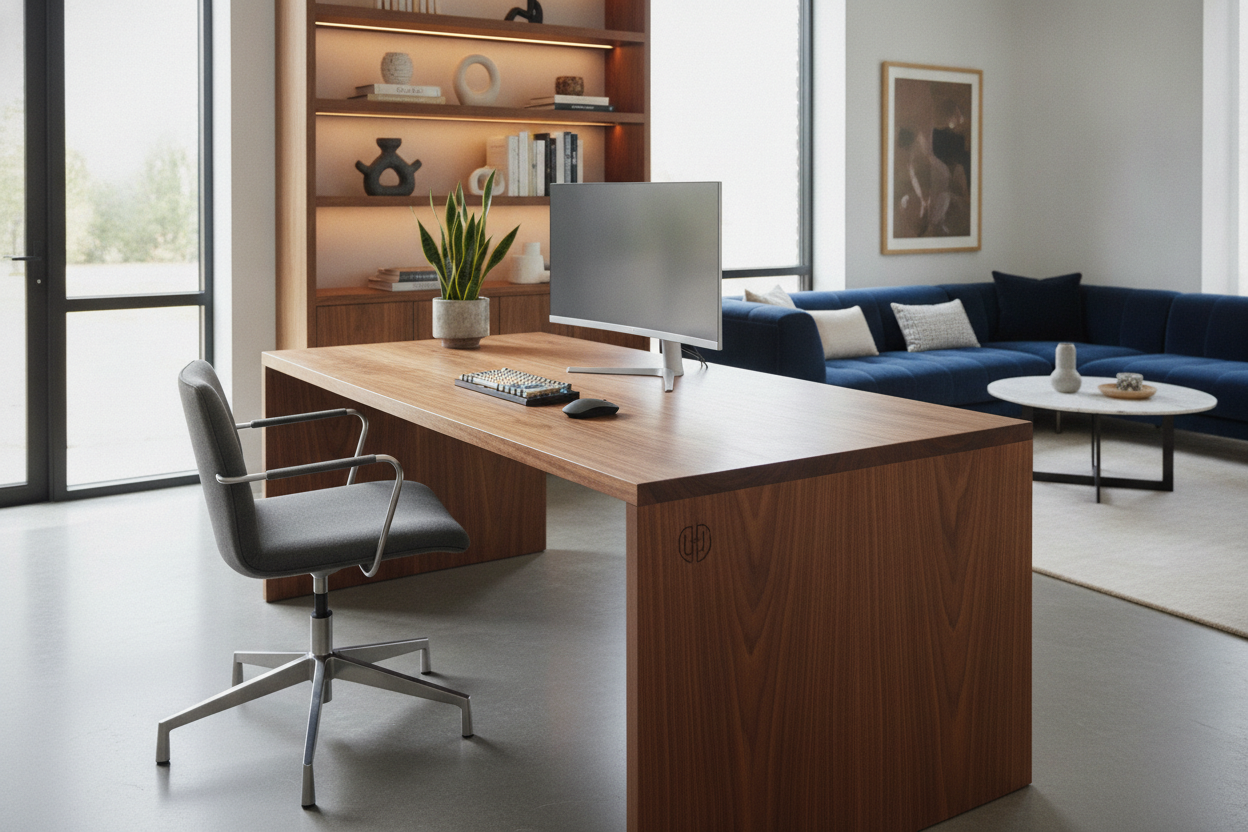
I spent $400 on a desk that looked like it belonged in a high-end design magazine. It had the tapered legs, the light oak finish, and 4.8 stars. Within three months, my monitor arm had literally crushed the 'wood' top because it was actually hollow cardboard disguised with a thin sticker. Finding nice desks shouldn't feel like a gamble, but the internet is full of pretty junk that can't handle a heavy laptop.
- Check the shipping weight; if it's under 50 lbs for a full-sized desk, it's likely hollow.
- Look for metal-to-metal connections instead of wood screws.
- Avoid '3D grain' or 'paper veneer'—it's basically a sticker that peels in a year.
- Prioritize desks with a crossbar or a perimeter frame for lateral stability.
The 'Instagram Aesthetic' Trap
Lighting hides a lot of sins. You see a 'natural wood' finish in a sunny photo, but in reality, it's often a 0.5mm paper veneer over low-density particle board. These pieces are designed to look good in a square grid, not to survive your daily 9-to-5. I often wonder if a quality office desk worth the investment is even possible online anymore when everything is built for the 'unboxing' moment rather than longevity.
A true quality desk doesn't feel like hollow plastic when you tap the surface. If the description mentions 'engineered wood' without specifying the density, proceed with caution. You want to see terms like 'kiln-dried hardwood' or 'high-density furniture board.' If it feels light enough to throw across the room, it's not going to hold up to your dual-monitor setup.
Weight Matters More Than You Think
High quality desks are almost always heavy. There is no getting around the physics of furniture. Solid wood, thick plywood, and high-density fiberboard (HDF) have mass. When you're typing furiously to meet a deadline, that mass is what keeps your coffee from rippling like a scene out of Jurassic Park.
A traditional writing computer desk usually has the structural integrity to stay still because it relies on thicker side panels or solid legs. Compare the specs: a flimsy desk might weigh 35 pounds, while a high quality desk of the same size will easily top 70 or 80 pounds. If you plan on using a clamp-on monitor mount, weight is your best friend. Hollow-core tops will literally cave in under the pressure of a mounting bracket.
The Virtual Wiggle Test
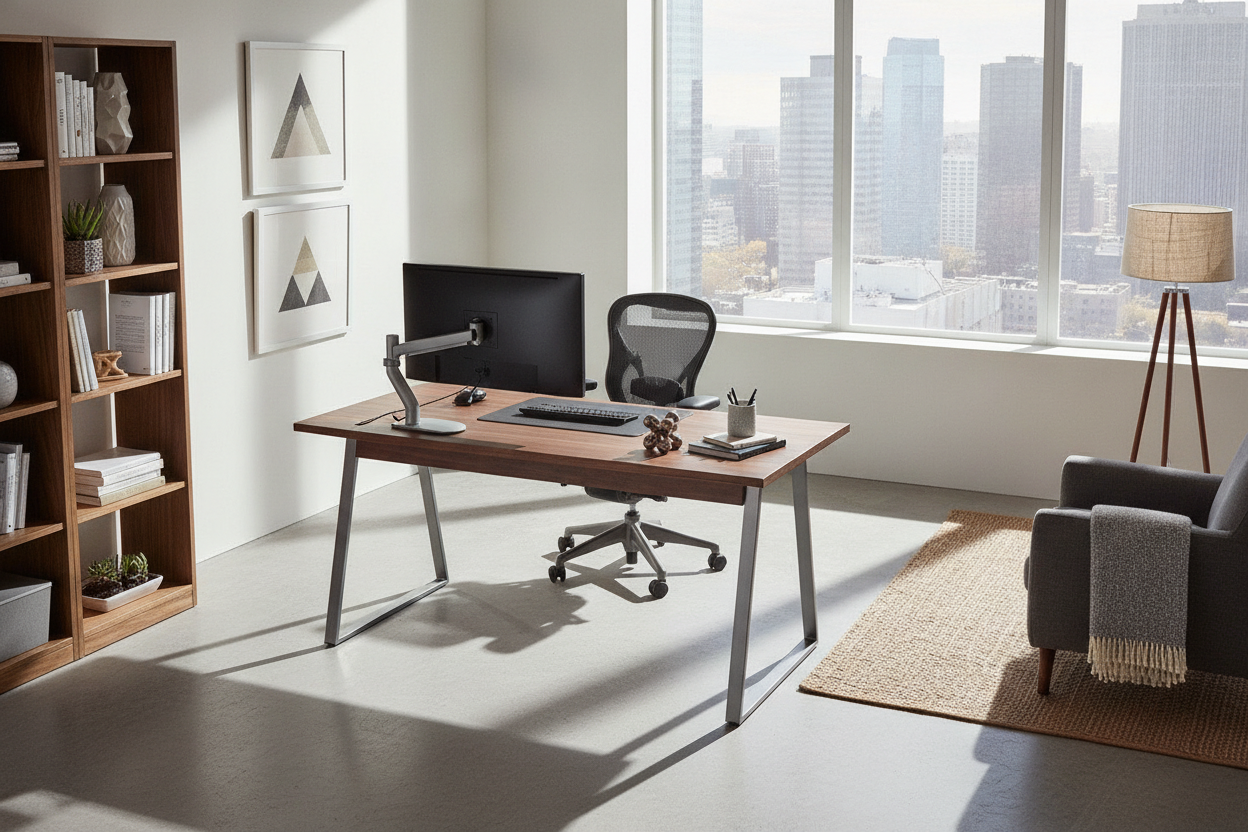
Since you can't physically shake the desk through your screen, you have to look at the frame geometry. Look for 'triangulation.' Desks with four thin legs and no support rails will eventually develop a nasty side-to-side sway. It's the 'card table' effect.
Check the product photos for a 'modesty panel' or a steel cross-brace. These aren't just for looks; they prevent the desk from racking. Also, look at the leg attachment points. If the legs just screw into the bottom of the desktop with a few wood screws, they will loosen over time. You want to see a metal mounting plate or a frame that runs the entire perimeter of the top.
Hardware is the Ultimate Tell
Zoom in on the assembly photos. If you see those cheap silver cam locks—the ones that look like a little 'C' and always break when you tighten them—you are looking at temporary furniture. These are fine for a guest room that gets used twice a year, but they ruin office desk quality in a daily workspace.
Look for metal-to-metal bolts that thread into pre-installed inserts. If the desk has drawers, check the glides. Are they plastic tracks or metal ball-bearing slides? If you're looking at a heavy-duty corner desk with large storage, the hardware needs to be industrial-grade. Cheap hinges on a large cabinet door will sag within months, making the whole unit look like a garage sale find.
Are Sit-Stand Mechanisms Inherently Flimsy?
The challenge with adjustable desks is the center of gravity. When you raise a desk to 45 inches, every tiny vibration is magnified. Most budget options use a single motor and thin, two-stage legs that shake if you even breathe on them. Finding quality desks in this category requires looking at the base weight and the motor count.
An ergonomic home office sit stand up desk should ideally have dual motors and three-stage legs. The heavier the feet, the better the stability. If the manufacturer doesn't list the weight capacity or the motor type, they are likely cutting corners. A solid standing desk should feel like a rock, even at its highest setting.
Is a 'solid wood' desk always the best choice?
Not necessarily. While solid wood is durable, it can warp if the environment is too humid or dry. High-quality birch plywood or heavy-duty HDF with a real wood veneer can actually be more stable and just as strong, provided the core isn't hollow.
How do I know if a desk will wobble before I buy it?
Look at the legs. If they are 'hairpin' style or very thin without a connecting bar near the bottom or top, the desk will likely wobble. Always check for a steel sub-frame that supports the tabletop.
What is the most important spec to check?
Shipping weight. It is the hardest spec for a manufacturer to fake. If a large desk arrives in a box that one person can easily carry under their arm, it's made of low-density materials that won't last.


Leave a comment
This site is protected by hCaptcha and the hCaptcha Privacy Policy and Terms of Service apply.