

















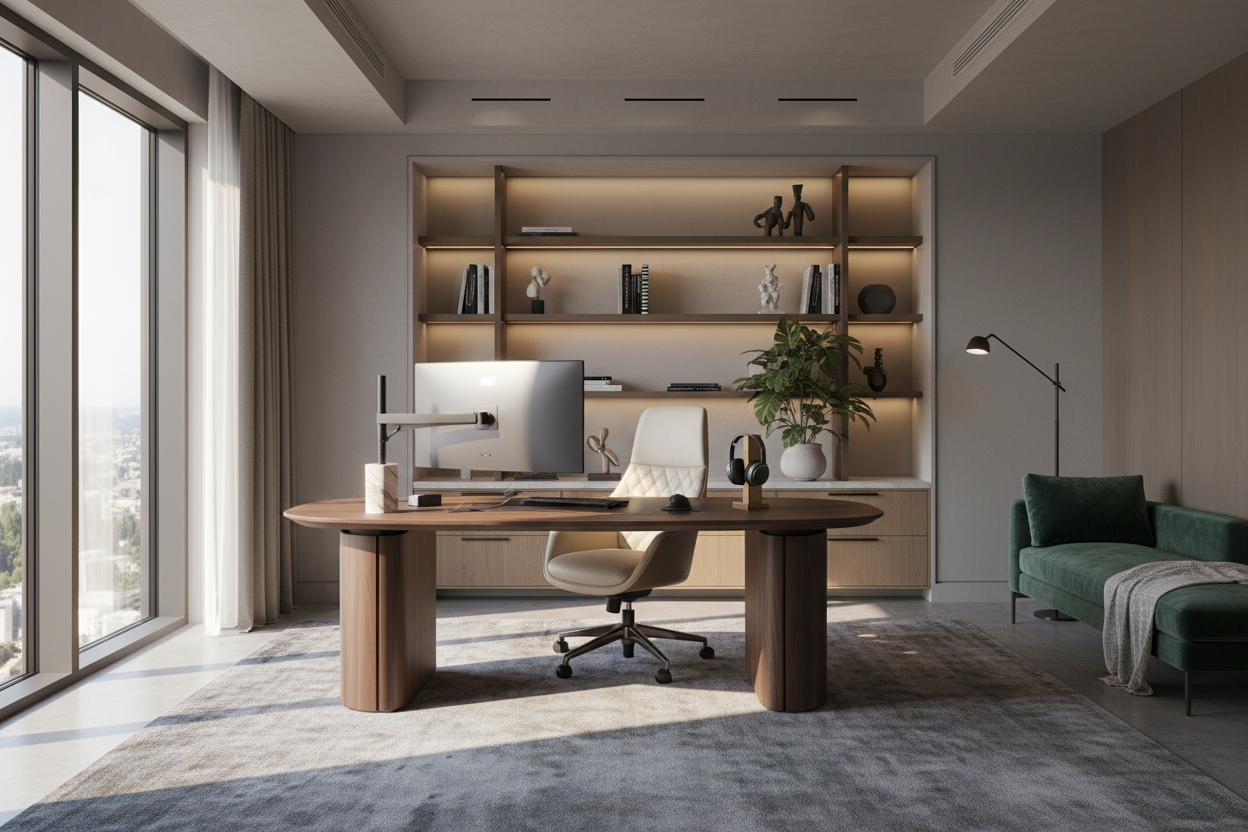
Staring at a blank wall or fighting for space on the dining room table is hardly conducive to creative thinking. As a designer, I often see clients treat their workspace as an afterthought, prioritizing the living room while neglecting the place where they spend eight hours a day. Designing your dream home office isn't just about buying a desk; it is about curating an environment that balances cognitive function with high-end residential aesthetics. This guide will walk you through the architectural and decorative decisions required to build a workspace that feels less like a cubicle and more like a sanctuary.
Key Features for a High-End Workspace
- The Command Position: Orienting the desk to face the room's entry, rather than a wall, for psychological security and authority.
- Layered Lighting: Combining ambient overhead fixtures with focused task lighting (aim for 3000K-4000K color temperature).
- Material Integrity: Prioritizing natural materials like solid walnut, oak, or leather over particle board for longevity and tactile appeal.
- Ergonomic Foundation: Investing in a chair with lumbar support and adjustable armrests, regardless of aesthetic style.
- Acoustic Control: Utilizing rugs, drapes, or upholstered panels to dampen echo in video calls.
Mastering Space Planning and Layout
The biggest error in a dream home office setup is shoving the desk into a corner. In luxury design, we focus on the "floating desk" layout. By pulling the desk into the center of the room—or at least perpendicular to a window—you create a focal point and improve visual flow. This positioning allows you to anchor the space with a plush area rug, defining the zone without erecting walls.
Ensure you have at least 48 inches of clearance behind your chair for movement. If you are incorporating a lounge area for reading or taking calls away from the screen, maintain a clear traffic path between the zones. This spatial breathing room is what separates a cramped study from a luxury suite.
Choosing Materials: Texture and Durability
When selecting furniture for dream office ideas, the tactile experience is paramount. A laminate top might look passable in photos, but it feels cold and hollow to the touch. I always advise clients to lean toward solid wood or high-grade veneers. Walnut brings warmth and gravity to a room, while white oak offers a Scandinavian, airy aesthetic.
Don't ignore the hardware. Brass or matte black handles on cabinetry can elevate a simple built-in to bespoke status. Similarly, consider the surface of your desk regarding writing; a leather inlay (or a high-quality desk pad) provides the perfect amount of friction for writing while protecting the wood underneath.
Ergonomics Meets Aesthetics
There is often a tension between the "Pinterest look" and spinal health. You might want that vintage cane chair, but your lower back will resent it by noon. The secret to a dream home office space is finding a hybrid.
Look for performance task chairs that offer customization in fabric. Many high-end manufacturers now offer ergonomic frames upholstered in boucle, velvet, or cognac leather, moving away from the standard black mesh. If you must use a decorative accent chair, reserve it for the guest seating or the reading corner, not the 9-to-5 station.
Lessons from My Own Projects
I want to share a specific detail that often gets overlooked until it is too late: the relationship between chair arm height and the desk apron (the vertical strip of wood under the tabletop).
In my own home office renovation last year, I fell in love with a vintage mid-century desk. It had a thick, beautiful drawer section right above the knees. I paired it with a modern executive chair. The problem? The chair arms couldn't slide under the desk because the apron was too low. I spent months unable to scoot in properly, which forced me to lean forward, wrecking my posture. I eventually had to remove the chair arms entirely. When you are measuring, don't just check the desk height; check the clearance underneath. It is a small nuance that defines daily comfort.
Curating Your Sanctuary
Ultimately, this space must reflect your workflow and personal taste. Whether you prefer the gravity of a mahogany library or the lightness of a modern studio, quality materials and thoughtful layout are universal. Invest in pieces that age well, and your office will serve you for decades.
Frequently Asked Questions
How do I handle cable management in a floating desk layout?
This is the main challenge of floating desks. Use floor outlets if you are renovating. If not, run cables down a single desk leg and use a cord cover that matches your flooring to bridge the gap to the wall. High-end desks often have hidden channels built into the legs specifically for this purpose.
What is the best paint finish for a home office?
I generally recommend a matte or eggshell finish for walls to minimize glare, which can be distracting during deep work. However, for shelving or cabinetry, a satin or semi-gloss finish is durable and easier to clean, providing a nice textural contrast to the matte walls.
Can I fit a dream office into a small bedroom?
Absolutely. In smaller footprints, verticality is your friend. Use floor-to-ceiling shelving to draw the eye up and maximize storage without eating floor space. Opt for a desk with visually lightweight legs (metal or slender wood) rather than a heavy block desk to keep the room feeling open.

Leave a comment
This site is protected by hCaptcha and the hCaptcha Privacy Policy and Terms of Service apply.