

















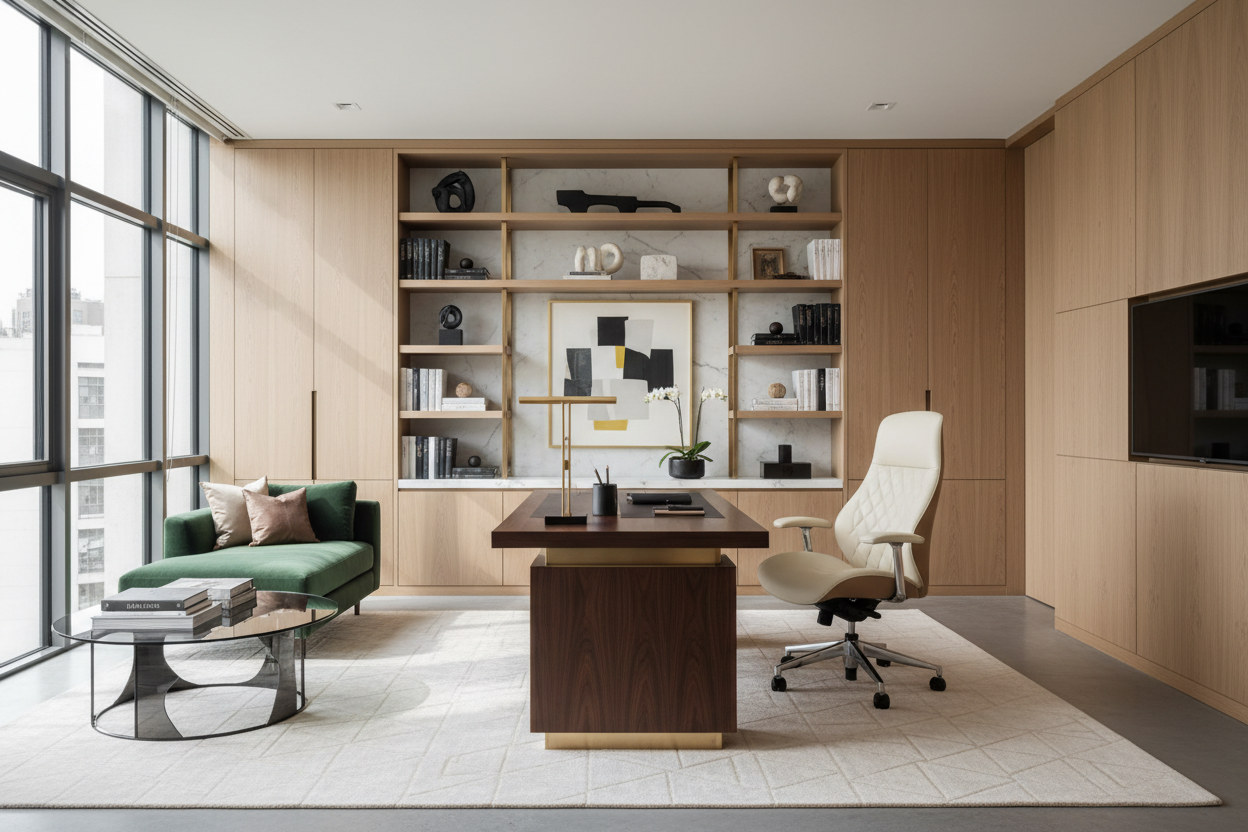
There is a distinct difference between a room that simply contains a desk and a curated environment designed for productivity. The design dilemma many homeowners face is integrating functionality without disrupting the visual harmony of their home. You want a professional setup, but you don't want your study to feel like a sterile corporate cubicle. The secret lies in selecting workspace furniture that balances ergonomic engineering with residential aesthetic appeal. As a designer, I treat the home office not just as a utility zone, but as a destination within the home.
Key Features to Look For
Before committing to a purchase, use this checklist to ensure the piece meets professional standards while fitting a residential context:
- Material Integrity: Prioritize solid hardwoods (walnut, white oak) or high-grade veneers over hollow-core laminates for longevity.
- Ergonomic Rating: Look for seating with lumbar support and adjustable tension that is concealed within the upholstery, rather than exposed plastic skeletons.
- Scale and Proportion: Ensure the desk depth allows for at least 24 inches of viewing distance to your monitor to reduce eye strain.
- Cable Management: Quality work spaces furniture should have integrated channels or grommets to hide wiring, maintaining visual silence.
Defining the Aesthetic: Materiality Matters
When selecting pieces for a luxury look, the tactile experience is paramount. In high-end design, we look at how materials age. A cheap laminate desk will chip and peel, whereas a solid wood desk develops a patina over time. For office workspace furniture, consider mixing textures to create depth. If you have a timber desk, pair it with a chair upholstered in boucle or full-grain leather rather than standard mesh. This softens the acoustics of the room and bridges the gap between 'office' and 'home.'
Space Planning and Layout Flow
The placement of your furniture dictates the energy of the room. A common error is pushing the desk directly against a wall, forcing you to stare at paint or wallpaper all day. Instead, position your working spaces office furniture in the 'command position'—facing the door, perhaps floating in the center of the room if space permits. This layout anchors the room and improves focus. Ensure there is at least 36 to 48 inches of clearance behind the chair for movement. If you are working with limited square footage, consider a console-style desk that can double as a vanity or display table when not in use.
The Ergonomic Equation
True luxury is comfort. While an antique wooden chair might look stunning, it is detrimental to your spine during an eight-hour shift. The challenge with workspace office furniture is finding a chair that supports the body without dominating the room's silhouette. Look for mid-century modern inspired task chairs that utilize memory foam and tilt mechanisms hidden beneath the seat. The goal is to support your posture without the visual clutter of heavy levers and knobs found on standard industrial chairs.
Lessons from My Own Projects
I want to share a specific realization from a project I worked on last year. I specified a stunning, high-gloss glass desk for a client's penthouse office. Visually, it was a masterpiece—sleek, modern, and light-reflecting. However, three weeks after installation, the client called me. The issue wasn't the look; it was the usability. They hated the cold sensation of the glass on their wrists during early morning emails, and the surface amplified the clicking sound of their mouse, creating an annoying echo.
We ended up having to commission a custom leather desk blotter to solve the temperature and acoustic issues. It was a humbling reminder for me: workspace furniture must be touched before it is bought. Always consider the 'wrist feel' of a surface and the thermal comfort of a chair material. Velvet, for instance, looks regal but can run incredibly hot after two hours of sitting. Now, I always steer clients toward matte, natural finishes that feel warm to the touch.
Conclusion
Elevating your home office isn't about buying the most expensive desk; it is about curating pieces that serve your workflow while respecting your home's architecture. By focusing on natural materials, proper scale, and hidden ergonomics, you create a space that invites creativity rather than demanding labor. Invest in pieces that will age gracefully alongside you.
Frequently Asked Questions
How do I maintain wood workspace furniture?
Dust regularly with a microfiber cloth and use a high-quality wood conditioner every six months. Avoid silicone-based sprays, which can build up a sticky residue over time, and always use coasters to prevent heat rings.
What is the ideal desk height for workspace office furniture?
The standard desk height is between 29 and 30 inches. However, if you are shorter than 5'4" or taller than 6'0", you should prioritize an adjustable height desk or a chair with significant lift range to ensure your elbows sit at a 90-degree angle.
Can I mix different wood tones in my office?
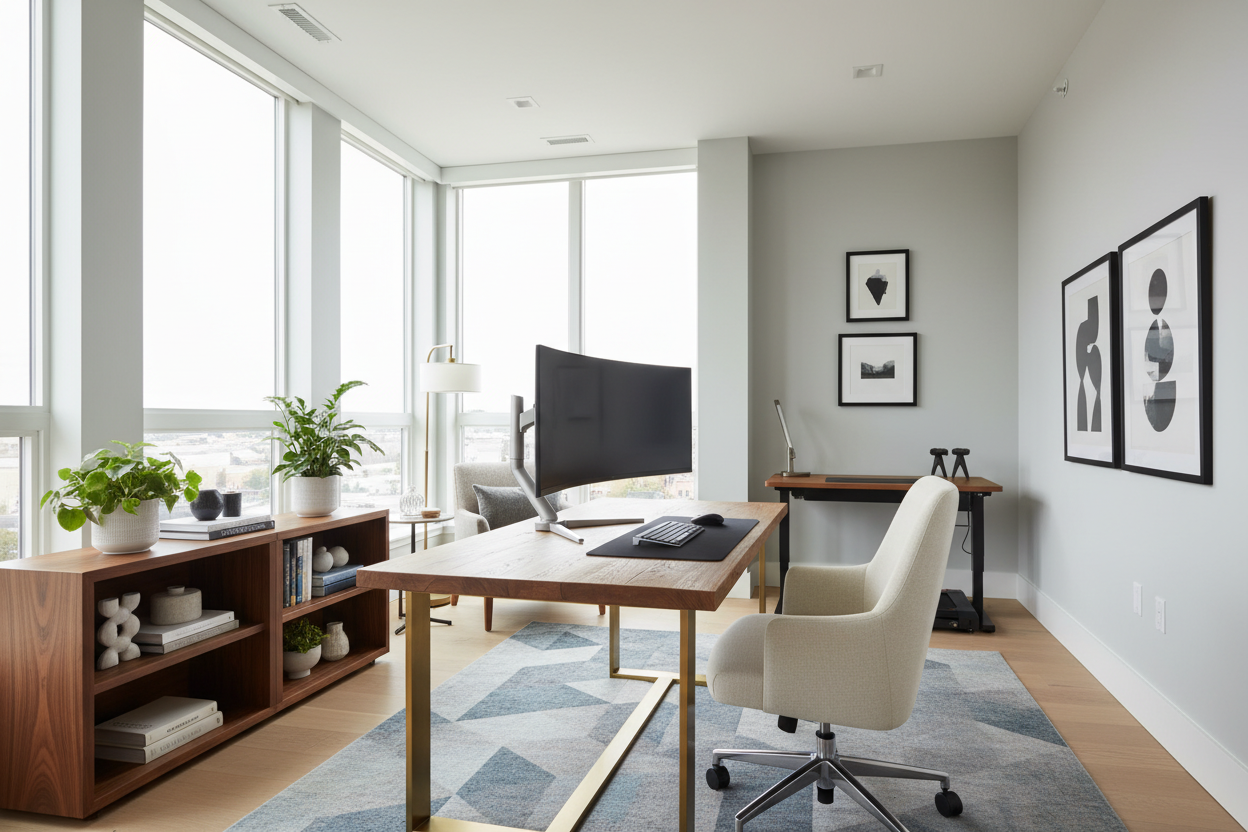
Absolutely. In fact, matching all furniture perfectly can make a room look like a catalogue rather than a curated space. Try to keep the undertones (warm vs. cool) consistent, but feel free to mix a dark walnut desk with lighter oak shelving for visual interest.


Leave a comment
This site is protected by hCaptcha and the hCaptcha Privacy Policy and Terms of Service apply.